

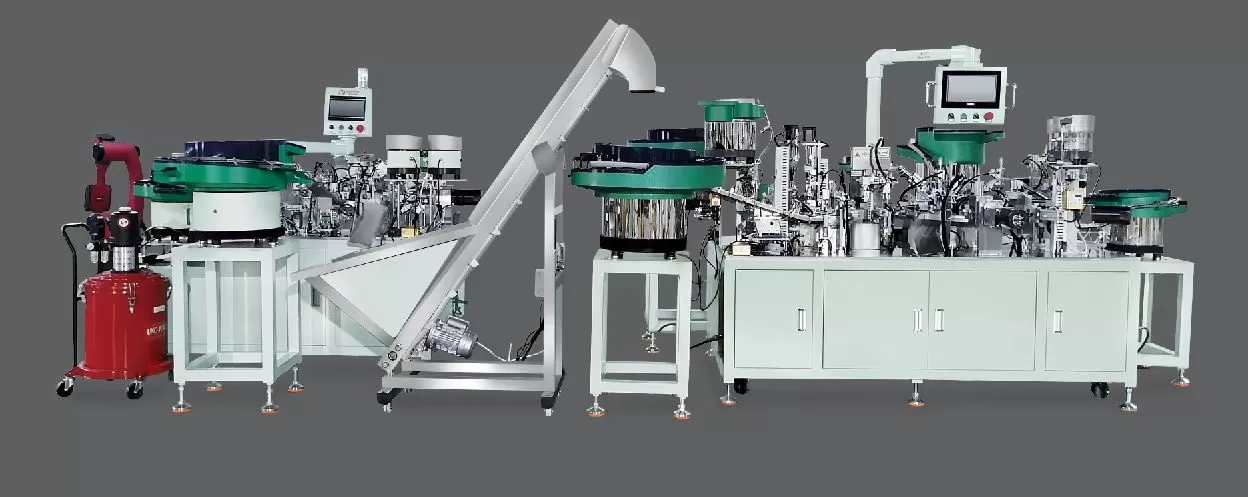
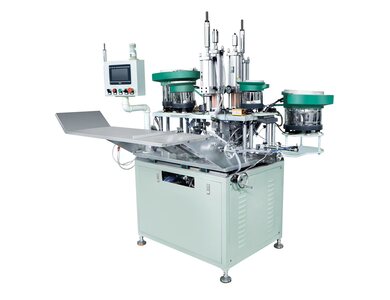
For manufacturers in furniture, automotive, and industrial sectors, manual slide assembly has long been a bottleneck. From the high labor costs of hiring skilled workers to the risk of inconsistent quality due to human error, the challenges of manual production can slow down operations and eat into profit margins. As demand for drawer slides, cabinet slides, and industrial slides continues to rise, the need for a more efficient, reliable solution has never been greater. Enter automatic slide assembly machines—your key to streamlining production, reducing waste, and scaling your output without compromising on precision.
The Pain Points of Manual Slide Assembly
Manual slide assembly relies heavily on human labor, which brings inherent limitations. Workers often struggle with repetitive tasks, leading to fatigue and higher error rates—even skilled operators can’t maintain consistent speed or quality over long shifts. This results in longer production cycles, with small-batch orders taking days to complete. Additionally, rising labor costs, especially in regions with tight labor markets, make manual methods increasingly unsustainable. For example, a typical production line with 20 workers might assemble only 500-800 slides daily, while errors like misaligned parts or loose fasteners require rework, further dragging down efficiency.
Key Advantages of Automatic Slide Assembly Machines
Automatic slide assembly machines eliminate these pain points by leveraging advanced mechanics and software. Unlike manual work, they operate at a steady, unwavering pace—many models can process 1,500-3,000 slides per hour, depending on slide type, a 300%+ increase over manual lines. Consistency is another critical benefit: sensors and precision tooling ensure every slide meets strict dimensional and functional standards, reducing rework by up to 90%. This reliability is especially valuable for industries like automotive, where slide performance directly impacts product safety.
How Automatic Machines Transform Production Workflows
Beyond speed and quality, automatic machines integrate seamlessly into modern production workflows. Many models feature modular designs, allowing them to adapt to different slide sizes and configurations with minimal setup time—no need for extensive tool changes or manual adjustments. Advanced systems also include real-time monitoring, tracking metrics like cycle time and defect rates, which helps managers identify bottlenecks and optimize operations. For instance, Sanyhore’s automatic machines can connect to ERP or MES systems, providing data-driven insights to further boost productivity.
Why Sanyhore’s Automatic Solutions Stand Out
As a professional manufacturer of drawer slide assembly machines and roll forming machines, Sanyhore has spent over two decades refining its technology. Unlike generic suppliers, we focus on custom-tailored solutions: our machines can handle everything from small drawer slides to heavy-duty industrial tracks, with options for in-line inspection, material handling, and even 24/7 operation. We prioritize durability too—high-grade steel and precision components ensure machines run reliably for 10+ years, minimizing downtime. Plus, our team offers end-to-end support, including installation, training, and on-site maintenance, ensuring you get the most from your investment.
Debunking Myths About Automatic Slide Assembly
Despite their benefits, some manufacturers hesitate to adopt automation, often due to misconceptions. Let’s address common concerns:
1. Is automation only for large-scale production?
No. Sanyhore’s machines are designed for small to medium-sized operations. Compact models can fit into tight factory floors and handle batch sizes from 100 to 10,000 slides, making them ideal for custom orders or niche markets.
2. Do I need specialized training to operate the machines?
Not at all. Our user-friendly interface and intuitive controls mean operators can be trained in just a few hours. We also provide digital tutorials and on-site training sessions to ensure smooth adoption.
3. How high are maintenance costs?
Surprisingly low. Regular maintenance (e.g., lubrication, sensor checks) takes only a few hours weekly, and Sanyhore offers affordable spare parts and remote diagnostics to minimize downtime. Most clients see ROI within 12-24 months, depending on production volume.
Ready to upgrade your slide assembly process? Contact Sanyhore today for a free consultation. As a trusted partner for drawer slide assembly machines and roll forming machines, we’re dedicated to helping you reduce costs, boost quality, and stay ahead of the competition. Reach out at +86 13425506550 or email info@sanyhore.com to discover how our automatic solutions can transform your production line.


