

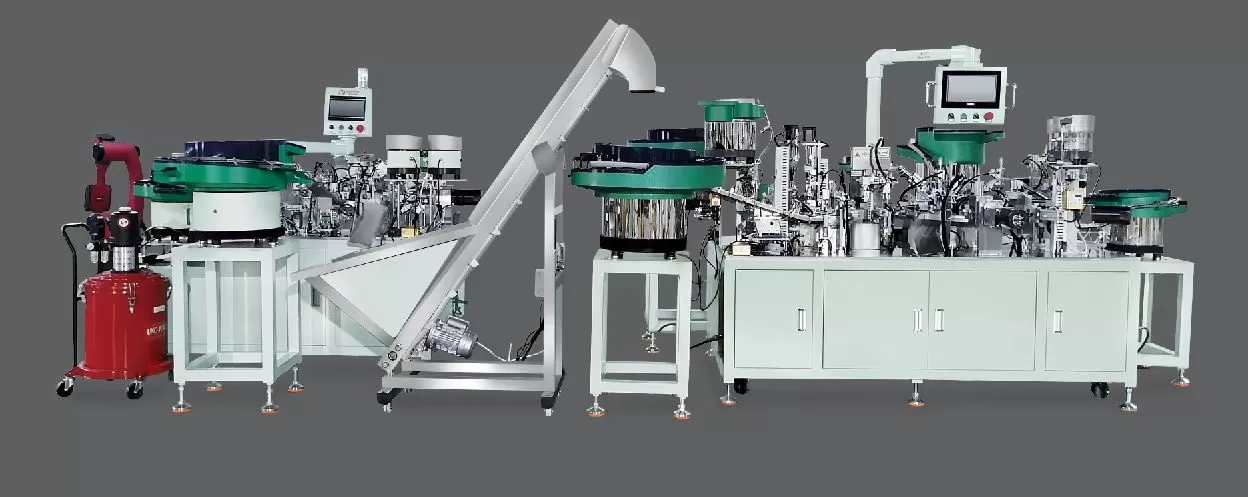

For manufacturers in the metalworking industry, the performance of roll forming equipment directly impacts production efficiency, product quality, and overall operational costs. As a professional manufacturer specializing in hinge assembly machines, telescopic drawer slide assembly machines, and roll forming machines, Sanyhore has established itself as a trusted provider of technically advanced roll forming equipment. This article explores the key technical advantages that set Sanyhore’s roll forming machines apart, highlighting their role in enhancing manufacturing processes.
Material Handling & Forming Efficiency
A critical technical strength of Sanyhore’s roll forming equipment lies in its optimized material handling system. Equipped with high-precision servo-driven feed mechanisms, the machines ensure consistent and smooth material advancement, minimizing material waste and deformation during the forming process. The integration of a multi-roll leveler further enhances material flatness, reducing the risk of defects in the final product. Additionally, Sanyhore’s advanced drive systems, paired with high-speed forming rolls, enable forming speeds of up to 30 meters per minute, significantly boosting production output while maintaining energy efficiency. This balance of speed and precision makes Sanyhore’s roll forming machines ideal for high-volume manufacturing lines.
Precision Forming Technology
Precision is non-negotiable in roll forming, and Sanyhore addresses this with cutting-edge forming technology. The core of this precision is its high-rigidity roll sets, designed with tight tolerances (±0.02mm) to ensure accurate and consistent shape replication. Each roll is crafted from premium alloy steel, heat-treated to HRC 58-62 for enhanced wear resistance, extending the machine’s service life and reducing the need for frequent replacements. Complemented by a closed-loop feedback control system, which uses laser sensors to monitor part dimensions in real time, the equipment can automatically adjust forming parameters, ensuring every component meets strict quality standards. This level of precision is particularly valuable for industries requiring tight dimensional control, such as automotive and furniture manufacturing.
Automation & Intelligent Integration
Sanyhore prioritizes automation to reduce manual intervention and improve production stability. The roll forming machines are integrated with advanced PLC control systems and human-machine interface (HMI) panels, allowing operators to set and monitor forming parameters, such as roll speed, material thickness, and forming angle, with ease. Furthermore, the inclusion of industrial sensors—including position sensors, load cells, and temperature monitors—enables real-time data collection and analysis. This data is then transmitted to a central management system, providing insights into production efficiency, tool wear, and potential issues, allowing for proactive maintenance and optimization. Such intelligent integration not only reduces labor costs but also minimizes downtime, making Sanyhore’s roll forming machines a smart choice for modern factories.
Structural Durability & Maintenance Design
Durability is a cornerstone of Sanyhore’s roll forming equipment design. The machine frame is constructed using high-strength steel plates, welded and stress-relieved to ensure structural rigidity and resistance to vibration during operation. Key components, such as gears and bearings, are sourced from reputable suppliers and undergo rigorous testing to withstand heavy loads and continuous use. To further enhance reliability, Sanyhore incorporates a modular maintenance design, where critical parts like rolls and dies can be quickly accessed and replaced without disassembling the entire machine. This not only reduces maintenance time but also lowers long-term operational costs, ensuring the equipment remains productive for years.
Customization Capabilities
Recognizing that each manufacturer has unique requirements, Sanyhore offers flexible customization options for its roll forming equipment. Our engineers work closely with clients to design machines tailored to specific product needs, including material type (steel, aluminum, stainless steel), part dimensions, and forming complexity. The PLC control system is programmed to accommodate variable forming sequences, and the machine can be adjusted to handle different material thicknesses (ranging from 0.3mm to 5mm) and widths (up to 1200mm). This customization ability ensures that Sanyhore’s roll forming machines can adapt to evolving production demands, making them a versatile solution for diverse industries.
Conclusion
Sanyhore’s roll forming equipment stands out in the market due to its combination of precision, efficiency, automation, and customization. By integrating advanced technologies and thoughtful design, our machines empower manufacturers to enhance productivity, reduce costs, and maintain high-quality standards. As a trusted partner in hinge assembly, telescopic drawer slide assembly, and roll forming machine production, Sanyhore is committed to delivering equipment that meets the unique needs of each client.
For inquiries about Sanyhore’s roll forming equipment or to discuss your specific manufacturing requirements, please contact our sales manager at +86 13425506550 or email info@sanyhore.com.
FAQ for Sanyhore’s Roll Forming Equipment
Q: What technical features make Sanyhore’s roll forming machines superior?
A: Our machines excel in precision (±0.02mm tolerance), high efficiency (up to 30m/min forming speed), and intelligent automation, with modular designs for easy maintenance.
Q: Can Sanyhore’s roll forming equipment be customized for specific product requirements?
A: Yes, we offer tailored solutions, including adjustments for material type, thickness, and part dimensions, ensuring alignment with your unique manufacturing needs.
Q: How does Sanyhore ensure the durability of its roll forming machines?
A: We use high-strength steel frames, wear-resistant alloy rolls, and rigorous component testing, combined with modular maintenance to maximize operational lifespan.


