
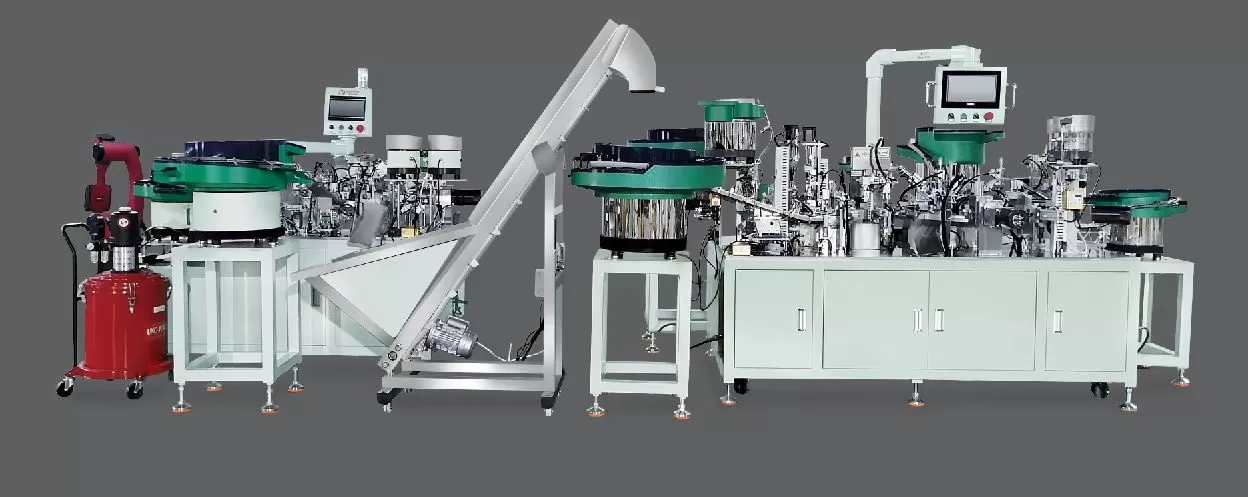
The Step-by-Step Process of Sanyhore’s Roll Forming Technology

2025-12-03


Roll forming is a foundational metal forming process that transforms flat or coiled material into complex, continuous profiles through a series of sequential die operations. For Sanyhore, a professional manufacturer specializing in hinge assembly machines, telescopic drawer slide assembly machines, and roll forming machines, mastering this technology is key to delivering high-precision, efficient, and customizable solutions. Below is a detailed breakdown of the step-by-step process Sanyhore employs to ensure optimal performance in its equipment.

1. Design and Material Preparation

The journey of Sanyhore’s roll forming technology begins with meticulous design and material selection. Before production, engineers analyze the target part specifications, including dimensions, material thickness, and mechanical requirements, using advanced CAD software. The chosen material—typically high-strength steel, aluminum alloys, or stainless steel—undergoes strict quality checks to ensure consistent composition, surface finish, and thickness tolerance. Contaminants are removed through cleaning processes, and the material may be pre-coated with lubricants or protective layers to facilitate smooth rolling and prevent damage during the forming sequence. This initial step ensures the material is ready to withstand the stresses of the roll forming process.

2. Roll Tooling Design and Manufacturing

Next, the design of the roll tooling—critical for shaping the material—takes center stage. Sanyhore’s tooling engineers use 3D modeling to create precise roll dies, each with unique contours matching the desired part geometry. The number and arrangement of rolls depend on the complexity of the profile; simple shapes may require 5-7 rolls, while complex ones (like those for telescopic drawer slides) need 10+ rolls to achieve gradual deformation. These dies are then manufactured using high-precision machining, often with carbide or high-speed steel for durability and wear resistance. Quality control during tooling production includes dimensional checks and material hardness testing to ensure the dies can maintain accuracy over thousands of forming cycles.

3. Roll Tooling Setup and Alignment

Once the tooling is ready, the next step is installing and aligning the rolls on the roll forming machine. Operators carefully mount each die onto the machine’s arbors, ensuring they are centered and securely fastened. Alignment is critical: misaligned rolls can cause material distortion, uneven pressure, or even machine damage. Using precision measuring tools, engineers adjust the position of each roll to maintain the correct gap between adjacent rolls, matching the material thickness. The machine’s control system, often integrated with sensors, helps monitor and fine-tune alignment, ensuring the material passes through the rolls with minimal resistance and uniform deformation.

4. Material Feeding and Continuous Forming

With tooling aligned, the material is fed into the roll forming machine. A powered feeding system—typically a pair of pinch rolls or a servo feeder—pulls the material through the die sequence at a controlled speed, determined by the desired production rate and material properties. As the material passes through each set of rolls, the dies gradually shape it, bending and deforming the material to the target profile. Each subsequent roll set applies additional force, refining the shape and ensuring tight tolerances. For example, in hinge assembly machine production, this step transforms flat steel strips into the curved, notched, and ribbed structures needed for hinge components. The continuous nature of the process allows for high-volume production with consistent results.

5. Cutting and End Finishing

After forming, the continuous profile is cut to the required length using a precision cutting mechanism, such as a flying shear or circular saw. The cutting process is synchronized with the machine’s production speed to avoid material waste and ensure accurate lengths. Depending on the application, additional finishing operations may be performed, including notching, punching, or deburring, to meet specific part requirements. For telescopic drawer slide assembly machines, this could involve creating slots or holes for滑轨 (telescopic slide) components. The finished parts are then collected via a conveyor system or stacked, ready for further processing or packaging.

6. Quality Control and Testing

Throughout the process, Sanyhore implements rigorous quality control measures to ensure product reliability. After forming, each part undergoes dimensional inspection using tools like calipers, laser scanners, or coordinate measuring machines (CMMs) to verify compliance with design specifications. Material properties, such as tensile strength and bendability, are tested to ensure the parts meet industry standards. Additionally, the machine itself is checked for stability, with operators monitoring for vibrations, noise, or irregularities in the forming process. This commitment to quality ensures that Sanyhore’s roll formed parts, integrated into its hinge assembly machines and telescopic drawer slide assembly machines, perform optimally in real-world applications.

7. Machine Calibration and Optimization

To maintain efficiency and precision over time, Sanyhore’s roll forming machines undergo regular calibration and optimization. Operators use feedback from production runs to adjust parameters like roll pressure, feeding speed, and tooling alignment, ensuring consistent results even as tooling wears. Advanced control systems allow for real-time monitoring of key metrics, such as material thickness and forming force, enabling proactive adjustments to prevent defects. This continuous optimization ensures that Sanyhore’s roll forming technology remains at the forefront of manufacturing efficiency, meeting the evolving needs of industries like furniture, automotive, and construction.

As a trusted manufacturer of hinge assembly machines, telescopic drawer slide assembly machines, and roll forming machines, Sanyhore leverages its expertise in roll forming technology to deliver tailored solutions. Whether you require custom roll formed parts or complete production lines, our team is dedicated to providing reliable, high-performance equipment. For inquiries about our roll forming technology or to discuss your project requirements, contact us at +86 13425506550 or email info@sanyhore.com.

We use cookie to improve your online experience. By continuing to browse this website, you agree to our use of cookie.

Cookies

Please read our Terms and Conditions and this Policy before accessing or using our Services. If you cannot agree with this Policy or the Terms and Conditions, please do not access or use our Services. If you are located in a jurisdiction outside the European Economic Area, by using our Services, you accept the Terms and Conditions and accept our privacy practices described in this Policy.
We may modify this Policy at any time, without prior notice, and changes may apply to any Personal Information we already hold about you, as well as any new Personal Information collected after the Policy is modified. If we make changes, we will notify you by revising the date at the top of this Policy. We will provide you with advanced notice if we make any material changes to how we collect, use or disclose your Personal Information that impact your rights under this Policy. If you are located in a jurisdiction other than the European Economic Area, the United Kingdom or Switzerland (collectively “European Countries”), your continued access or use of our Services after receiving the notice of changes, constitutes your acknowledgement that you accept the updated Policy. In addition, we may provide you with real time disclosures or additional information about the Personal Information handling practices of specific parts of our Services. Such notices may supplement this Policy or provide you with additional choices about how we process your Personal Information.


Cookies

Cookies are small text files stored on your device when you access most Websites on the internet or open certain emails. Among other things, Cookies allow a Website to recognize your device and remember if you've been to the Website before. Examples of information collected by Cookies include your browser type and the address of the Website from which you arrived at our Website as well as IP address and clickstream behavior (that is the pages you view and the links you click).We use the term cookie to refer to Cookies and technologies that perform a similar function to Cookies (e.g., tags, pixels, web beacons, etc.). Cookies can be read by the originating Website on each subsequent visit and by any other Website that recognizes the cookie. The Website uses Cookies in order to make the Website easier to use, to support a better user experience, including the provision of information and functionality to you, as well as to provide us with information about how the Website is used so that we can make sure it is as up to date, relevant, and error free as we can. Cookies on the Website We use Cookies to personalize your experience when you visit the Site, uniquely identify your computer for security purposes, and enable us and our third-party service providers to serve ads on our behalf across the internet.

We classify Cookies in the following categories:
 ●  Strictly Necessary Cookies
 ●  Performance Cookies
 ●  Functional Cookies
 ●  Targeting Cookies


Cookie List
A cookie is a small piece of data (text file) that a website – when visited by a user – asks your browser to store on your device in order to remember information about you, such as your language preference or login information. Those cookies are set by us and called first-party cookies. We also use third-party cookies – which are cookies from a domain different than the domain of the website you are visiting – for our advertising and marketing efforts. More specifically, we use cookies and other tracking technologies for the following purposes:

Strictly Necessary Cookies
These cookies are necessary for the website to function and cannot be switched off in our systems. They are usually only set in response to actions made by you which amount to a request for services, such as setting your privacy preferences, logging in or filling in forms. You can set your browser to block or alert you about these cookies, but some parts of the site will not then work. These cookies do not store any personally identifiable information.

Functional Cookies
These cookies enable the website to provide enhanced functionality and personalisation. They may be set by us or by third party providers whose services we have added to our pages. If you do not allow these cookies then some or all of these services may not function properly.

Performance Cookies
These cookies allow us to count visits and traffic sources so we can measure and improve the performance of our site. They help us to know which pages are the most and least popular and see how visitors move around the site. All information these cookies collect is aggregated and therefore anonymous. If you do not allow these cookies we will not know when you have visited our site, and will not be able to monitor its performance.

Targeting Cookies
These cookies may be set through our site by our advertising partners. They may be used by those companies to build a profile of your interests and show you relevant adverts on other sites. They do not store directly personal information, but are based on uniquely identifying your browser and internet device. If you do not allow these cookies, you will experience less targeted advertising.

How To Turn Off Cookies
You can choose to restrict or block Cookies through your browser settings at any time. Please note that certain Cookies may be set as soon as you visit the Website, but you can remove them using your browser settings. However, please be aware that restricting or blocking Cookies set on the Website may impact the functionality or performance of the Website or prevent you from using certain services provided through the Website. It will also affect our ability to update the Website to cater for user preferences and improve performance. Cookies within Mobile Applications

We only use Strictly Necessary Cookies on our mobile applications. These Cookies are critical to the functionality of our applications, so if you block or delete these Cookies you may not be able to use the application. These Cookies are not shared with any other application on your mobile device. We never use the Cookies from the mobile application to store personal information about you.

If you have questions or concerns regarding any information in this Privacy Policy, please contact us by email at . You can also contact us via our customer service at our Site.