

.png)
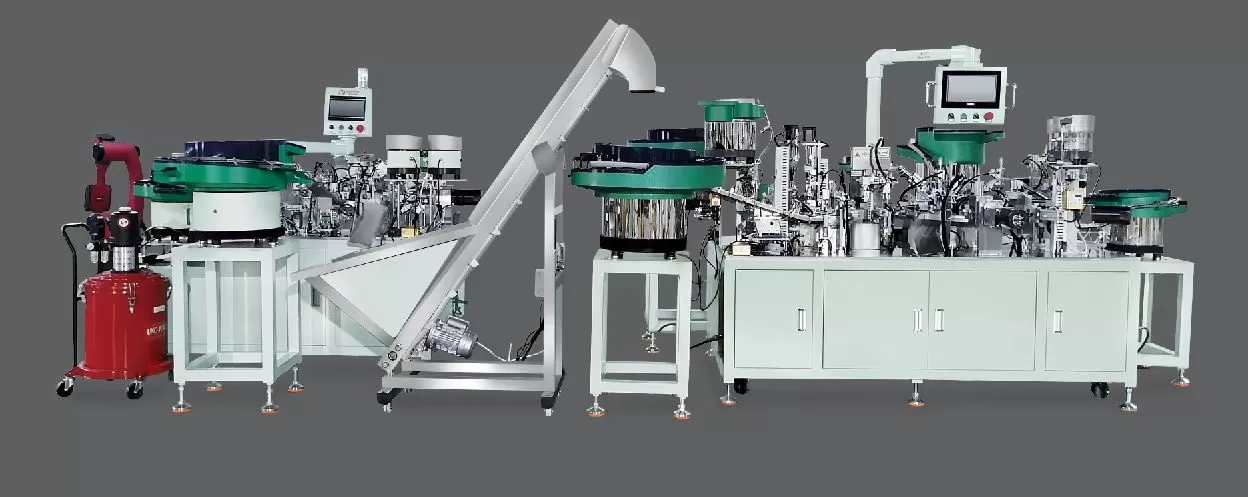
The Transformative Influence of Sanyhore 3D hinge assembly machine on Production Cycles
Understanding Production Cycle Bottlenecks in Hinge Manufacturing
In modern hinge manufacturing, production cycles are the backbone of operational efficiency. A typical production cycle involves multiple stages: raw material handling, component preparation, manual or semi-automated assembly, quality checks, and packaging. For many manufacturers, bottlenecks often emerge in the assembly phase, where manual or outdated machinery struggles to balance speed, precision, and adaptability. Traditional hinge assembly processes, reliant on manual alignment and repetitive tasks, frequently lead to inconsistencies, longer setup times, and higher labor dependency. These inefficiencies not only extend overall production cycles but also increase the risk of errors, rework, and unplanned downtime—all critical factors that impact a company’s competitiveness in fast-paced markets.
The Role of 3D Hinge Assembly Machines in Reducing Cycle Time
Sanyhore’s 3D Hinge Assembly Machine addresses these challenges by integrating advanced automation and precision engineering. Unlike conventional machines that rely on 2D alignment, 3D systems use multi-axis robotic arms and intelligent sensors to position hinge components with sub-millimeter accuracy. This eliminates the need for manual adjustments, reducing the time spent on aligning parts from hours to minutes. For instance, a single hinge assembly, once requiring 15–20 minutes of manual work, can now be completed in 2–3 minutes with the 3D machine. This dramatic reduction in per-unit assembly time directly shortens the overall production cycle, allowing manufacturers to meet tighter deadlines and scale output without proportional increases in labor or operational costs.
Precision and Consistency: Key to Minimizing Rework and Delays
In hinge manufacturing, even minor misalignments or component mismatches can lead to functional defects, requiring rework or scrapping. Sanyhore’s 3D Hinge Assembly Machine mitigates this risk through real-time quality control. Equipped with integrated vision systems and force sensors, the machine checks each assembly for dimensional accuracy, torque, and fit during production. If a defect is detected, it immediately pauses the process, preventing the component from moving to subsequent stages. This not only reduces rework rates—by up to 80% in some cases—but also minimizes delays caused by post-assembly quality checks. With consistent, defect-free outputs, manufacturers can maintain steady production flow, avoiding the bottlenecks and downtime associated with fixing errors later in the cycle.
Reducing Labor Dependency: Lower Costs and Fewer Human Errors
Human error is a significant variable in production cycles, especially in repetitive tasks like hinge assembly. Sanyhore’s 3D Hinge Assembly Machine automates 95% of the assembly process, reducing reliance on manual labor. This lowers labor costs and minimizes errors caused by fatigue, distraction, or skill gaps. Operators are freed from tedious, high-risk tasks to focus on monitoring the machine, performing maintenance, or handling more complex adjustments. Additionally, the machine’s 24/7 operational capability—with minimal human intervention—ensures continuous production, even during extended shifts. By reducing both labor needs and human-caused delays, the 3D hinge assembly machine streamlines the production cycle, making it more predictable and scalable.
Adapting to Variability: Flexibility in Production Scheduling
Hinge manufacturers often need to produce diverse hinge types to meet customer demands, from small residential hinges to large industrial ones. Traditional machines require extensive retooling and setup changes for each model, which can take hours or even days. Sanyhore’s 3D Hinge Assembly Machine, however, features modular tooling and intuitive software that allows for quick model changes. With pre-programmed parameters for different hinge designs, operators can switch between products in under 10 minutes, reducing setup time by 70% or more. This flexibility ensures that manufacturers can adapt to fluctuating order volumes and diverse customer requirements without sacrificing production speed, keeping the overall cycle time efficient and responsive.
Real-World Impact: Sanyhore’s 3D Hinge Assembly Machine in Action
For a leading furniture hardware manufacturer, integrating Sanyhore’s 3D Hinge Assembly Machine resulted in a 45% reduction in production cycle time within the first month. By automating manual assembly, the company eliminated rework, reduced labor costs by 30%, and increased daily output by 2,000 units. Another client, a manufacturer of automotive door hinges, reported improved on-time delivery rates from 65% to 98% after implementing the machine, as its precision and speed ensured consistent throughput. These results highlight how Sanyhore’s 3D hinge assembly machine transforms production cycles from a bottleneck to a competitive advantage.
Partner with Sanyhore for Optimized Production Cycles
As a professional manufacturer specializing in hinge assembly machines, telescopic drawer slide assembly machines, and roll forming machines, Sanyhore is committed to delivering solutions that drive operational excellence. Our 3D Hinge Assembly Machine is designed to not only reduce production cycles but also enhance quality, flexibility, and cost-efficiency. Whether you’re scaling up production or improving existing workflows, we provide the expertise and technology to meet your needs.
For inquiries about optimizing your production cycles with our 3D hinge assembly machines, reach out to our sales manager at +86 13425506550 or send an email to info@sanyhore.com. Let’s discuss how Sanyhore can help your business achieve faster, more reliable production cycles.


