

In the dynamic landscape of furniture hardware, premium soft-closing drawer slides stand as a benchmark for quality and user experience. Consumers increasingly seek products that combine durability, smooth operation, and silent closure, making their manufacturing a focal point for producers aiming to meet market demands. Achieving this balance of excellence while maintaining operational efficiency is the core challenge—one that requires a strategic, multi-faceted approach. This article explores the efficient path to premium soft-closing drawer slide manufacturing, delving into design, materials, production integration, and the role of advanced technology in elevating both quality and output.
Design Optimization: The Foundation of Efficiency
At the heart of efficient manufacturing lies a well-crafted design. Premium soft-closing functionality—characterized by gradual, silent closure—relies on precise engineering. Modern design processes leverage computer-aided design (CAD) and computer-aided manufacturing (CAM) tools to model slide mechanisms, ensuring optimal alignment of components like dampers, rails, and springs. Modular design principles further streamline production by standardizing parts across product lines, reducing tooling costs and minimizing assembly time. For instance, integrating soft-closing dampers as pre-engineered modules allows manufacturers to scale production without compromising on performance, a key step in optimizing the overall manufacturing flow.
Material Selection: Balancing Durability and Performance
The choice of materials directly impacts both the soft-closing performance and the longevity of drawer slides. High-strength steel alloys are preferred for rails, as they offer the rigidity needed to withstand repeated use while maintaining dimensional stability. Surface treatments, such as zinc plating or powder coating, enhance corrosion resistance, ensuring slides remain functional even in humid or dusty environments. Equally critical is the selection of lubricants and damping fluids. Formulating low-friction, long-lasting lubricants not only ensures smooth operation but also reduces wear, extending the slide’s lifespan. Sanyhore’s expertise in material science, paired with advanced material testing, ensures that every component meets the strict durability standards required for premium soft-closing systems.
Production Process Integration: Streamlining Operations
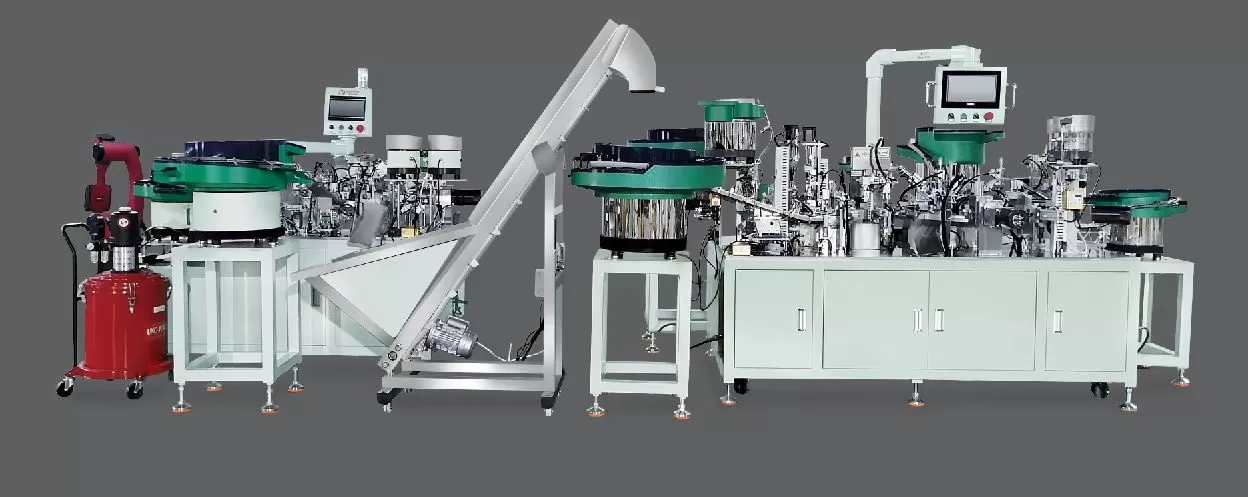
Efficiency in manufacturing hinges on integrating advanced machinery and lean production principles. Automated assembly lines, equipped with precision robotics, play a pivotal role in reducing human error and accelerating throughput. For example, Sanyhore’s telescopic drawer slide assembly machine and hinge assembly machine are engineered to automate critical steps—from rail forming and spring insertion to damper mounting—minimizing manual intervention and ensuring consistent quality. Additionally, implementing lean manufacturing practices, such as 5S and just-in-time (JIT) inventory, helps eliminate waste, reducing lead times and lowering operational costs. By integrating these systems, manufacturers can scale production while maintaining the precision required for soft-closing functionality.
Quality Control: Ensuring Premium Soft-Closing Performance
Premium soft-closing drawer slides demand rigorous quality control at every stage. Post-assembly, comprehensive testing is essential to verify soft-closing performance, including closure force, rebound prevention, and cycle durability. Modern quality control systems use automated testing machines to simulate thousands of cycles, ensuring slides meet industry standards for smoothness and reliability. Sanyhore’s roll forming machines, designed for high-precision rail production, are paired with in-line inspection tools to detect defects early, reducing rework and ensuring only the finest slides reach the market. This commitment to quality not only builds customer trust but also reduces after-sales service costs in the long run.
Technological Innovation: Driving Future Manufacturing
To stay ahead, manufacturers must embrace technological innovation. Smart manufacturing, enabled by IoT sensors and real-time data analytics, allows for predictive maintenance and process optimization by monitoring machine performance and production bottlenecks. For instance, AI-driven systems can identify when tooling needs adjustment or when material quality deviates, preventing defects before they occur. Sanyhore continuously invests in R&D to enhance its machinery, with innovations like adaptive assembly tools and AI-powered quality inspection, empowering partners to meet evolving market demands for premium, cost-effective drawer slides.
Sustainability in Production: Aligning with Modern Demands
Today’s consumers increasingly prioritize sustainability, and manufacturers are responding by integrating eco-friendly practices into production. Using recycled materials for non-critical components, optimizing energy consumption in machinery, and reducing waste through efficient design all contribute to greener manufacturing. Sanyhore’s focus on energy-efficient machines and sustainable material sourcing ensures that its production processes align with global sustainability goals, making its solutions attractive to environmentally conscious buyers and brands.
For manufacturers looking to excel in premium soft-closing drawer slide production, the path to success lies in combining optimized design, high-quality materials, advanced machinery, and rigorous quality control. Sanyhore, a trusted provider of hinge assembly machines, telescopic drawer slide assembly machines, and roll forming machines, is dedicated to equipping producers with the tools to achieve this efficiency. To explore how our solutions can elevate your manufacturing capabilities, contact our sales manager at +86 13425506550 or email info@sanyhore.com today.


