
In today’s competitive manufacturing landscape, hinge production requires solutions that balance speed, precision, and cost-effectiveness. Traditional manual or semi-automated processes often struggle with inconsistencies, slow throughput, and high labor dependency, limiting operational scalability. Hydraulic automation has emerged as a transformative technology, addressing these challenges by integrating advanced hydraulic systems with smart control mechanisms to optimize every stage of hinge manufacturing. This article explores the key benefits of hydraulic automation in hinge production, highlighting how it drives operational excellence for modern manufacturers.
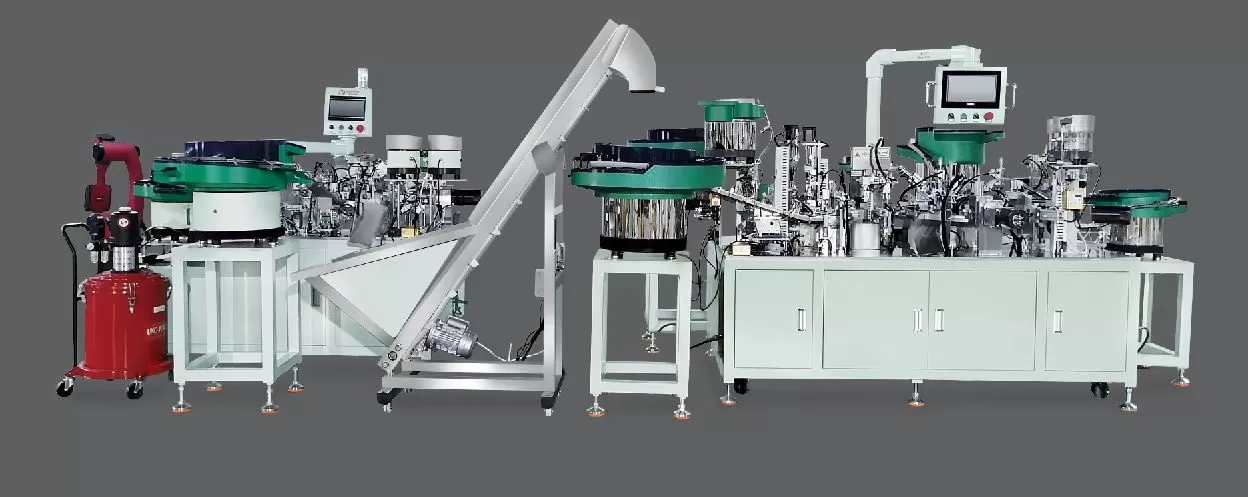
To begin with, hydraulic automation significantly elevates production throughput. Unlike manual or mechanical systems, hydraulic presses offer rapid and consistent force application, enabling faster cycle times. This is critical for meeting tight production schedules, as each hinge can be processed in seconds rather than minutes, reducing overall lead times. For example, integrating a hydraulic-driven hinge assembly machine allows manufacturers to handle higher volumes without compromising on precision, directly impacting business growth. The ability to maintain steady pressure throughout the production cycle ensures uniform processing, eliminating delays caused by inconsistent force application in manual setups.
Beyond efficiency, hydraulic automation enhances product consistency, a cornerstone of quality in hinge manufacturing. Hydraulic systems provide precise control over clamping force, crimping depth, and alignment, eliminating variations caused by human error. This results in hinges with uniform dimensions, smooth operation, and consistent performance—key factors in industries like furniture, automotive, and construction where reliability matters. Additionally, advanced sensors integrated into hydraulic automation systems monitor production in real time, quickly identifying anomalies to prevent defective units from reaching the market. This not only improves product quality but also reduces rework and scrap rates, further optimizing resource usage.
Another key advantage is the flexibility hydraulic automation offers in handling diverse hinge types. Traditional production lines often require significant retooling for different hinge sizes or styles, leading to downtime and increased setup costs. Hydraulic systems, however, can be adjusted via programmable logic controllers (PLCs) to accommodate varying parameters—such as material thickness, hinge size, or joining methods—with minimal manual intervention. This adaptability allows manufacturers to respond swiftly to market demands, producing a wider range of hinges without disrupting operations. Whether manufacturing small residential hinges or large industrial ones, hydraulic automation ensures seamless transitions between product variants.
Hydraulic automation also drives down long-term operational costs. By automating repetitive tasks, manufacturers reduce reliance on manual labor, lowering wage expenses and minimizing the risk of work-related injuries. Additionally, precise force application reduces material waste, as over-pressurization or misalignment—common in manual processes—are eliminated. Over time, the energy efficiency of modern hydraulic systems further contributes to cost savings, with variable flow controls ensuring optimal power usage during production cycles. These cumulative cost reductions make hydraulic automation a sound investment for manufacturers aiming to improve their bottom line.
Beyond economic benefits, hydraulic automation creates safer and more ergonomic work environments. Manual hinge production often involves repetitive motion, heavy lifting, and exposure to sharp tools, increasing the risk of accidents. By automating tasks like loading, pressing, and finishing, hydraulic systems remove workers from these high-risk scenarios, reducing accident rates and improving employee morale. This not only protects the workforce but also aligns with modern health and safety regulations, avoiding potential legal and reputational issues. A safer workplace also translates to higher employee retention, a critical factor in maintaining consistent production levels.
In summary, hydraulic automation is a game-changer for hinge production, delivering tangible benefits in efficiency, quality, flexibility, and cost. For manufacturers seeking to upgrade their operations, Sanyhore—specializing in hinge assembly machines, telescopic drawer slide assembly machines, and roll forming machines—offers tailored hydraulic automation solutions designed to meet the unique needs of modern production lines. To explore how our systems can transform your hinge manufacturing process, contact our sales manager at +86 13425506550 or email info@sanyhore.com for a personalized consultation.


