

The hardware manufacturing industry stands at a critical inflection point, driven by the relentless push toward automation. As global demand for precision, speed, and cost-effectiveness surges, traditional production methods—reliant on manual labor and fragmented workflows—are increasingly yielding to advanced automated systems. This shift is not merely a trend but a fundamental reimagining of how hardware components like hinges, drawer slides, and structural parts are designed, assembled, and produced. For manufacturers, embracing this automation wave is no longer optional; it is essential to staying competitive in an era where efficiency and consistency directly translate to market success.
Traditional Manufacturing: Limitations in the Modern Era
Historically, hardware manufacturing has relied heavily on manual assembly, with workers handling tasks like hinge pin insertion, slide component alignment, and quality checks. While effective for small-scale production, this approach faces significant limitations: labor costs continue to rise, increasing operational expenses; human error introduces variability in product quality, leading to higher defect rates; and scaling production often requires exponential increases in workforce, straining resources. Additionally, manual processes struggle to meet the demands of complex, high-precision components, where even minor inconsistencies can compromise functionality or durability. These challenges have created a pressing need for a more streamlined, error-resistant production model—one that leverages technology to address these pain points.
Automation Technologies: The Engine of Transformation
Automation in hardware manufacturing encompasses a suite of cutting-edge technologies, each playing a role in redefining production capabilities. Industrial robots, equipped with advanced sensors and machine vision, now perform repetitive tasks with unmatched precision, reducing cycle times and minimizing errors. Collaborative robots (cobots) further enhance flexibility by working alongside human operators in shared workspaces, combining automation's efficiency with human adaptability. IoT-enabled devices and data analytics provide real-time insights into production metrics, enabling predictive maintenance, process optimization, and quality control at every stage. For hardware-specific tasks like hinge assembly, telescopic slide production, or roll forming, specialized automated systems—such as those designed for precise component insertion or material shaping—eliminate manual bottlenecks and set new standards for consistency.
The Role of Specialized Automated Machines
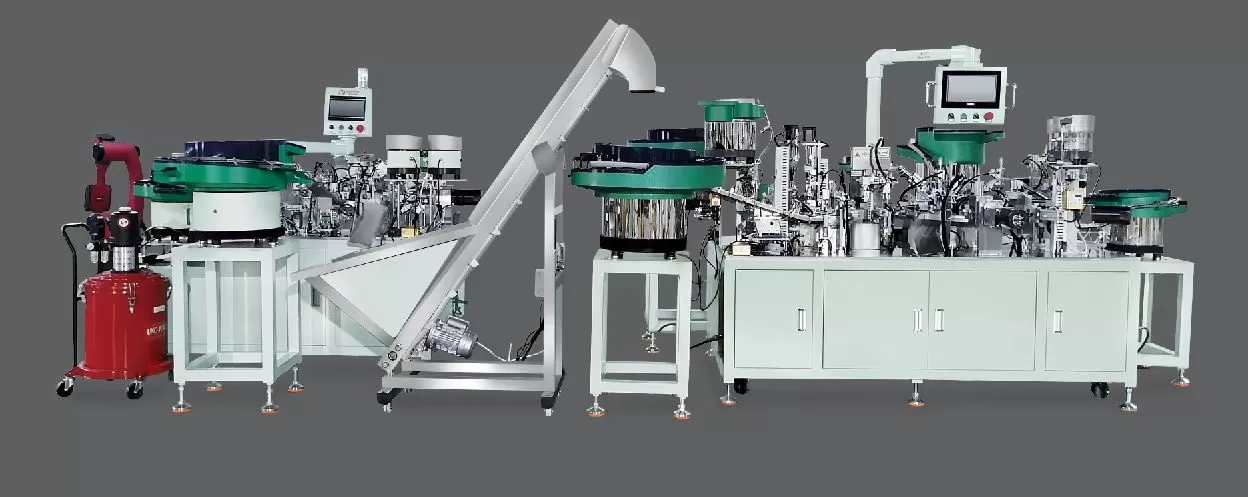
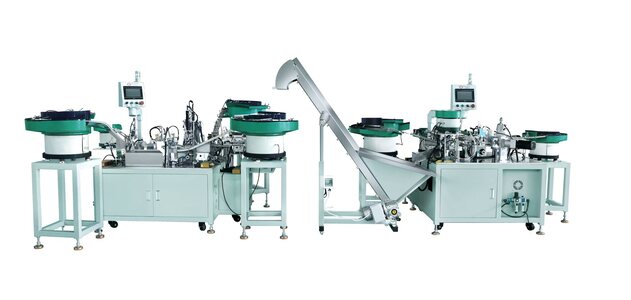
Within the broader automation landscape, specialized hardware assembly machines are emerging as key enablers of transformation. For instance, hinge assembly machines (hinge assembly machine) integrate robotic arms with custom tooling to handle pin insertion, alignment, and torque testing, ensuring each hinge meets strict tolerances. Similarly, telescopic drawer slide assembly machines (telescopic drawer slide assembly machine) automate the complex process of combining multiple components—rollers, rails, and locking mechanisms—with high-speed accuracy, reducing assembly time by up to 60% compared to manual methods. roll forming machines (roll forming machine), another critical piece of equipment, use sequential rolling dies to shape metal sheets into precise, consistent profiles, a process that was once labor-intensive but now benefits from automated die adjustments and material tracking. These machines, designed with hardware manufacturing in mind, bridge the gap between automation and industry-specific requirements, delivering tangible value to producers.
Benefits of Automated Hardware Production
The integration of automation into hardware manufacturing yields a multifaceted set of benefits that extend beyond cost savings. Production efficiency improves significantly: automated lines operate 24/7 with minimal downtime, and cycle times are reduced, allowing manufacturers to scale output without proportional increases in labor or space. Quality control becomes more rigorous, as machine vision systems detect defects in real time, preventing faulty components from entering the supply chain. Material and resource waste is minimized through precise material usage and process monitoring, aligning with sustainability goals. Perhaps most importantly, automated systems free human workers from repetitive, physically demanding tasks, redirecting their skills toward supervision, maintenance, and innovation—fostering a more skilled and engaged workforce.
Overcoming Challenges: Adoption and Implementation
While the benefits of automated hardware manufacturing are clear, successful adoption requires careful planning and execution. Initial investment costs can be a barrier, but many manufacturers find that the long-term ROI—through reduced labor costs, lower defect rates, and increased output—justifies the upfront expenditure. Training teams to operate and maintain automated systems is another key consideration, as is ensuring seamless integration with existing production workflows. Partnering with experienced suppliers of automated equipment, like Sanyhore, can ease this process. Sanyhore, a trusted provider of hardware assembly solutions, offers tailored hinge assembly machines, telescopic drawer slide assembly machines, and roll forming machines designed to adapt to diverse production needs, with a focus on reliability, precision, and user-friendly operation.
The Road Ahead: Innovations and Opportunities
Looking ahead, the future of automated hardware manufacturing is poised for further innovation. Advancements in AI and machine learning will enable systems to self-optimize, learning from production data to refine processes continuously. Digital twins—virtual replicas of production lines—will allow manufacturers to test and simulate changes before implementation, reducing risk and accelerating innovation. As these technologies mature, the cost of automation will decrease, making it accessible to more mid-sized manufacturers. For producers, this means staying ahead of the curve by investing in scalable, future-proof automated systems.
Conclusion: Embrace the Automated Edge
The automated future of hardware manufacturing is not a distant vision but a present reality, reshaping how products are made and delivered. For manufacturers, the choice is clear: adapt to automation or risk falling behind. By integrating advanced machines like hinge assembly machines, telescopic drawer slide assembly machines, and roll forming machines, and partnering with experts in the field, producers can unlock unprecedented efficiency, quality, and growth. To learn more about how Sanyhore's automated hardware solutions can transform your production line, contact us today at +86 13425506550 or via email at info@sanyhore.com. Let's build the future of hardware manufacturing together.


