

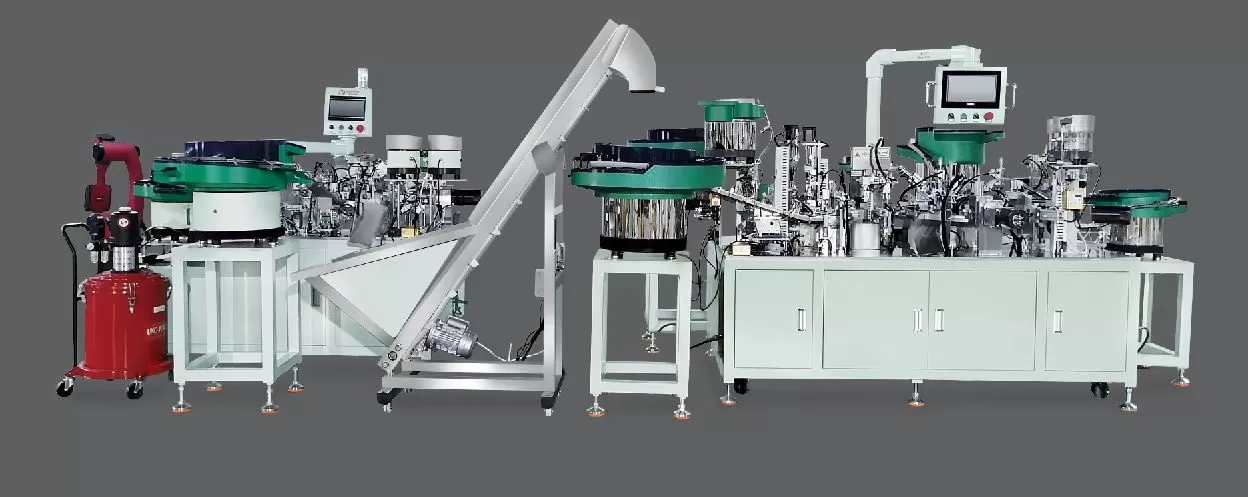
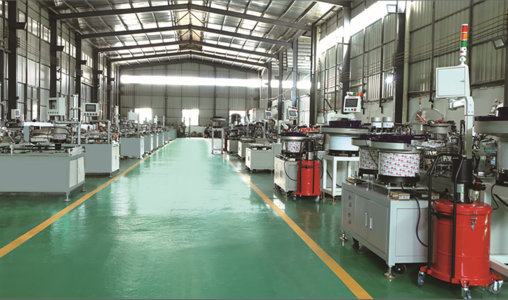
Sanyhore, a trusted provider of hinge assembly machines, telescopic drawer slide assembly machines, and roll forming machines, understands the critical role of efficient drawer slide production lines in modern manufacturing. This guide explores actionable strategies to optimize these lines, addressing challenges like material flow, automation, and quality control to boost output while maintaining precision.
Production Line Layout Optimization: A well-designed layout forms the foundation of an efficient production line. Manufacturers often overlook how spatial arrangement impacts workflow, leading to bottlenecks and increased material handling time. Sanyhore recommends a U-shaped layout for smaller lines, where raw materials enter one end and finished products exit the other, minimizing travel distance. For larger operations, a cellular layout groups similar tasks—such as hinge assembly or roll forming—together, reducing cross-departmental movement. By analyzing production flow data, including cycle times and operator movements, you can identify and eliminate dead zones, creating a more streamlined process.
Material Handling and Inventory Management: Efficient material handling is a cornerstone of production line optimization. Inefficient material flow can cause delays, as even a small hold-up in one stage disrupts the entire line. Sanyhore advises integrating automated conveyor systems and robotic arms to transport components between workstations, especially for heavy or frequently used materials like steel coils for slide rails. Additionally, real-time inventory tracking systems, paired with just-in-time (JIT) ordering, prevent overstocking and stockouts. By reducing material storage space and ensuring components are available when needed, manufacturers can cut inventory costs by up to 30% while maintaining production continuity.
Automation Integration for Repetitive Tasks: Automation is key to reducing manual labor and enhancing consistency. Repetitive tasks like hinge installation and slide rail assembly are ideal for automation. Sanyhore’s hinge assembly machine, for instance, uses precision grippers and vision systems to align and attach hinges with 99.5% accuracy, eliminating human error and increasing output by 40%. Similarly, our telescopic drawer slide assembly machine automates the insertion of ball bearings and clips, reducing cycle times from 45 seconds per unit to 15 seconds. By prioritizing automation for high-volume, repetitive tasks, manufacturers can reallocate labor to more strategic roles, such as quality inspection and process supervision.
Quality Control Systems: Maintaining consistent quality is non-negotiable in drawer slide production. Defective slides lead to customer complaints, warranty claims, and lost reputation. Sanyhore emphasizes implementing multi-layered quality control systems. Inline inspection tools, such as laser measuring devices and force testers, check dimensions and load capacity during production, flagging anomalies immediately. Statistical Process Control (SPC) software tracks key metrics like slide tension and alignment across shifts, enabling early detection of trends that could lead to quality issues. By integrating these systems with our production machines, you ensure every component meets strict standards before leaving the line.
Preventive Maintenance for Extended Equipment Lifespan: Equipment downtime is a major productivity killer, often caused by unplanned breakdowns. Sanyhore advocates for preventive maintenance programs tailored to each machine type. For roll forming machines, regular checks of tooling wear and alignment prevent premature damage to the forming dies, which can cause warped slide rails. Similarly, hinge assembly machines require lubrication of moving parts and calibration of torque settings to maintain consistent performance. By scheduling maintenance during low-production periods and using predictive analytics to identify potential issues, manufacturers can reduce unplanned downtime by 25% and extend machine lifespan by 15–20%.
Data-Driven Production: In today’s smart manufacturing landscape, data is a powerful tool for optimization. By installing sensors on production machines, you can collect real-time data on parameters like speed, temperature, and energy consumption. Analyzing this data reveals inefficiencies, such as a drop in roll forming machine speed due to material thickness variations, allowing for timely adjustments. Sanyhore’s production monitoring software aggregates this data, generating actionable insights like “adjust roll forming pressure by 5% to reduce cycle time by 2 seconds.” Over time, this data-driven approach leads to incremental improvements in efficiency and quality.
Future Trends in Drawer Slide Manufacturing: The industry is moving toward more sustainable and intelligent production lines. Eco-friendly materials, such as recycled steel for slide rails, are gaining traction, and Sanyhore is adapting its roll forming machines to handle these materials without compromising strength. Additionally, AI-driven predictive maintenance, where machines self-diagnose issues before they occur, is becoming mainstream. By partnering with Sanyhore, manufacturers can access cutting-edge technology that aligns with these trends, ensuring long-term competitiveness in the market.
Q1: What are the main steps to optimize a drawer slide production line?
A1: Start with layout analysis to streamline material flow, integrate automation (e.g., hinge assembly machines, telescopic drawer slide assembly machines) to reduce manual work, implement preventive maintenance for roll forming machines, and use data analytics to refine processes. Sanyhore’s team can guide you through each step.
Q2: How do roll forming machines improve production efficiency?
A2: Roll forming machines shape slide rails in a continuous process, reducing the need for multiple cutting and welding steps. Sanyhore’s machines offer high precision, consistent material thickness, and fast cycle times, which together increase output by 30%+ compared to traditional methods.
Q3: Can automation reduce production costs for drawer slides?
A3: Yes. By automating tasks like hinge assembly and slide rail insertion with Sanyhore’s machines, you cut labor costs by 40–50% and reduce rework due to human error. Automated systems also operate 24/7, maximizing machine utilization and lowering per-unit production costs.
Q4: How does Sanyhore support clients in optimizing their lines? A4: As a full-service manufacturer, Sanyhore provides end-to-end support, from initial layout design to machine installation and training. Our experts assess your current setup, recommend the right combination of hinge assembly machines, roll forming machines, and telescopic drawer slide assembly machines, and offer ongoing maintenance and upgrades.
Q5: What makes Sanyhore’s drawer slide production equipment stand out?
A5: Our machines are engineered for durability, precision, and adaptability. We prioritize compatibility with diverse production needs, ensuring seamless integration with existing lines. Plus, our focus on data-driven design means our equipment can be customized to optimize your specific production goals, whether it’s speed, quality, or sustainability.
For inquiries about optimizing your drawer slide production line, contact our sales manager at +86 13425506550 or email info@sanyhore.com to schedule a consultation.


