

.png)
In the world of furniture and storage systems, telescopic drawer slides stand as unsung heroes—enabling smooth, space-efficient operation while supporting heavy loads. Achieving their seamless functionality requires mastery of material science, mechanical design, and precision manufacturing. Sanyhore, a trusted name in assembly and forming technology, has dedicated years to refining the art of telescopic drawer slide formation. This guide distills our expertise, offering insights into the critical processes, components, and machinery that define flawless slide performance. Whether you’re a manufacturer optimizing production or a business owner seeking reliable components, understanding the formation of these slides is key to durability and customer satisfaction.
Understanding Telescopic Drawer Slide Mechanics
At the core of every high-quality telescopic drawer slide lies a balance of structural design and dynamic movement. These systems typically consist of multiple rails (inner, middle, outer) that interlock, allowing extension and retraction with minimal friction. The formation process begins with material selection—high-grade steel, aluminum alloys, or stainless steel—chosen for strength and flexibility. Proper material thickness and hardness are non-negotiable; too thin, and the slide risks bending under load; too thick, and smooth movement is compromised. Sanyhore’s engineering team emphasizes that the first step in flawless formation is aligning material properties with application demands, whether for light-duty home use or heavy-duty commercial storage.
Key Components of Flawless Slide Formation
A telescopic slide’s performance hinges on three critical components: the rails, ball bearings or rollers, and hinge assemblies. The rails, often formed via roll forming, must maintain consistent dimensions to ensure proper fit and movement. Ball bearings, when present, reduce friction, while hinge assemblies connect the rails, supporting weight and preventing misalignment. Sanyhore’s focus on precision starts with these components: our roll forming machines, for instance, use computerized controls to shape rails with tolerances as tight as 0.1mm, ensuring seamless interaction between parts. Even small deviations in rail thickness or hinge alignment can lead to jamming or premature wear, so each component undergoes rigorous quality checks before integration.
Sanyhore’s Roll Forming Technology: Precision in Motion
Roll forming is the backbone of telescopic drawer slide formation, as it transforms flat metal sheets into continuous, precisely shaped rails. Unlike traditional cutting and welding, roll forming uses a series of dies to gradually bend and shape the material, minimizing waste and enhancing structural integrity. At Sanyhore, our roll forming machines are engineered with modular tooling, allowing quick adjustments for different slide designs—from compact kitchen drawers to large industrial cabinets. The result is rails with uniform wall thickness, smooth surfaces, and consistent mechanical properties, all achieved at high production speeds without compromising quality. This technology ensures that every rail meets the exacting standards required for long-term, reliable performance.
Hinge Assembly Integration: The Foundation of Durability
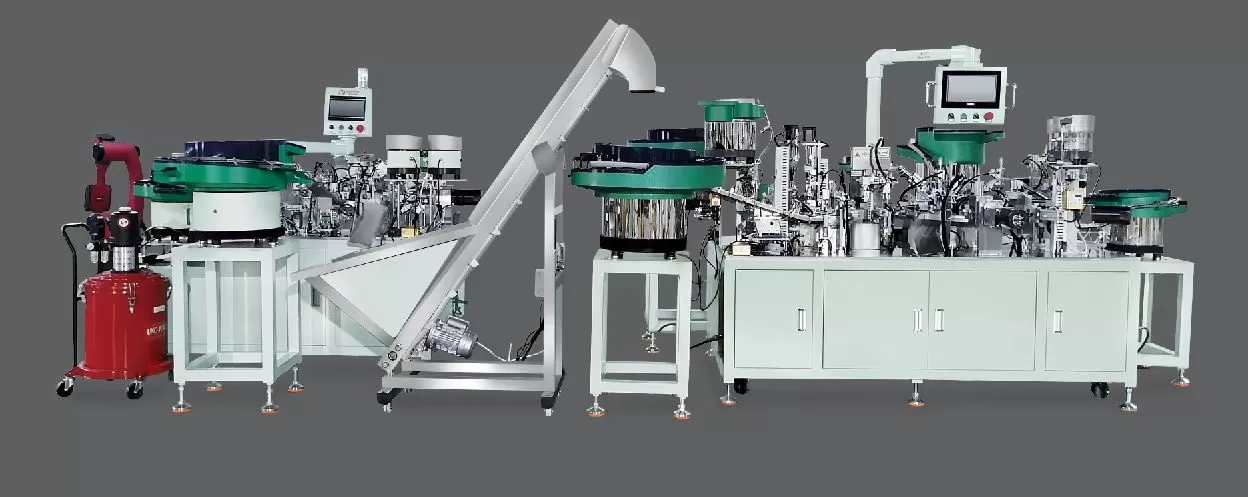
Hinge assemblies are the unsung architects of a slide’s durability. These small but critical parts connect the telescoping rails, allowing them to extend and retract while bearing weight. A poorly designed hinge can cause the slide to wobble, while a low-quality assembly may fail under repeated use. Sanyhore’s hinge assembly machines address this by combining precision engineering with automated quality control. Our systems feed rails into the assembly station, where hinges are inserted, crimped, or welded with pinpoint accuracy. By controlling variables like pressure, temperature, and alignment, we ensure hinges withstand 100,000+ cycles of use, a benchmark for commercial-grade slides. This integration of hinge assembly and rail formation in our machines eliminates manual errors, ensuring consistency across every unit produced.
Troubleshooting Common Slide Formation Issues
Even with advanced technology, challenges can arise during telescopic drawer slide formation. Common issues include uneven rail bending, misaligned hinge holes, or material springback (where formed parts return to their original shape). Sanyhore’s technical support team has developed strategies to resolve these: for uneven bending, our roll forming machines include adaptive die adjustments that account for material thickness variations. For hinge misalignment, we’ve integrated vision systems that check hole positions in real time, rejecting flawed parts before they proceed. By addressing these issues proactively, we help manufacturers reduce waste and maintain high production yields, ensuring that every slide leaving our partners’ facilities meets the mark.
Why Choose Sanyhore for Your Slide Manufacturing Needs
In a market flooded with generic machinery, Sanyhore stands out as a partner that understands your unique needs. As a manufacturer of hinge assembly machines, telescopic drawer slide assembly machines, and roll forming machines, we don’t just sell equipment—we provide solutions tailored to your production goals. Our commitment to innovation means our machines are built with the latest sensors, software, and materials, ensuring precision and efficiency. Whether you’re scaling up production or upgrading outdated systems, we work closely with you to optimize your process, from design to final assembly. When you choose Sanyhore, you gain access to decades of expertise, reliable machinery, and dedicated support to keep your operations running smoothly.
For inquiries about our hinge assembly machines, telescopic drawer slide assembly machines, or roll forming machines, contact our team directly at +86 13425506550 or via email at info@sanyhore.com. Let us help you form the flawless slides that set your products apart.


