

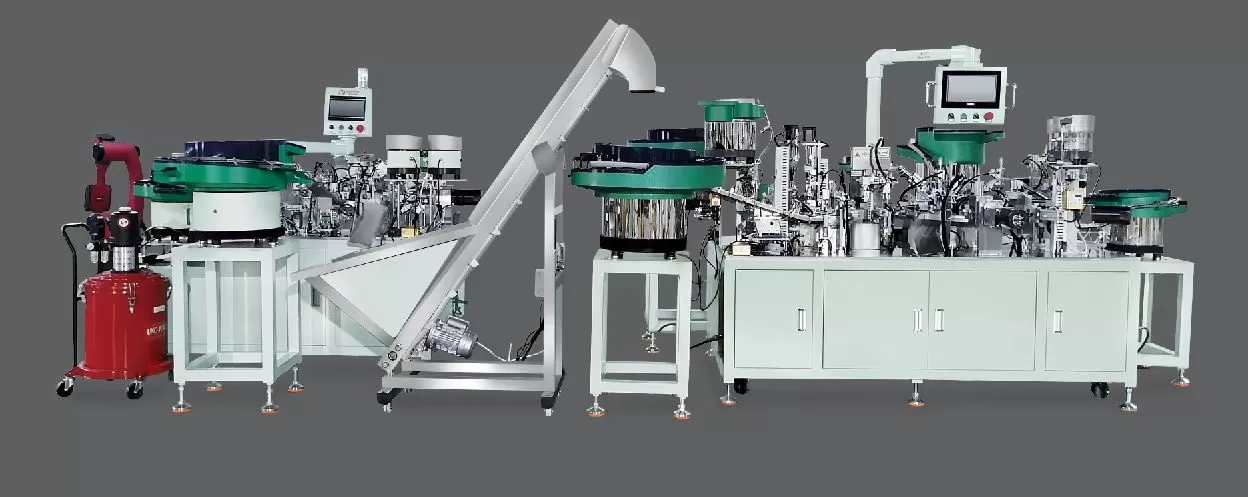
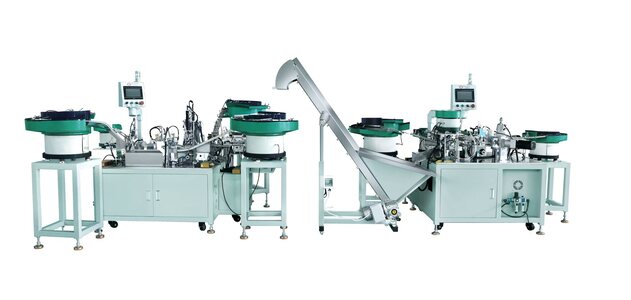
In the competitive landscape of manufacturing, the choice between manual and automated assembly processes significantly impacts operational success. For hinge production, the debate between fully automatic hinge assemblers and traditional manual machines has become increasingly critical, as businesses seek to balance efficiency, quality, and cost-effectiveness. This article delves into a detailed comparison of these two approaches, highlighting the key advantages of Sanyhore’s fully automatic hinge assemblers and how they outperform manual alternatives in various aspects of production.
Efficiency and Production Capacity
Automation has revolutionized hinge assembly by eliminating the bottleneck of human limitations. Sanyhore’s fully automatic hinge assemblers, for instance, operate at speeds of up to 200 hinges per minute, with continuous production runs that can last for hours without manual intervention. This contrasts sharply with manual machines, which rely on human operators working in shifts, typically yielding only 10–15 hinges per hour. The lack of automation also means manual lines face frequent interruptions—whether due to operator fatigue, breaks, or skill gaps—resulting in lower overall output. For high-volume production, the automatic assembler’s consistent, high-speed output directly translates to increased order fulfillment and market responsiveness, a critical edge in today’s fast-paced manufacturing environment.
Precision and Quality Control
Consistency is non-negotiable in hinge assembly, where even minor misalignments can compromise product performance or safety. Sanyhore’s fully automatic machines leverage advanced servo-motor technology and computerized controls, achieving a repeat positioning accuracy of ±0.02mm. This precision ensures every hinge meets strict industry tolerances, reducing defects and rework. In contrast, manual assembly is highly dependent on operator skill and focus, leading to inevitable inconsistencies. A single misaligned pin or loosely fitted component can slip through manual checks, resulting in higher scrap rates and customer complaints. For businesses prioritizing product reliability, the automatic assembler’s ability to maintain tight quality standards minimizes waste and strengthens brand reputation.
Operational Costs Over Time
While manual machines may require lower initial investment, their long-term operational costs often outweigh this advantage. Labor expenses represent the largest cost difference: a manual hinge assembly line with 3–5 operators incurs monthly salaries, benefits, and training costs that far exceed the maintenance and utility fees of an automatic system. Additionally, manual processes use more raw materials and tools—operators often over-tighten screws or misfeed components, increasing material waste. Sanyhore’s automatic assemblers, designed with integrated material handling and tooling, reduce scrap rates by up to 40% and lower energy consumption by 30% compared to manual setups. Over a 3–5 year period, these savings typically offset the higher upfront cost of automation, making it a more economical choice for growing businesses.
Operator Requirements and Workforce Management
The skill level and availability of operators significantly influence production stability. Manual hinge assembly demands extensive training—new operators often take 2–3 months to reach peak efficiency, and retaining experienced staff requires competitive compensation. This instability can disrupt production schedules, especially in regions with tight labor markets. Sanyhore’s fully automatic machines, however, require minimal operator input: staff only need basic training to load materials and monitor the system, with built-in diagnostics that alert operators to issues before they escalate. This reduces reliance on specialized labor, lowers turnover risks, and allows businesses to redeploy skilled workers to more value-added tasks, such as quality control or process improvement.
Long-Term Investment and Competitive Edge
Investing in Sanyhore’s fully automatic hinge assemblers is not just about cost savings—it’s about securing a competitive advantage. Modern automatic systems are designed for scalability, with modular components that can be expanded to meet growing demand. They also integrate seamlessly with Industry 4.0 technologies, such as IoT sensors and data analytics, enabling real-time production monitoring and predictive maintenance. For businesses looking to future-proof their operations, this adaptability is invaluable. In contrast, manual machines become increasingly inefficient as production demands rise, forcing businesses to either invest in additional manual labor (driving up costs) or risk losing market share to more automated competitors.
For businesses aiming to enhance productivity, reduce costs, and ensure consistent quality, Sanyhore’s fully automatic hinge assemblers offer a superior solution. As a leading manufacturer of hinge assembly machines, telescopic drawer slide assembly machines, and roll forming machines, we combine cutting-edge technology with years of industry expertise to deliver equipment that meets the demands of modern production lines. Contact Sanyhore today to discuss your specific needs and discover how our machinery can drive your manufacturing success. Reach out via phone at +86 13425506550 or email at info@sanyhore.com for personalized consultation.


