

[TDK:
标题:Remote Monitoring Process for Jieyang Hinge Automatic Assembly Machine
关键词:Remote Monitoring Process, Jieyang Hinge Automatic Assembly Machine, Hinge Assembly Automation, Manufacturing Remote Monitoring, Sanyhore Hinge Machine
描述:Optimize manufacturing with remote monitoring for Jieyang Hinge Automatic Assembly Machine. Sanyhore offers reliable hinge assembly machines with real-time monitoring. Contact +86 13425506550.
In today’s fast-paced manufacturing landscape, the demand for efficient, reliable, and data-driven operations has never been higher. For manufacturers specializing in hinge production, the integration of automatic assembly machines has already transformed production lines, reducing manual errors and boosting throughput. However, the next frontier in operational excellence lies in remote monitoring—a technology that extends control and visibility beyond the factory floor. This article explores the remote monitoring process for Jieyang Hinge Automatic Assembly Machines, highlighting its technical components, implementation steps, and the tangible benefits it brings to modern manufacturing setups.
The Core of Hinge Automatic Assembly: Precision and Efficiency
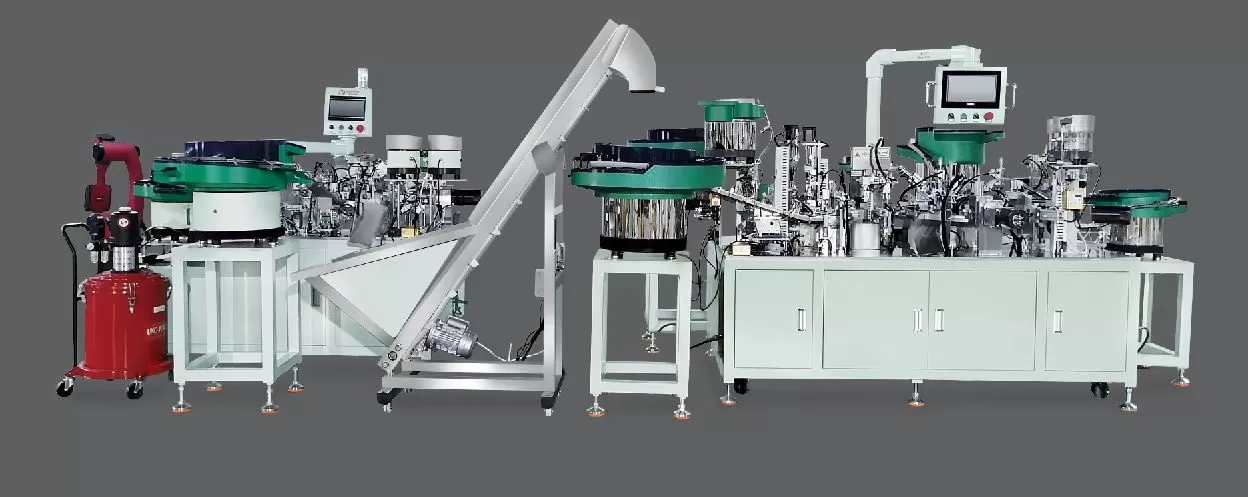
Jieyang Hinge Automatic Assembly Machines are engineered to handle the intricate demands of hinge production, from material feeding and component alignment to final quality checks. These systems typically integrate advanced servo motors, precision sensors, and computerized control units, ensuring each hinge meets strict dimensional and performance standards. However, even the most advanced machines require oversight to maintain optimal performance. Traditional monitoring methods, relying on periodic manual checks, often lead to delayed issue detection, increased downtime, and inefficient resource allocation. This is where remote monitoring emerges as a critical solution, bridging the gap between real-time operational data and centralized control.
The Evolution of Remote Monitoring in Manufacturing
Remote monitoring, at its core, leverages Internet of Things (IoT) technology to connect machines to a centralized platform, enabling real-time data collection, analysis, and remote intervention. Over the past decade, this technology has evolved from simple status tracking to comprehensive predictive maintenance and performance optimization. For hinge assembly machines, this means manufacturers can now monitor production metrics, detect anomalies, and troubleshoot issues without being on-site. The shift from reactive to proactive management has become a key differentiator for manufacturers aiming to stay competitive, especially in regions like Jieyang where precision and consistency are paramount in hinge manufacturing.
Key Components of the Remote Monitoring Process
A robust remote monitoring process for hinge automatic assembly machines involves several interconnected components working in harmony. First, sensor integration is essential. High-precision sensors installed on the machine collect data points such as operational speed, temperature, vibration levels, and component positioning. These sensors, often based on MEMS (Micro-Electro-Mechanical Systems) technology, provide granular insights into machine health and production efficiency.
Next, data transmission ensures this information reaches the monitoring platform. Using industrial-grade communication protocols—such as Modbus, Profinet, or LoRaWAN—data is transmitted securely over local networks or the cloud. Edge computing capabilities at the machine level further enhance efficiency by processing critical data in real time, reducing latency and minimizing bandwidth usage.
The cloud-based monitoring platform serves as the central hub, aggregating, storing, and visualizing the collected data. Customizable dashboards allow operators to track key performance indicators (KPIs) like production rate, defect rate, and machine uptime. Advanced analytics tools, including machine learning algorithms, then analyze this data to identify patterns, predict potential failures, and suggest optimization strategies.
Finally, user interface and alert systems ensure timely action. Operators receive instant notifications via email, SMS, or app alerts when deviations from normal operating parameters occur. This enables rapid response, whether through remote adjustments to the machine’s settings or scheduling on-site maintenance before a minor issue escalates into a major breakdown.
Implementation Steps for Integrating Remote Monitoring
Integrating remote monitoring into a Jieyang Hinge Automatic Assembly Machine involves a structured approach to ensure seamless integration and maximum ROI. The first step is needs assessment, where manufacturers identify specific goals—whether reducing downtime, improving product quality, or optimizing resource usage. This helps define the scope of monitoring, including which KPIs to track and which alerts to prioritize.
Next, hardware selection and installation. Compatibility is key here; the monitoring system must work with the machine’s existing control system. Sanyhore, a leading manufacturer of hinge assembly machines, ensures its automatic assembly systems are designed with modular remote monitoring interfaces, simplifying integration with third-party or custom monitoring platforms. Once sensors and communication modules are installed, rigorous testing verifies data accuracy and transmission reliability.
Platform configuration follows, where the cloud platform is set up with the machine’s specifications, KPIs, and alert thresholds. Operators are then trained on using the platform to interpret data, respond to alerts, and leverage insights for continuous improvement. Sanyhore provides comprehensive training and support to ensure users can fully utilize the remote monitoring capabilities of its machines.
Benefits of Remote Monitoring for Hinge Assembly Lines
The implementation of remote monitoring delivers multifaceted benefits that extend beyond basic oversight. For manufacturers, real-time visibility into machine performance enables proactive decision-making. For example, if a sensor detects unusual vibration patterns, the system can trigger an alert before excessive wear damages critical components, reducing unplanned downtime by up to 30% in some cases.
Data-driven optimization is another key advantage. By analyzing trends in production data, manufacturers can identify bottlenecks, adjust assembly parameters, or optimize material usage, leading to a 15-20% increase in production efficiency. Additionally, remote monitoring reduces the need for on-site inspections, cutting operational costs associated with travel and labor.
For manufacturers in Jieyang, where hinge production often caters to diverse industries—from furniture to automotive—remote monitoring ensures consistent product quality across multiple production runs, enhancing customer trust and loyalty.
Partner with Sanyhore for Advanced Hinge Assembly Solutions
At Sanyhore, we specialize in designing and manufacturing hinge automatic assembly machines, telescopic drawer slide assembly machines, and roll forming machines tailored to meet the unique needs of modern manufacturers. Our machines are engineered with built-in remote monitoring capabilities, ensuring seamless integration with industry-standard IoT platforms and providing real-time insights into production performance.
Whether you’re looking to upgrade an existing production line or set up a new facility, our team of experts can guide you through the remote monitoring implementation process, ensuring your machines deliver optimal efficiency and reliability. To learn more about how our hinge automatic assembly machines and remote monitoring solutions can transform your manufacturing operations, contact our sales manager at +86 13425506550 or email info@sanyhore.com. We’re committed to providing tailored solutions that drive growth and operational excellence for your business.


