
In the fast-paced landscape of modern manufacturing, the balance between productivity and personnel well-being has never been more critical. As production lines grow more complex, integrating advanced automation and high-speed processes introduces new operational risks. This shift underscores the rise of "Protected Operations"—a paradigm where safety-conscious design is not an afterthought but the cornerstone of every manufacturing system. By embedding safety principles into the core of equipment engineering, manufacturers can mitigate hazards, reduce downtime, and foster a culture of operational resilience.
1. The Imperative of Safety-Conscious Design
The modern manufacturing environment demands more than basic compliance with safety regulations. Today’s facilities operate with tighter timelines, higher component precision, and increased reliance on human-machine collaboration. Even minor design oversights—such as inadequate guardrails, unergonomic interfaces, or delayed emergency response systems—can lead to catastrophic incidents, including injuries, equipment damage, and production halts. According to industry data, 60% of manufacturing accidents stem from design flaws rather than operator error, highlighting the need for proactive, design-led safety solutions. Safety-conscious design transforms these risks into controlled, predictable outcomes by anticipating human behavior, system limitations, and environmental variables.
2. Key Principles Shaping Protected Operations
Effective protected operations hinge on a set of foundational design principles. First, risk assessment must be iterative, not static: engineers must conduct continuous hazard analysis throughout the product lifecycle, from prototype testing to field deployment. This ensures emerging risks—such as new component materials or changing operational workflows—are addressed before they compromise safety. Second, redundancy and fail-safety systems are non-negotiable. Critical components, like drive mechanisms or locking systems, should include backup functions to prevent failure cascades. For instance, emergency stop buttons integrated with machine vision can detect operator presence and immediately halt motion, while redundant power supplies ensure systems remain operational during power fluctuations.
3. Technological Enablers for Safer Systems
Advancements in sensor technology, AI, and the Industrial Internet of Things (IIoT) have revolutionized safety-conscious design. Machine vision systems, for example, use cameras and deep learning algorithms to monitor operator movements, identifying pinch points or improper positioning in real time. IoT-connected devices enable remote monitoring of safety metrics, such as temperature, pressure, and component wear, allowing predictive maintenance before anomalies escalate. Modular design further enhances adaptability: components like guardrails or access panels can be reconfigured to accommodate new product lines without sacrificing safety standards, reducing redesign costs and time-to-market.
4. Sanyhore: Engineering Safety into Assembly Solutions
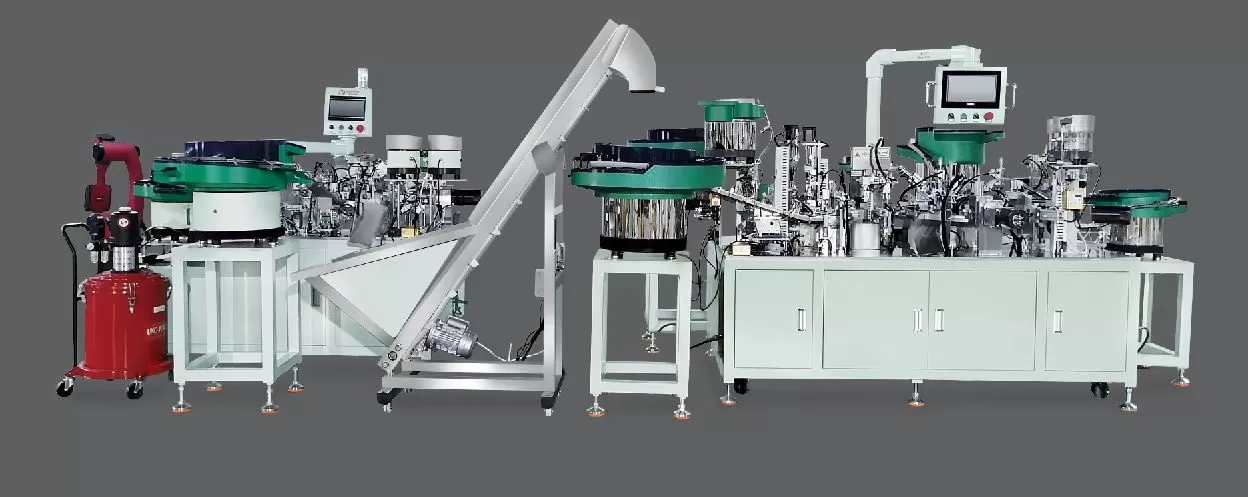
At Sanyhore, we specialize in designing and manufacturing hinge assembly machines, telescopic drawer slide assembly machines, and roll forming machines that embody these safety principles. Our hinge assembly machines, for instance, integrate anti-pinch mechanisms and fail-safe locking systems, minimizing human error risks during component insertion and alignment. Telescopic drawer slide assembly machines feature adaptive control systems that adjust for material variations, preventing jams and reducing operator intervention. Even in roll forming processes, where high forces and tight tolerances are common, our machines include real-time stress monitoring to prevent overloading and ensure consistent, safe material deformation.
5. Beyond Compliance: The Business Case for Safety
While regulatory compliance is a baseline, safety-conscious design delivers tangible business benefits. Reduced accident rates directly lower insurance premiums and workers’ compensation costs, while fewer production halts improve overall equipment effectiveness (OEE). A 2023 study by the Manufacturing Institute found that companies with robust safety cultures achieve 25% higher productivity than those with reactive approaches. Sanyhore’s commitment to safety extends beyond equipment—we work with clients to optimize their entire operational workflows, ensuring that assembly systems align with their specific safety goals, from basic compliance to advanced risk mitigation.
In the competitive landscape of modern manufacturing, protected operations are no longer a luxury but a necessity. By prioritizing safety-conscious design, manufacturers can create systems that protect personnel, enhance efficiency, and drive long-term success. At Sanyhore, our hinge assembly machines, slide assembly machines, and roll forming machines are engineered to deliver this balance, with safety integrated at every stage of production. To learn how we can help your facility achieve protected operations, contact us today: +86 13425506550 or via email at info@sanyhore.com.


