

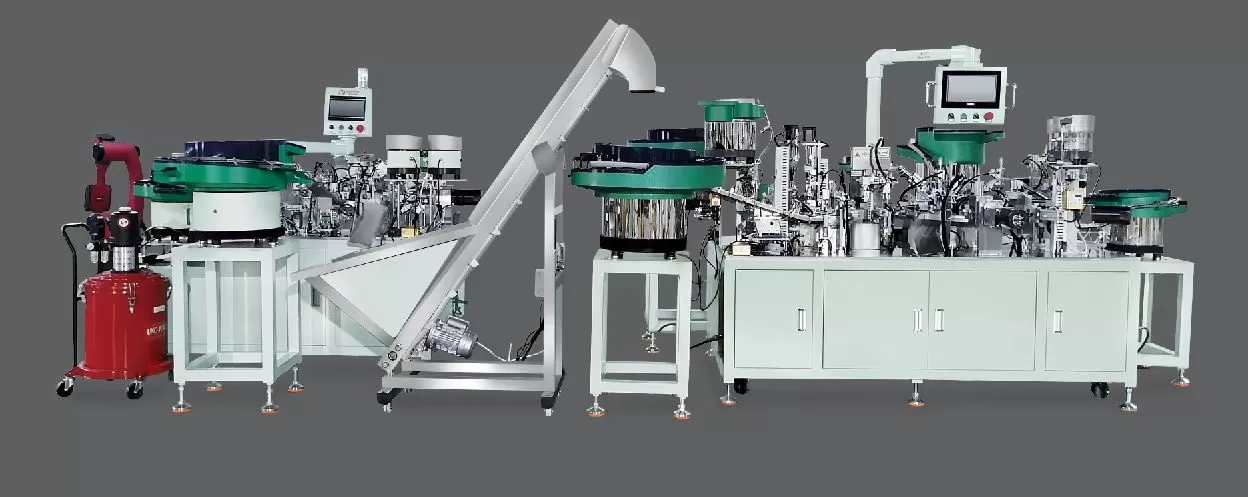
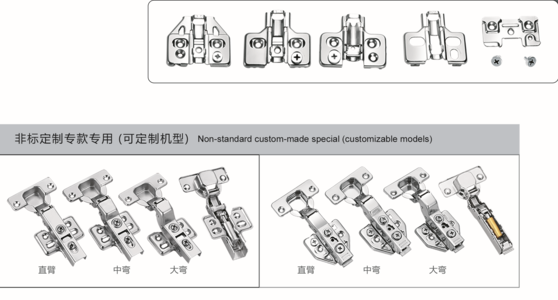
The production line process flow of Jieyang hinge automatic assembly machine is a sophisticated integration of automated systems and precision engineering, designed to streamline hinge manufacturing and enhance production efficiency. This systematic workflow, developed by Sanyhore – a professional manufacturer specializing in hinge assembly machines, telescopic drawer slide assembly machines, and roll forming machines – ensures consistent quality and reduced labor dependency, making it ideal for modern hinge production facilities in Jieyang.
1. Raw Material Handling and Preparation
The first stage begins with raw material handling and preparation. High-quality metal sheets or rods, the primary components for hinges, are first inspected for material thickness, surface finish, and chemical composition. These materials are then transported to a cutting or stamping station, where precise machinery cuts them into semi-finished parts, such as hinge bases, leaves, and pins, according to predefined design specifications. The cut components are then cleaned to remove debris, ensuring a clean surface for subsequent assembly steps.
2. Component Feeding and Sorting
Next, component feeding and sorting take place. Semi-finished parts from the preparation stage are automatically fed into a feeding system, typically consisting of vibratory bowls or belt conveyors. These systems use vibration and guiding mechanisms to orient parts correctly, ensuring that each hinge component (e.g., the main body, spring, and pin) is positioned with the right orientation for the assembly process. A sorting mechanism, often equipped with optical sensors, separates and directs components to their respective assembly stations, minimizing errors and ensuring a continuous supply.
3. Precision Positioning and Alignment
Precision positioning and alignment are critical to the assembly process. Each component is then moved to an alignment station, where advanced vision systems and servo-electric manipulators work together to position parts with micron-level accuracy. For instance, the hinge base and leaf are placed on a fixture, and laser sensors verify their positions to ensure they are centered and aligned. This step is essential to prevent misalignment issues that could affect the hinge’s functionality, such as uneven closure or reduced durability.
4. Automated Assembly and Joining
The core assembly and joining stage follows. Using a combination of robotic arms and specialized tools, the machine performs the key joining operations. Robotic grippers pick up components from the alignment station and place them into a joining mechanism, which may include ultrasonic welding, press fitting, or bolt tightening, depending on the hinge type. For example, the spring and pin are inserted into pre-drilled holes in the hinge base, and a press-fit operation ensures a secure, non-slip connection. The assembly unit, designed with adjustable parameters, can adapt to different hinge sizes and designs, enhancing production flexibility.
5. Quality Inspection and Testing
After assembly, each hinge undergoes rigorous quality inspection and testing. Automated inspection systems check critical dimensions, such as hinge gap, thickness, and hole alignment, using coordinate measuring machines (CMMs) or laser scanners. Additionally, functional tests are performed, including cycle testing to verify the hinge’s ability to open and close smoothly over repeated operations, and load testing to ensure it can withstand specified weight capacities. Any hinges failing these tests are automatically rejected and diverted to a waste collection system, ensuring only qualified products proceed to the next stage.
6. Finishing and Packaging
The final stage involves finishing and packaging. Hinges that pass inspection are moved to a finishing station for surface treatment, such as polishing, coating, or plating, to enhance appearance and corrosion resistance. Once finished, the hinges are sorted by type or batch, placed into protective packaging (e.g., blister packs or cartons), and labeled with product information, including model numbers and batch codes. This packaged product is then ready for storage or shipment to customers.
At Sanyhore, we take pride in engineering hinge assembly machines that not only optimize production processes but also deliver reliable, high-performance equipment. Whether you need a custom solution for your Jieyang hinge production line or standard automatic assembly machines, our team is dedicated to meeting your specific requirements. To learn more about our hinge assembly machines, telescopic drawer slide assembly machines, or roll forming machines, contact our sales manager at +86 13425506550 or send an email to info@sanyhore.com today.


