

.png)
TDK(放在聊天区):
标题:Enhancing Efficiency and Precision: Production Cycle Control in Jieyang Hinge Automatic Assembly Machines
关键词:hinge automatic assembly machine, production cycle control, Jieyang hinge assembly, assembly line optimization, precision manufacturing
描述:Discover how production cycle control optimizes Jieyang hinge automatic assembly machines, boosting efficiency and precision for modern manufacturing processes.
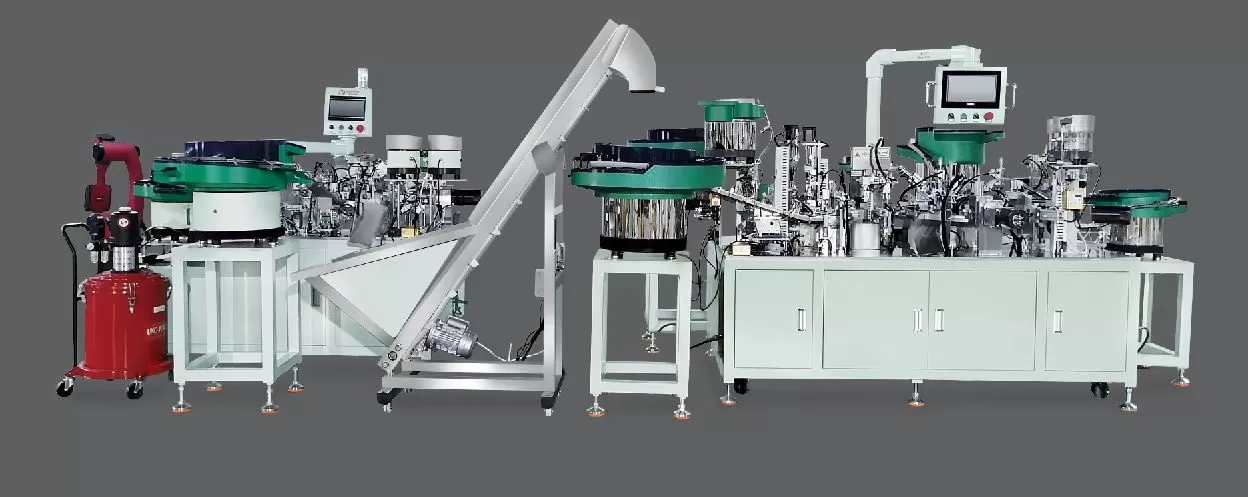
In the dynamic landscape of modern manufacturing, the demand for efficient, precise, and cost-effective production processes has never been higher. For manufacturers specializing in hinge components, the Jieyang hinge automatic assembly machine has emerged as a critical asset, streamlining the assembly workflow. However, to fully leverage its potential, production cycle control— a systematic approach to managing the sequence of operations from raw material intake to final product delivery— becomes indispensable. This article explores the fundamentals, key influences, and practical strategies for optimizing production cycle control in hinge automatic assembly, with insights tailored for manufacturers seeking to enhance productivity and quality.
Cycle Control Fundamentals: Understanding the Core of Hinge Assembly Cycles
At its core, production cycle control for hinge automatic assembly machines revolves around defining, measuring, and minimizing the total time required to complete one full assembly cycle. A typical cycle includes several interconnected stages: material feeding, component positioning, joining (e.g., riveting, welding), quality inspection, and packaging. Each stage contributes to the overall cycle time, and disruptions in any phase can lead to delays, inefficiencies, or even product defects. For instance, a misaligned feeding mechanism might cause material jams, halting the cycle until resolved. Sanyhore, a leading manufacturer of hinge assembly machines, emphasizes that precise cycle control begins with mapping these stages and establishing baseline metrics to identify bottlenecks.
Key Factors Influencing Cycle Time in Automatic Hinge Assembly
Several factors directly impact the efficiency of production cycles in hinge automatic assembly machines. First, equipment precision is critical. Even minor misalignments in robotic arms or tooling can extend cycle times as the machine adjusts for errors. Sanyhore’s machines are engineered with high-precision servo systems and adaptive tooling to minimize such adjustments, ensuring consistent cycle times. Second, material supply and handling play a role. If raw materials (e.g., metal sheets, pins, or fasteners) are not delivered in a timely, organized manner, the assembly line may idle, increasing downtime. Sanyhore addresses this by integrating automated material storage and feeding systems, reducing dependency on manual intervention.
Integration of Smart Technologies: Elevating Cycle Control Capabilities
Modern hinge automatic assembly machines increasingly incorporate smart technologies to enhance cycle control. Sensors, for example, continuously monitor process parameters—such as temperature during welding or pressure during riveting—providing real-time data to adjust operations dynamically. Programmable Logic Controllers (PLCs) and Industrial Internet of Things (IIoT) platforms further enable remote monitoring, allowing operators to identify and resolve issues before they escalate. Sanyhore’s machines, for instance, feature a built-in analytics dashboard that tracks cycle times, identifies trends, and suggests optimizations, such as adjusting tool speeds or resequencing workflow stages to reduce idle time.
Implementation Strategies: From Baseline to Optimization
Implementing effective production cycle control requires a structured approach. First, manufacturers should conduct a comprehensive audit of existing workflows to map current cycle times and identify inefficiencies. This audit might reveal that a specific inspection step, once considered necessary, is overly time-consuming and can be streamlined with faster, non-destructive testing methods. Second, training operators to recognize and respond to cycle disruptions—such as jams or tool wear—ensures quick recovery. Sanyhore supports this by providing detailed operator manuals and on-site training sessions, ensuring that teams understand how to monitor and adjust cycle control settings.
Benefits of Optimized Production Cycle Control for Hinge Assembly
The payoff of effective cycle control is substantial. By reducing cycle times, manufacturers can increase output without scaling up production capacity, directly lowering per-unit costs. Improved consistency in cycle times also translates to higher product quality, as fewer variables (e.g., inconsistent joining force) lead to fewer defects. Additionally, optimized cycles enhance flexibility, allowing manufacturers to adapt quickly to changing order demands or design modifications. For example, if a new hinge model requires a slight adjustment to the assembly process, a well-controlled cycle system can accommodate this change with minimal downtime.
For manufacturers seeking to enhance their hinge automatic assembly processes, Sanyhore offers tailored solutions designed to optimize production cycle control. As a professional provider of hinge assembly machines, telescopic drawer slide assembly machines, and roll forming machines, Sanyhore combines technical expertise with a focus on practical, results-driven manufacturing. To learn more about how our machines can transform your production cycles, contact Sanyhore at +86 13425506550 or via email at info@sanyhore.com.


