

 - 副本.png)
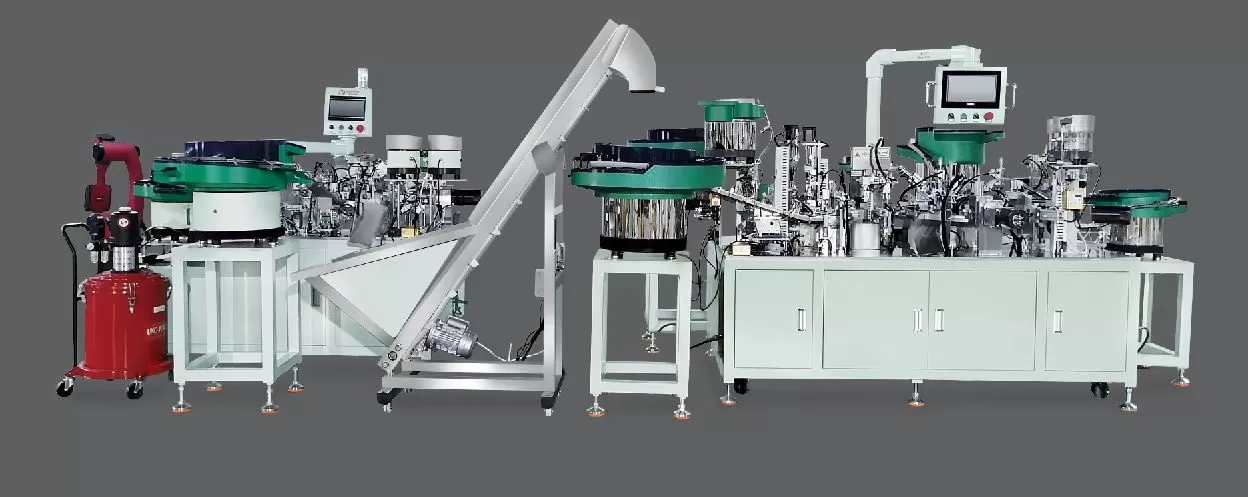
In the manufacturing sector, the performance of automatic assembly machines directly impacts production efficiency and product quality. For hinge production, especially in regions like Jieyang where the industry thrives, precise parameter settings for automatic assembly machines are critical to achieving consistent results. This article explores the essential process parameter settings for Jieyang hinge automatic assembly machines, offering insights into optimization strategies that enhance productivity and reduce operational costs. By understanding and adjusting key parameters, manufacturers can ensure stable machine operation, minimize defects, and meet tight production schedules.
Key Process Parameters for Hinge Assembly
Hinge automatic assembly machines rely on several core parameters to function optimally. The primary ones include pressure, assembly speed, positional accuracy, temperature (for thermoplastic components), and material tolerance. Each parameter plays a specific role in the assembly process:
- Pressure: Determines the tightness of component connections. Insufficient pressure may result in loose joints, while excessive pressure can damage delicate parts like hinge pins or plates.
- Assembly Speed: Influences production throughput. Faster speeds may compromise precision, leading to misaligned parts, whereas slower speeds can reduce efficiency, delaying output targets.
- Positional Accuracy: Ensures components are correctly aligned before joining. Deviations here can cause functional issues, such as hinges that do not open/close smoothly.
- Temperature: Critical for processes involving welding or bonding, especially with materials like stainless steel or brass. Incorrect temperatures may weaken bonds or cause material deformation.
- Material Tolerance: Accounts for variations in component dimensions. Proper tolerance settings prevent jams and ensure parts fit together seamlessly.
Systematic Optimization of Parameter Variables
Optimizing these parameters requires a systematic approach rather than trial-and-error. Manufacturers should start by referencing the machine’s user manual, which often provides baseline values for different hinge types. However, adjustments may be necessary based on specific product requirements:
1. Product Specification Analysis: Review the hinge design, including dimensions, material type, and load capacity. Heavier or larger hinges may require higher pressure and slower speeds.
2. Production Target Alignment: Balance speed and precision based on daily output goals. For high-volume production, prioritize stable speed settings with minimal adjustments, while maintaining quality checks.
3. Data Collection and Monitoring: Use sensors to track machine performance during operation. Collect data on defect rates, assembly time, and component wear to identify parameter-related issues.
4. Iterative Testing: Conduct small-batch trials with adjusted parameters. Compare results against quality standards, such as tensile strength or movement resistance, to refine settings.
Step-by-Step Implementation for Parameter Calibration
Implementing parameter settings effectively involves a structured workflow:
1. Initial Setup: Begin with baseline parameter values from the machine’s manual. Ensure the machine is calibrated for the specific hinge model, considering material characteristics (e.g., thickness, hardness).
2. Low-Volume Testing: Run a short production run (10–20 units) with the initial settings. Inspect all parts for defects, such as misalignment or cracked joints.
3. Incremental Adjustment: Modify one parameter at a time (e.g., increase pressure by 5% or slow speed by 10%) and test again. This isolates the impact of each adjustment.
4. Quality Verification: After adjustments, verify the hinges meet all functional and dimensional requirements (e.g., smooth movement, secure pin placement). Document the final parameter values for future reference.
5. Documentation and Training: Record the optimized parameter settings in a clear manual. Train operators to follow these settings consistently to maintain results.
Operational Benefits of Optimized Parameters
Properly configured parameters deliver tangible benefits to hinge assembly operations:
- Enhanced Efficiency: Reduced downtime from misalignment or jams, along with minimized rework, directly improves overall equipment effectiveness (OEE).
- Cost Reduction: Lower defect rates decrease material waste and scrap, while stable operation minimizes maintenance needs, extending machine lifespan.
- Consistent Quality: Standardized parameter settings ensure each hinge meets the same high-quality standards, eliminating variability in product performance.
- Scalability: With well-documented parameters, manufacturers can quickly adapt the machine to new hinge designs or production demands.
Partner with Sanyhore for Hinge Assembly Excellence
As a professional manufacturer of hinge assembly machines, telescopic drawer slide assembly machines, and roll forming machines, Sanyhore is dedicated to equipping producers with reliable, high-performance equipment. Our automatic hinge assembly machines are designed to integrate seamlessly with optimized parameter settings, ensuring consistent results even under varying production conditions. We understand that every manufacturer has unique requirements, and our team works closely with clients to tailor machines and parameter guidance to their specific needs.
To learn how Sanyhore’s hinge assembly machines and parameter optimization support can elevate your production line, contact our sales manager today. Reach out at +86 13425506550 or send an email to info@sanyhore.com. Our experts are ready to provide personalized solutions and help you achieve optimal performance for your Jieyang hinge production.


