

 - 副本.png)
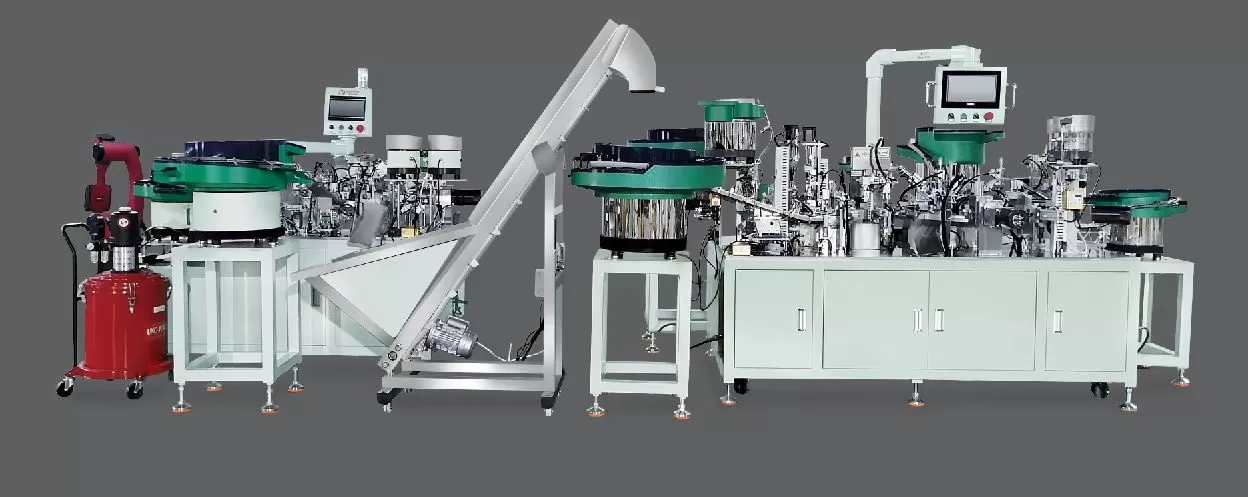
The automatic assembly machine for hinges in Jieyang has become a cornerstone in modern manufacturing, enabling high-volume production with consistent quality. However, even with advanced machinery, process inefficiencies can arise due to improper setup, suboptimal component handling, or inadequate maintenance. This article outlines actionable process optimization recommendations tailored for Jieyang hinge automatic assembly machines, focusing on enhancing efficiency, reducing downtime, and improving product consistency. By implementing these strategies, manufacturers can maximize the performance of their assembly systems while aligning with industry standards for precision and productivity.
Enhancing Initial Setup and Parameter Calibration
Proper initial setup is critical to the long-term performance of any automatic assembly machine. A misaligned parameter configuration, such as incorrect speed settings, sensor thresholds, or material tolerance adjustments, can lead to frequent jams, component misalignment, or inconsistent assembly results. For Jieyang hinge automatic assembly machines, the first optimization step involves thorough parameter calibration. This includes aligning proximity sensors to accurately detect component presence, adjusting the feeding system to match the dimensional specifications of hinge parts, and setting the assembly pressure and torque parameters based on material hardness (e.g., stainless steel vs. brass). Additionally, conducting a pre-production test run with sample components to validate each parameter ensures that the machine operates within the optimal range, minimizing the risk of errors during full production runs.
Streamlining Component Handling and Feeding Systems
The reliability of the entire assembly process often hinges on the efficiency of component handling. In many cases, bottlenecks in the feeding system—such as unstable component orientation, material jamming, or inconsistent delivery speed—can significantly reduce overall machine uptime. For Jieyang hinge automatic assembly machines, optimizing the feeding system involves selecting or modifying vibration feeders with appropriately sized bowls to prevent component damage and ensure correct orientation. Integrating a secondary alignment mechanism, such as a guide rail or air jets, can further refine component positioning before they enter the assembly station. Regular inspection of feed tracks and adjustment of material guides ensure that each hinge part is delivered to the assembly point with consistent precision, reducing the likelihood of downstream errors and improving throughput.
Implementing Real-Time Quality Monitoring and Feedback Loops
Incorporating real-time quality monitoring is essential to identifying and addressing issues before they escalate into mass production defects. For automatic assembly machines, integrating a visual inspection system with machine vision technology allows continuous checks of critical assembly features, such as hinge pin insertion depth, fastener tightness, and surface finish. These systems, when paired with a feedback loop, can automatically stop the machine or trigger alerts if a defect is detected, preventing the production of non-conforming units. Additionally, logging real-time data on assembly times, defect rates, and machine status provides insights into recurring issues, enabling data-driven decisions for further optimization—for example, adjusting tooling or modifying assembly sequences to eliminate specific defects.
Optimizing Assembly Sequence and Tooling Design
The assembly sequence directly impacts the efficiency and accuracy of the process. For hinge assembly, the order in which components are positioned and joined can affect both cycle time and the stability of the final product. By analyzing the assembly workflow, engineers can identify redundant steps or steps that require excessive repositioning. For instance, integrating a pre-assembly station where hinge halves are partially aligned before entering the main assembly mechanism can reduce the load on the primary assembly tools, extending their lifespan and improving precision. Similarly, investing in custom-designed tooling—such as adaptive grippers, precision alignment fixtures, or specialized welding nozzles—tailored to the specific hinge geometry ensures that each joint or fastener is applied with consistent force and accuracy, minimizing variability in the final product.
Integrating Predictive Maintenance for Reduced Downtime
Mechanical wear and tear is a common cause of unexpected downtime in automatic assembly machines. Implementing a predictive maintenance program based on sensor data can help manufacturers proactively address potential issues, reducing unplanned interruptions. For Jieyang hinge assembly machines, installing vibration sensors on key components (e.g., drive motors, gears, and linear guides) allows monitoring of mechanical stress and early detection of wear. Similarly, temperature sensors on electrical components and pressure transducers in hydraulic systems provide insights into abnormal operation, enabling maintenance teams to schedule service before failures occur. Regular calibration of these monitoring sensors, combined with a maintenance schedule based on operational hours and wear trends, ensures that the machine remains in peak condition, maximizing uptime and reducing long-term operational costs.
Driving Continuous Improvement Through Data Analytics
Beyond real-time monitoring, leveraging data analytics for long-term process improvement is key to staying competitive. By collecting and analyzing data on machine performance, such as overall equipment effectiveness (OEE), defect rates, and cycle times, manufacturers can identify trends and bottlenecks that require attention. For example, a sudden increase in OEE could indicate the success of recent optimization efforts, while a rising defect rate might signal the need for tooling adjustments or operator training. Sanyhore, as a professional provider of hinge assembly machines, telescopic drawer slide assembly machines, and roll forming machines, can support manufacturers in implementing data analytics tools tailored to their specific production lines, helping them transform raw data into actionable insights. This continuous improvement cycle ensures that the assembly process evolves with changing production demands, maintaining high efficiency and quality standards.
In conclusion, optimizing the process of Jieyang hinge automatic assembly machines requires a holistic approach, combining precise setup, efficient component handling, advanced quality control, and proactive maintenance. By implementing these recommendations, manufacturers can enhance production efficiency, reduce costs, and ensure consistent product quality—all while extending the lifespan of their equipment. For those seeking reliable hinge assembly machines or complementary solutions like telescopic drawer slide assembly machines or roll forming machines, Sanyhore stands ready to provide tailored support. Contact our team today at +86 13425506550 or via email at info@sanyhore.com to discuss how we can help optimize your production processes and drive operational excellence.


