

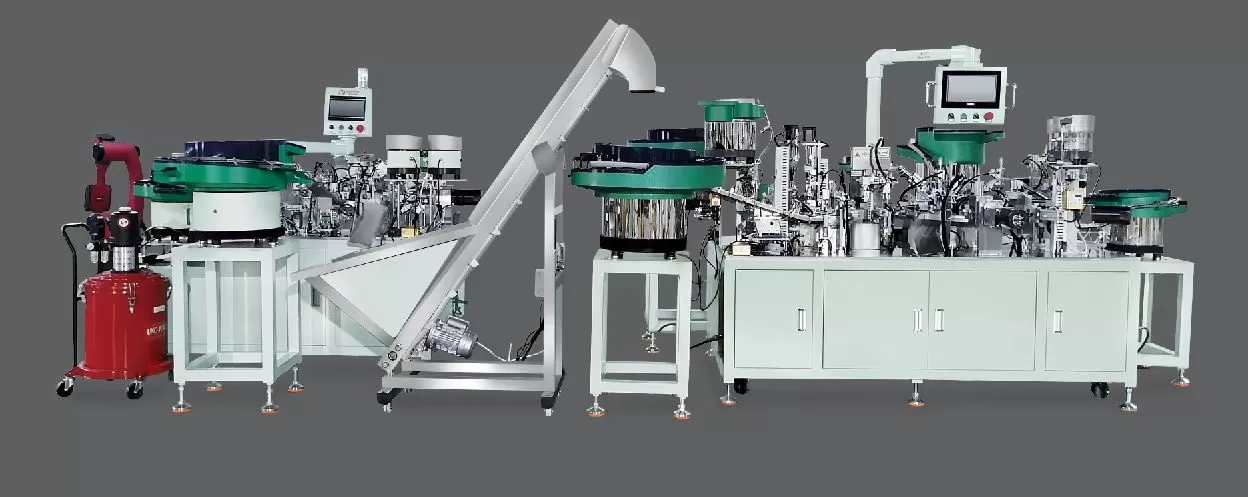
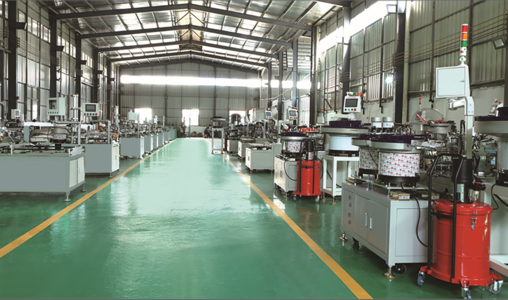
In the competitive landscape of hinge manufacturing, automatic assembly machines play a pivotal role in enhancing production efficiency and ensuring consistent quality. The Jieyang Hinge Automatic Assembly Machine, a critical piece of equipment in modern hinge production lines, requires a systematic performance analysis process to maximize its operational potential. This article delves into the step-by-step methodology for evaluating the machine’s performance, from defining key metrics to implementing optimization strategies, helping manufacturers unlock higher productivity and reliability.
Defining Key Performance Metrics for hinge assembly machines
To effectively analyze the performance of the Jieyang Hinge Automatic Assembly Machine, it is essential to first establish clear, measurable metrics. These metrics serve as benchmarks to assess the machine’s output, quality, and reliability. Primary metrics typically include production rate (units per hour), defect rate (percentage of non-conforming hinges), cycle time (time per assembly cycle), energy consumption (kWh per unit produced), and tool durability (number of assemblies before tool replacement). Additionally, factors like operational stability (frequency of downtime) and maintenance requirements (time spent on upkeep) contribute to a comprehensive performance evaluation. By defining these metrics upfront, manufacturers can align their analysis with production goals, whether focusing on efficiency, cost reduction, or quality improvement.
Pre-Analysis: Machine Calibration and Data Collection
Before conducting the formal performance analysis, a pre-analysis phase is crucial to ensure data accuracy and machine readiness. This phase begins with thorough machine calibration, where all mechanical, electrical, and sensor components are checked and adjusted to factory-recommended specifications. Calibration ensures that measurements, such as torque, position, and speed, are precise, eliminating errors that could skew analysis results. Concurrently, data collection systems are set up to monitor the machine during operation. This may involve installing sensors to track production rate, cycle time, and tool wear, as well as integrating data loggers to record real-time operational data. The data collected during this phase includes historical performance records, maintenance logs, and initial production outputs, providing a baseline for subsequent analysis.
In-Process Testing: Evaluating Operational Efficiency
In-process testing focuses on evaluating the machine’s efficiency during active production. This step involves running the machine under typical production conditions while continuously monitoring key metrics. Operators observe the machine’s speed, ensuring it meets the target production rate without compromising stability. Cycle time is measured precisely, with comparisons made to the machine’s design specifications to identify bottlenecks. For example, if the actual cycle time exceeds the stated capacity, further investigation into mechanical components (e.g., drive systems, grippers) or control algorithms may be necessary. Additionally, tool wear is monitored to assess how quickly cutting or forming tools degrade, which directly impacts production rate and defect levels. In-process testing also includes checks for operational noise, vibration, and temperature, as abnormal values can indicate underlying issues affecting long-term performance.
Post-Assembly Validation: Quality and Reliability Checks
While operational efficiency is critical, the quality and reliability of the assembled hinges are equally important. Post-assembly validation involves subjecting the produced hinges to rigorous quality checks to ensure they meet industry standards. This includes dimensional inspection using precision tools like calipers or coordinate measuring machines (CMMs) to verify hinge dimensions, such as thickness, length, and alignment. Functional testing is also performed, simulating real-world usage to check for smooth operation, resistance to wear, and durability. For instance, hinges may undergo repeated opening and closing cycles to assess lifespan, with failure points recorded to evaluate reliability. Defect analysis is a key part of this phase, where non-conforming hinges are examined to determine root causes—whether due to machine misalignment, tool wear, or material inconsistencies. This data feeds back into the performance analysis process to prioritize necessary adjustments.
Data Analysis and Optimization Strategies
Once data from pre-analysis, in-process testing, and post-assembly validation is collected, a detailed analysis is conducted to identify areas for improvement. Statistical tools, such as statistical process control (SPC) and root cause analysis (RCA), are often used to interpret trends and patterns in the data. For example, SPC can reveal if production rate is fluctuating within acceptable limits, while RCA can pinpoint why defect rates spike during certain shifts or machine settings. Common optimization strategies may include adjusting mechanical parameters (e.g., modifying gripper pressure or conveyor speed), upgrading tooling to extend durability, or refining control algorithms to reduce cycle time. The Jieyang Hinge Automatic Assembly Machine’s software system may also be optimized, with updates to control logic to enhance synchronization between components. These adjustments are tested iteratively to ensure they improve performance without introducing new issues.
Implementation and Continuous Improvement
After identifying and testing optimization strategies, the next step is full implementation of the improvements. This may involve recalibrating the machine, updating software, or replacing worn components. Once implemented, the machine is run under production conditions again to verify the effectiveness of the changes, comparing post-implementation metrics to the pre-optimization baseline. Continuous improvement is a core principle of performance analysis, as production demands and technology evolve over time. Therefore, the analysis process should be repeated periodically—perhaps monthly or quarterly—to ensure the machine continues to meet current production needs. Sanyhore, a professional manufacturer specializing in hinge assembly machines, telescopic drawer slide assembly machines, and roll forming machines, understands the importance of this ongoing process. By combining advanced machine design with a commitment to performance optimization, Sanyhore helps clients achieve consistent, high-quality production results.
In conclusion, the performance analysis process for the Jieyang Hinge Automatic Assembly Machine is a systematic approach that combines pre-analysis preparation, in-process testing, quality validation, data analysis, and continuous improvement. By following this structured methodology, manufacturers can maximize machine efficiency, reduce costs, and ensure the reliability of their hinge production. For those seeking to enhance their hinge assembly operations, Sanyhore offers tailored solutions and expertise. Contact us at +86 13425506550 or email info@sanyhore.com to discuss your specific production requirements and discover how our machines can elevate your manufacturing capabilities.


