

 - 副本.png)
Efficient material management is the backbone of seamless operation for automatic assembly machines, and the Jieyang Hinge Automatic Assembly Machine is no exception. This process ensures that raw materials, components, and auxiliary items are received, stored, and distributed in a way that supports continuous production, minimizes downtime, and maintains the precision required for high-quality hinge assembly. For manufacturers in the hardware and furniture industries, mastering this process is critical to scaling production while upholding product consistency.
MaterialReceiving and Initial Inspection: The journey of materials for the Jieyang Hinge Automatic Assembly Machine begins with receiving. Upon arrival at the production facility, incoming materials—including metal blanks, springs, pins, and packaging—undergo strict initial inspection. Trained staff verify quantity, compliance with design specifications, and absence of defects such as rust, deformation, or incorrect dimensions. Automated inspection tools, like optical scanners or weight checkers, complement manual checks to ensure accuracy. This step is foundational, as substandard materials can lead to assembly errors, equipment damage, or even production line disruptions. By validating materials upfront, the assembly process avoids avoidable delays and maintains the integrity of the final product.
Storage and Inventory Control: After inspection, materials are stored in designated areas within the production environment. For the Jieyang Hinge Automatic Assembly Machine, storage solutions are designed to align with the machine’s requirements—typically compact, organized, and easily accessible. Small, high-turnover components, such as precision springs or screws, are stored in clear, labeled bins or automated racks that integrate with inventory management systems. Larger items, like metal sheets or bulk blanks, are kept in secure, climate-controlled spaces to prevent degradation. Inventory control software tracks stock levels in real time, triggering alerts when materials approach minimum thresholds. This ensures that the assembly line never faces unexpected shortages, even during peak production periods, and reduces the risk of overstocking, which ties up capital and occupies valuable space.
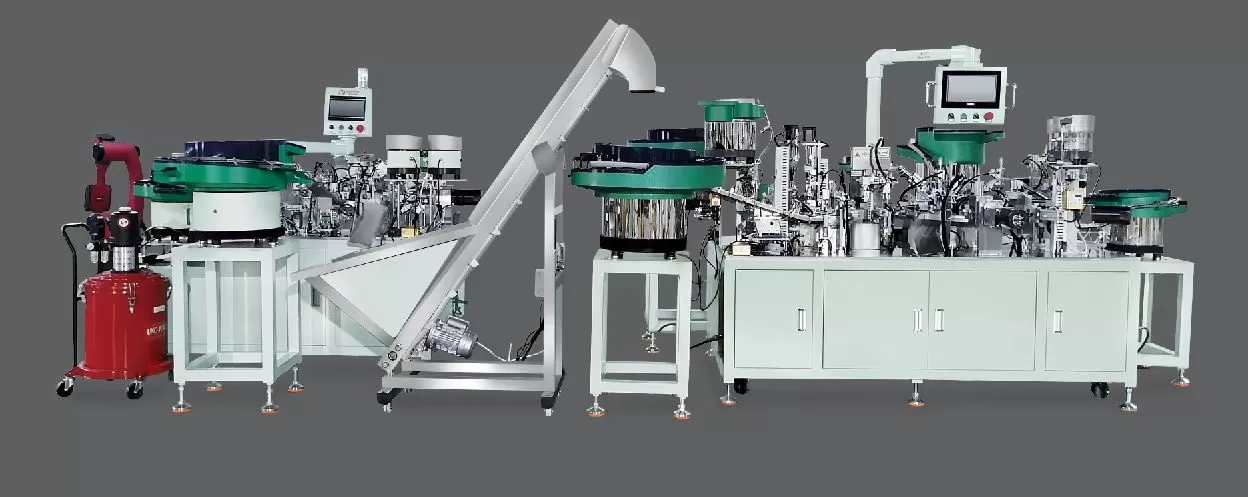
Automated Material Feeding for Production: To maximize efficiency, the Jieyang Hinge Automatic Assembly Machine is integrated with an automated material feeding system. This system, often consisting of vibratory bowl feeders, conveyor belts, and robotic arms, delivers components directly to the assembly station at the required pace. Vibratory bowls, for instance, sort and orient small parts like pins or washers, ensuring they are correctly positioned before transfer to the machine. Conveyor systems manage the flow of larger materials, while robotic pick-and-place units handle delicate components, minimizing human intervention and reducing the likelihood of errors. By automating material delivery, the process eliminates manual handling, speeds up cycle times, and allows the assembly machine to operate at its optimal capacity, which is essential for meeting high-volume production demands.
Quality Control in Material Distribution: Even with precise receiving and storage, material quality can degrade during distribution. To address this, the material management process includes on-the-go quality checks during distribution. Sensors along the conveyor belts or robotic arms scan components in transit, verifying dimensions, surface conditions, and material properties. If a defect is detected, the system diverts the material for re-inspection or disposal, preventing it from entering the assembly process. Additionally, regular maintenance of feeding equipment—such as cleaning bowls, lubricating conveyor tracks, and calibrating sensors—ensures consistent performance. This layer of quality control guarantees that only flawless materials reach the assembly machine, upholding the final product’s quality and reliability.
Supply Chain Integration for Sustained Production: The material management process for the Jieyang Hinge Automatic Assembly Machine extends beyond the facility walls, integrating with the supply chain. Sanyhore, a professional manufacturer of hinge assembly machines, telescopic drawer slide assembly machines, and roll forming machines, works closely with suppliers to establish streamlined delivery schedules. By sharing production forecasts and inventory data, suppliers can adjust their output to match the assembly machine’s needs, reducing lead times and ensuring a steady supply of raw materials. This integration also supports just-in-time (JIT) production, where materials arrive exactly when needed, minimizing storage costs and reducing waste. For clients, this means greater production flexibility and the ability to adapt to market demands quickly.
For inquiries about optimizing the material management process for your hinge assembly machine, contact Sanyhore’s sales manager at +86 13425506550 or email info@sanyhore.com. Our team provides tailored solutions to enhance your production efficiency, ensuring that your automatic assembly line runs smoothly with precise material management.


