Jieyang Drawer Slide Assembly Machine: Assembly vs Manual Installation Comparison

2025-12-16


The global furniture manufacturing industry increasingly prioritizes efficiency and precision in component production, with drawer slides standing as critical elements for cabinetry, drawers, and storage systems. Traditionally, manual installation has been the go-to method for assembling these slides, but recent advancements in automatic assembly machines have sparked a debate: is mechanized assembly truly superior, or does manual installation still hold value? This article explores the key differences between Jieyang drawer slide assembly machines and manual installation, helping manufacturers make informed decisions for their production lines.

Efficiency: Time and Output

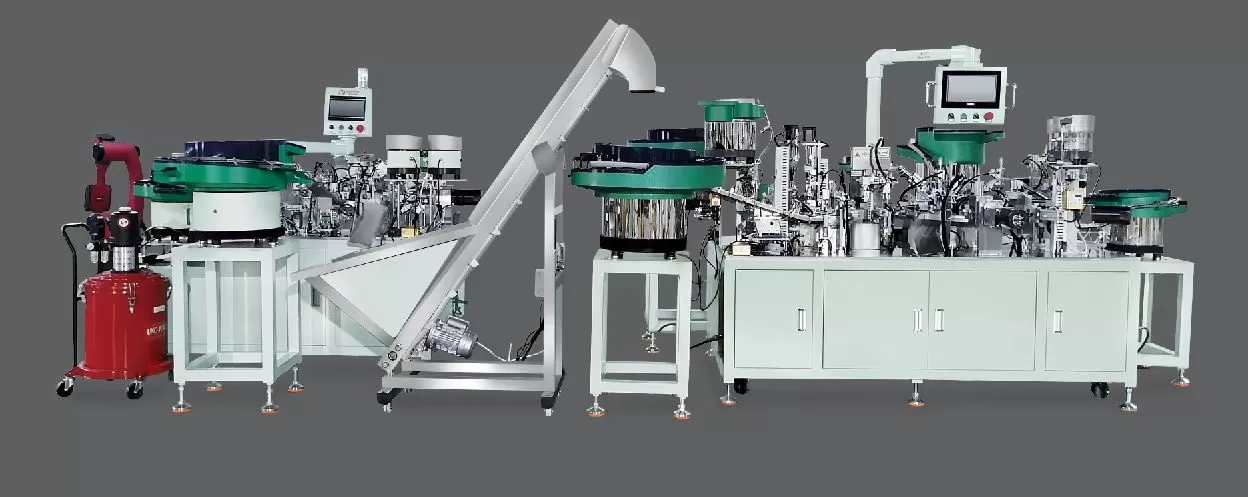
Efficiency is often the primary driver behind adopting new manufacturing technologies, and drawer slide assembly machines excel here. Manual installation, while feasible for small-batch production, typically requires workers to align, fasten, and test each slide individually. A skilled technician might assemble 10–15 slides per hour, depending on complexity, while a modern Jieyang drawer slide assembly machine can process 100+ slides hourly. This leap in output directly translates to higher throughput for production lines, reducing lead times and meeting tighter customer deadlines. For large-scale manufacturers, the time saved by automatic assembly can lower overall production costs, as fewer labor hours are needed to achieve the same output.

Precision and Consistency: Reducing Defects

In furniture manufacturing, precision is non-negotiable—even minor misalignments in drawer slides can lead to jamming, uneven movement, or reduced product lifespan. Manual installation relies heavily on operator skill, which varies between workers, leading to inconsistent quality. A single technician might apply more force to a fastener here, or misalign a telescopic section there, creating subtle defects that accumulate over time. In contrast, Jieyang drawer slide assembly machines use computerized controls and mechanical fixtures to ensure each component is positioned and fastened to exact tolerances. This consistency minimizes defects, reducing the need for rework and improving customer satisfaction with durable, reliable slides.

Cost Consideration: Short-Term vs Long-Term Investment

At first glance, the upfront cost of a drawer slide assembly machine may seem prohibitive compared to manual tools like screwdrivers or clamps. However, long-term cost analysis reveals significant savings. Manual installation requires hiring and training skilled workers, who may demand higher wages and are prone to errors that increase material waste. Over a year, the cumulative cost of labor, rework, and missed production targets can outweigh the initial investment in an automatic machine. Additionally, modern machines often integrate roll forming and other advanced processes, reducing reliance on multiple manual steps and lowering overall operational expenses. For manufacturers scaling production, the long-term ROI of an assembly machine becomes clear.

Ease of Operation: Skill Requirements

Manual installation demands a high level of technical skill, especially for complex telescopic drawer slides with multiple components. Workers must understand torque specifications, material compatibility, and slide mechanics to avoid damaging parts. This skill gap can slow down production during peak periods or when labor turnover is high. Jieyang drawer slide assembly machines, however, are designed for user-friendliness. Most models feature intuitive touchscreens, pre-programmed settings, and safety interlocks, allowing operators with minimal training to set up and run the machine. This reduces dependency on specialized labor, making production more flexible and resilient to skill shortages.

Application Scenarios: When to Choose Which Method

Neither manual installation nor automatic assembly is universally superior—their suitability depends on production needs. Small workshops or custom furniture makers may benefit from manual installation for low-volume, one-off projects, where the personal touch of a skilled technician can enhance craftsmanship. However, for high-volume, standardized production, Jieyang drawer slide assembly machines are indispensable. They excel in producing consistent, high-quality telescopic slides, hinge assemblies, and other components, supporting manufacturers in meeting market demands for speed and reliability.

Conclusion and Next Steps

The comparison between Jieyang drawer slide assembly machines and manual installation highlights a clear trend: automation is reshaping furniture manufacturing by delivering efficiency, precision, and long-term cost savings. While manual methods have their place, modern assembly machines are proving to be a game-changer for producers aiming to scale, reduce defects, and stay competitive.

If you’re looking to upgrade your production line, consider Sanyhore—we specialize in designing and manufacturing top-tier hinge assembly machines, telescopic drawer slide assembly machines, and roll forming machines tailored to your needs. With our equipment, you can streamline operations, enhance product quality, and meet growing market demands.

Contact our sales manager today at +86 13425506550 or email info@sanyhore.com to discuss how we can support your production goals.

We use cookie to improve your online experience. By continuing to browse this website, you agree to our use of cookie.

Cookies

Please read our Terms and Conditions and this Policy before accessing or using our Services. If you cannot agree with this Policy or the Terms and Conditions, please do not access or use our Services. If you are located in a jurisdiction outside the European Economic Area, by using our Services, you accept the Terms and Conditions and accept our privacy practices described in this Policy.
We may modify this Policy at any time, without prior notice, and changes may apply to any Personal Information we already hold about you, as well as any new Personal Information collected after the Policy is modified. If we make changes, we will notify you by revising the date at the top of this Policy. We will provide you with advanced notice if we make any material changes to how we collect, use or disclose your Personal Information that impact your rights under this Policy. If you are located in a jurisdiction other than the European Economic Area, the United Kingdom or Switzerland (collectively “European Countries”), your continued access or use of our Services after receiving the notice of changes, constitutes your acknowledgement that you accept the updated Policy. In addition, we may provide you with real time disclosures or additional information about the Personal Information handling practices of specific parts of our Services. Such notices may supplement this Policy or provide you with additional choices about how we process your Personal Information.


Cookies

Cookies are small text files stored on your device when you access most Websites on the internet or open certain emails. Among other things, Cookies allow a Website to recognize your device and remember if you've been to the Website before. Examples of information collected by Cookies include your browser type and the address of the Website from which you arrived at our Website as well as IP address and clickstream behavior (that is the pages you view and the links you click).We use the term cookie to refer to Cookies and technologies that perform a similar function to Cookies (e.g., tags, pixels, web beacons, etc.). Cookies can be read by the originating Website on each subsequent visit and by any other Website that recognizes the cookie. The Website uses Cookies in order to make the Website easier to use, to support a better user experience, including the provision of information and functionality to you, as well as to provide us with information about how the Website is used so that we can make sure it is as up to date, relevant, and error free as we can. Cookies on the Website We use Cookies to personalize your experience when you visit the Site, uniquely identify your computer for security purposes, and enable us and our third-party service providers to serve ads on our behalf across the internet.

We classify Cookies in the following categories:
 ●  Strictly Necessary Cookies
 ●  Performance Cookies
 ●  Functional Cookies
 ●  Targeting Cookies


Cookie List
A cookie is a small piece of data (text file) that a website – when visited by a user – asks your browser to store on your device in order to remember information about you, such as your language preference or login information. Those cookies are set by us and called first-party cookies. We also use third-party cookies – which are cookies from a domain different than the domain of the website you are visiting – for our advertising and marketing efforts. More specifically, we use cookies and other tracking technologies for the following purposes:

Strictly Necessary Cookies
These cookies are necessary for the website to function and cannot be switched off in our systems. They are usually only set in response to actions made by you which amount to a request for services, such as setting your privacy preferences, logging in or filling in forms. You can set your browser to block or alert you about these cookies, but some parts of the site will not then work. These cookies do not store any personally identifiable information.

Functional Cookies
These cookies enable the website to provide enhanced functionality and personalisation. They may be set by us or by third party providers whose services we have added to our pages. If you do not allow these cookies then some or all of these services may not function properly.

Performance Cookies
These cookies allow us to count visits and traffic sources so we can measure and improve the performance of our site. They help us to know which pages are the most and least popular and see how visitors move around the site. All information these cookies collect is aggregated and therefore anonymous. If you do not allow these cookies we will not know when you have visited our site, and will not be able to monitor its performance.

Targeting Cookies
These cookies may be set through our site by our advertising partners. They may be used by those companies to build a profile of your interests and show you relevant adverts on other sites. They do not store directly personal information, but are based on uniquely identifying your browser and internet device. If you do not allow these cookies, you will experience less targeted advertising.

How To Turn Off Cookies
You can choose to restrict or block Cookies through your browser settings at any time. Please note that certain Cookies may be set as soon as you visit the Website, but you can remove them using your browser settings. However, please be aware that restricting or blocking Cookies set on the Website may impact the functionality or performance of the Website or prevent you from using certain services provided through the Website. It will also affect our ability to update the Website to cater for user preferences and improve performance. Cookies within Mobile Applications

We only use Strictly Necessary Cookies on our mobile applications. These Cookies are critical to the functionality of our applications, so if you block or delete these Cookies you may not be able to use the application. These Cookies are not shared with any other application on your mobile device. We never use the Cookies from the mobile application to store personal information about you.

If you have questions or concerns regarding any information in this Privacy Policy, please contact us by email at . You can also contact us via our customer service at our Site.