

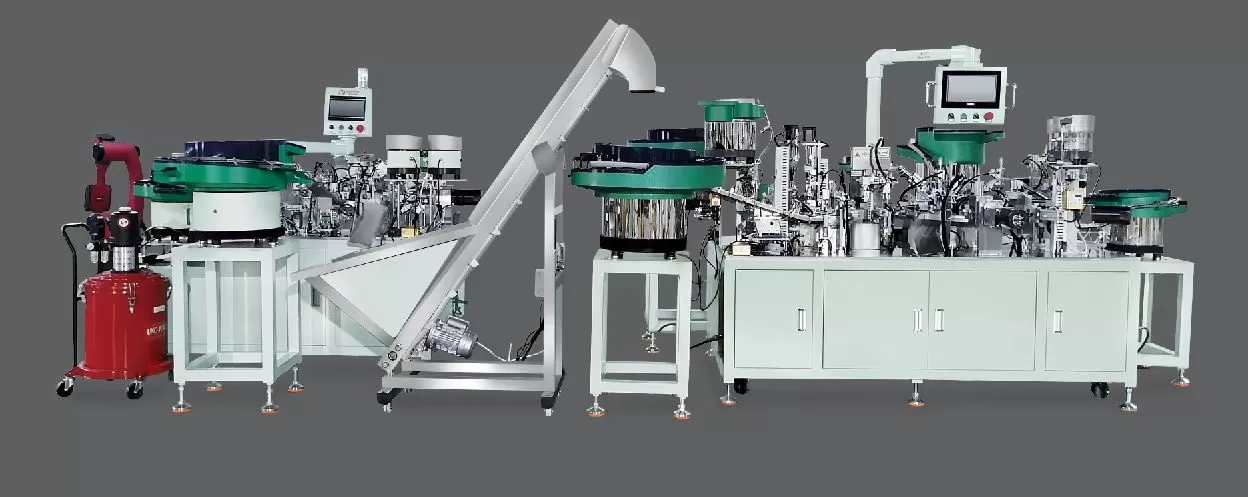
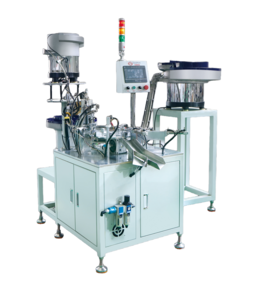
In the competitive landscape of modern manufacturing, the demand for efficient, high-quality hinge products—from residential to industrial applications—continues to rise. This is particularly true for manufacturers in Jieyang, a key hub for hinge production, where the need for reliable, cost-effective automatic assembly machines has become critical. Central to meeting this demand is the integration of an intelligent scheduling process, which transforms traditional hinge assembly lines into dynamic, responsive systems capable of adapting to real-time production needs.
Understanding the Core of Hinge Assembly Production
Hinge automatic assembly machines, such as those produced by Sanyhore, are designed to streamline the manufacturing of hinges by automating repetitive tasks like component feeding, alignment, and joining. However, even the most advanced machines can struggle with inefficiencies if not supported by a well-structured production flow. Without proper scheduling, bottlenecks—such as delayed material delivery, unexpected machine downtime, or mismatched production orders—can disrupt operations, increase lead times, and reduce overall output. This is where intelligent scheduling emerges as a game-changer, acting as the "brain" that coordinates all elements of the production process.
The Role of Intelligent Scheduling in Modern Manufacturing
Intelligent scheduling, at its core, leverages advanced algorithms and real-time data analytics to optimize the sequence of operations in hinge assembly. Unlike manual or basic scheduling methods, which rely on static timetables, intelligent systems continuously monitor production metrics—such as machine status, component availability, and order priorities—to adjust workflows dynamically. For Jieyang hinge automatic assembly machines, this means minimizing idle time, reducing setup times, and ensuring that resources (labor, materials, machines) are allocated efficiently. By aligning production with demand fluctuations, manufacturers can meet tight deadlines while maintaining consistent quality.
Key Components of the Intelligent Scheduling Process for Jieyang Hinge Automatic Assembly Machine
A robust intelligent scheduling process for hinge automatic assembly machines typically includes three key components: data integration, adaptive algorithms, and real-time monitoring. Data integration connects the assembly machine to a central production management system, collecting data on machine performance, component usage, and order progress. Adaptive algorithms then analyze this data to generate optimal production sequences, considering factors like machine capacity, component lead times, and order deadlines. Finally, real-time monitoring ensures that any deviations from the schedule—such as a machine breakdown or material shortage—are detected immediately, triggering adjustments to keep production on track.
Enhancing Efficiency: How Intelligent Scheduling Optimizes Production
The primary benefit of intelligent scheduling is its ability to enhance operational efficiency. For example, by analyzing historical production data, the system can predict peak demand periods and adjust machine usage accordingly, reducing the risk of overloading critical equipment. It also minimizes "waiting time"—a common inefficiency in hinge assembly, where machines often sit idle while components are prepared or orders are prioritized. By automating these tasks, the scheduling process can cut cycle times by up to 30%, allowing manufacturers to produce more hinges in less time without compromising quality.
Ensuring Precision: Quality Control Integration in Scheduling
Beyond efficiency, intelligent scheduling plays a vital role in maintaining quality standards. Modern systems are designed to integrate with quality control tools, such as vision inspection systems or force sensors, that monitor each hinge during assembly. If a component fails inspection, the scheduling process can pause the relevant machine, flag the issue to operators, and adjust subsequent orders to avoid producing defective products. This integration ensures that quality checks are not an afterthought but an integral part of the production flow, reducing rework and scrap rates significantly.
Addressing Challenges: Common Hurdles and Solutions in Scheduling
Despite its benefits, implementing intelligent scheduling for hinge automatic assembly machines can present challenges. One common issue is data accuracy—if the central system lacks real-time, reliable data, algorithms may generate suboptimal schedules. To overcome this, Sanyhore’s scheduling process is designed with user-friendly interfaces that allow operators to input and update data easily, ensuring the system remains responsive. Another challenge is adaptability to sudden changes, such as urgent orders or component shortages. Here, the system’s adaptive algorithms excel, quickly reallocating resources and adjusting timelines to accommodate new requirements without disrupting the overall production plan.
Future Trends: The Evolution of Intelligent Scheduling for Hinge Assembly
As manufacturing technology advances, intelligent scheduling for hinge assembly machines is evolving to incorporate even more sophisticated features. Predictive maintenance, for instance, uses machine learning to forecast when components like motors or grippers might fail, allowing proactive maintenance to prevent downtime. Additionally, the integration of the Internet of Things (IoT) enables seamless communication between machines, tools, and suppliers, creating a fully connected production ecosystem. These advancements promise to further reduce costs, improve flexibility, and position manufacturers in Jieyang to meet future market demands.
Partner with Sanyhore for Advanced Hinge Assembly Solutions
For manufacturers in Jieyang and beyond seeking to optimize their hinge automatic assembly lines, Sanyhore offers a range of intelligent scheduling solutions tailored to your needs. As a leading producer of hinge assembly machines, telescopic drawer slide assembly machines, and roll forming machines, we understand the unique challenges of modern manufacturing and have the expertise to implement scheduling systems that drive efficiency and profitability.
To learn more about how our intelligent scheduling process can transform your production, contact Sanyhore at +86 13425506550 or via email at info@sanyhore.com. Our team of engineers is ready to discuss your requirements and deliver a customized solution that aligns with your goals.
SEO常见问题:
Q1: What is the role of intelligent scheduling in hinge automatic assembly machine production?
A1: Intelligent scheduling optimizes resource allocation, reduces downtime, and aligns production with demand, enhancing efficiency and reducing lead times for hinge assembly.
Q2: How does Sanyhore’s scheduling process differ from traditional methods for hinge assembly?
A2: Our system uses real-time data and adaptive algorithms to dynamically adjust workflows, unlike static traditional scheduling, ensuring better responsiveness and lower costs.
Q3: Can your intelligent scheduling process integrate with telescopic drawer slide assembly machines?
A3: Yes, our solutions are flexible and designed to work seamlessly with various assembly machines, including telescopic drawer slide assembly machines, for unified production management.
Q4: How does Sanyhore support manufacturers in implementing intelligent scheduling for hinge assembly?
A4: We provide end-to-end support, from system integration to operator training, ensuring a smooth transition and maximum ROI for your hinge assembly operations.
Q5: What makes Sanyhore a reliable partner for hinge assembly machine scheduling solutions?
A5: As a professional manufacturer of hinge assembly machines, telescopic drawer slide assembly machines, and roll forming machines, we combine deep industry knowledge with cutting-edge technology to deliver tailored scheduling solutions.


