

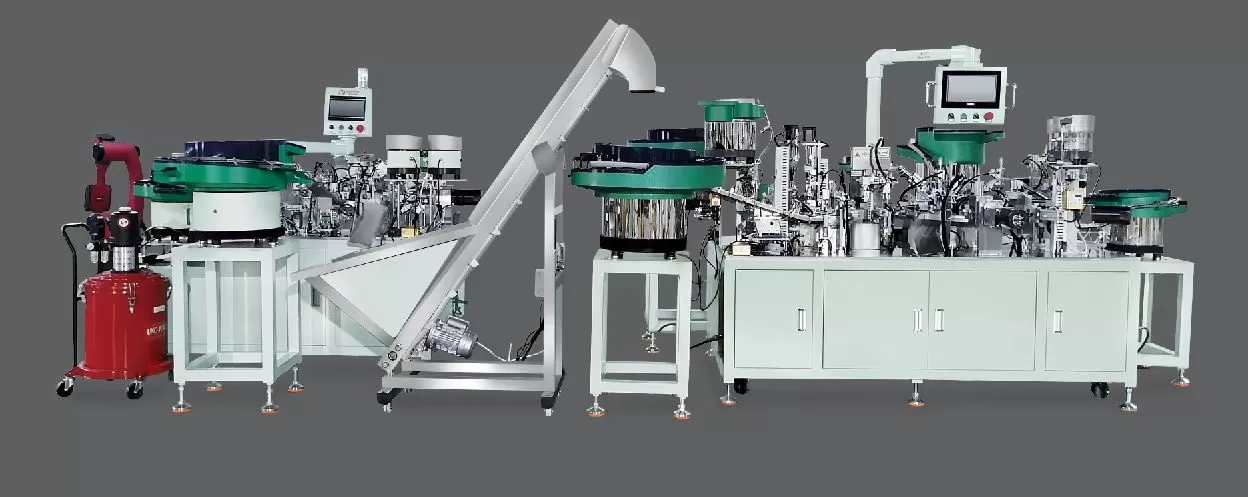
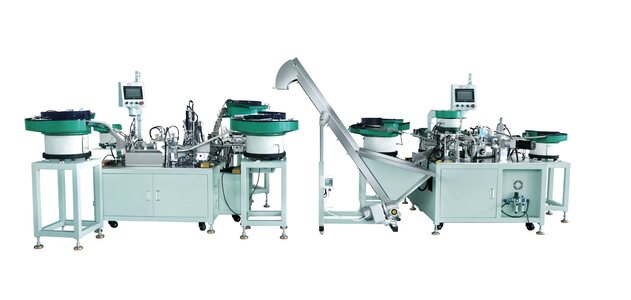
Training your team to operate Sanyhore’s Fully Automatic Hinge Assembler (FAHA) effectively is critical to maximizing production efficiency, reducing errors, and ensuring workplace safety. As a professional manufacturer of hinge assembly machines, Sanyhore understands that well-trained staff are the backbone of seamless operations. Below is a structured approach to equipping your team with the skills needed to master this advanced machinery.
#Pre-Training Preparation: Lay the Foundation for Success
Before the first training session, ensure your team has the right tools and knowledge to engage meaningfully. Start by reviewing the FAHA’s technical specifications, including its maximum production capacity, required power supply, and material compatibility—this helps your team grasp the machine’s capabilities and limitations. Distribute the official Sanyhore operation manual, highlighting key sections like cycle time, component tolerances, and maintenance intervals. Test the machine beforehand to confirm it’s in optimal condition: inspect conveyor belts, sensor alignment, and tooling to avoid disruptions during training. Additionally, prepare visual aids such as diagrams or short video clips to simplify complex concepts like automated feeding systems or precision positioning mechanisms.
#Step-by-Step Operation Training: Build Confidence Through Hands-On Practice
Break down the assembly process into clear, sequential steps to avoid overwhelming your team. Begin with the basics: guiding them through loading raw hinge components (e.g., cup, pin, spring) into the machine’s loading hopper, ensuring parts are oriented correctly to prevent jams. Next, demonstrate how to set up production parameters via the intuitive control panel—Sanyhore’s FAHA features a user-friendly touchscreen interface, so focus on adjusting speed, pressure, and alignment settings to match specific hinge models.
Once the setup is complete, have team members perform the first run under supervision. Start with low-volume batches to practice monitoring the assembly process: checking for proper pin insertion, cup seaming, and final quality control. Encourage questions during this phase—common queries might include “How do I adjust for different hinge sizes?” or “What if a component misfeeds?” Use these moments to reinforce key takeaways, such as the importance of consistent material placement and regular sensor calibration.
#Safety Protocol Enforcement: Prioritize Workplace Protection
Safety must never be an afterthought when training on machinery. Dedicate a dedicated session to familiarize your team with Sanyhore’s safety features, including emergency stop buttons, safety light curtains, and interlock systems. Demonstrate proper PPE usage: eye protection, anti-slip gloves, and steel-toed boots, emphasizing how these prevent injuries from moving parts or sharp edges.
Conduct a mock emergency drill to test understanding: have team members practice stopping the machine immediately if a jam occurs, and know the location of fire extinguishers or first-aid kits. Review Sanyhore’s safety guidelines for cleaning the machine—for example, never reach into the working area while the machine is running, and always disconnect power before performing maintenance. By integrating safety into every training module, you’ll foster a culture of caution that prevents accidents and downtime.
#Troubleshooting and Maintenance: Turn Challenges into Opportunities
Even with proper training, minor issues may arise during operation. Train your team to identify and resolve common problems independently, reducing reliance on external support. Start with “quick win” fixes: jams caused by misaligned parts can often be cleared by clearing the conveyor and reloading components, while sensor errors may stem from dust buildup—teach them to clean optical sensors with compressed air.
For more complex issues, provide a troubleshooting flowchart tailored to the FAHA, which maps symptoms (e.g., unusual noise, slow production) to root causes (e.g., worn tooling, loose wiring). Encourage documentation of problems and solutions in a shared logbook—this builds a collective knowledge base for future reference. Finally, schedule monthly maintenance sessions with your team: teach them to inspect lubrication points, tighten fasteners, and replace wear parts (e.g., O-rings, blades) to extend the machine’s lifespan.
#Continuous Skill Enhancement: Adapt and Improve Over Time
Training doesn’t end after the initial session—it’s an ongoing process. Host monthly skill assessments where team members demonstrate their ability to operate the FAHA, adjust settings, and troubleshoot minor issues. Use feedback from these assessments to identify knowledge gaps: if multiple members struggle with sensor calibration, design a targeted refresher module.
Stay updated with Sanyhore’s product updates, such as new software releases or tooling upgrades, and share these with your team promptly. Attend Sanyhore’s optional advanced training workshops (when available) to learn about optimizing production or integrating the FAHA with your existing smart factory system. By investing in continuous learning, your team will remain proficient and adaptable, ensuring long-term success with Sanyhore’s hinge assembly solutions.
常见问题 (FAQ):
Q: What are the key prerequisites for training a team on Sanyhore’s Fully Automatic Hinge Assembler?
A: Prior to training, ensure the machine is fully functional, and team members have basic mechanical literacy. Review Sanyhore’s manual together to align on technical specs and safety guidelines.
Q: How long does it take to train a team to operate the FAHA independently?
A: Typically, a team of 3–5 members can operate the machine independently after 2–3 weeks of training, depending on prior experience. Focus on hands-on practice and gradual responsibility transfer.
Q: What safety equipment is mandatory when using the FAHA?
A: Required PPE includes safety glasses, anti-vibration gloves, steel-toed boots, and earplugs. All team members must also know the location of emergency stop buttons and interlock systems.
Q: How can we troubleshoot common FAHA issues like slow production?
A: Start by checking the control panel for error codes, then inspect conveyor alignment and material feeding. If issues persist, refer to Sanyhore’s troubleshooting flowchart or contact our technical support team at +86 13425506550.
Q: Does Sanyhore offer additional training resources for existing users?
A: Yes. We provide online tutorials, maintenance guides, and optional on-site training to help teams adapt to new features or optimize machine performance. Contact info@sanyhore.com for details.
Sanyhore is a trusted manufacturer of hinge assembly machines, telescopic drawer slide assembly machines, and roll forming machines, dedicated to empowering businesses with efficient, reliable equipment. Let our team of experts support your training needs—contact us today to learn how we can enhance your team’s productivity and safety with Sanyhore’s Fully Automatic Hinge Assembler.


