

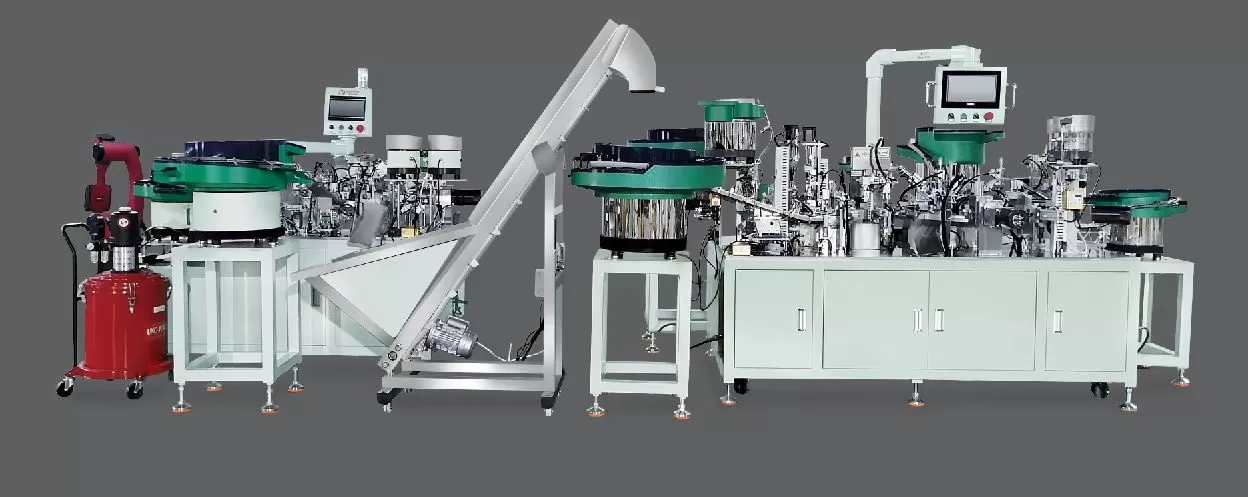
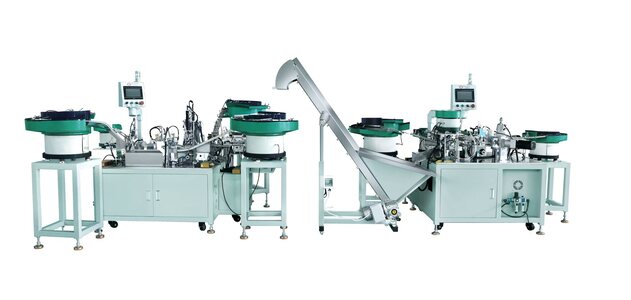
In today’s competitive manufacturing landscape, optimizing production lines for efficiency, precision, and scalability is critical for staying ahead. Manual hinge assembly processes often lead to inconsistencies, slower throughput, and higher labor costs, making the shift to automated solutions a strategic necessity. For manufacturers seeking a reliable, all-in-one solution, integrating Sanyhore’s Fully Automatic Hinge Assembler into existing production lines can transform operational dynamics. This guide breaks down the key steps to ensure a seamless integration, from initial assessment to post-implementation optimization, helping you leverage advanced automation to boost productivity and reduce waste.
Assess Your Production Requirements and Current Line Setup
Before integrating any new equipment, a thorough evaluation of your existing production workflow is essential. Start by mapping out your current hinge assembly process: identify bottlenecks, such as manual handling stages, inconsistent cycle times, or quality control gaps. Measure your daily production volume, as this directly influences the capacity and specifications of the Sanyhore hinge assembler you’ll need. For instance, if your line currently produces 500 hinges per hour, a machine with a minimum output of 800 hinges per hour would better align with your needs, ensuring no under or overcapacity.
Next, analyze your line’s infrastructure: check for available power sources, space dimensions, and existing conveyor systems or robotic arms. Sanyhore’s Fully Automatic Hinge Assembler is designed for flexibility, compatible with most standard production line layouts, but confirming clearances (e.g., 1.5 meters of operating space around the machine) and power supply (380V, 50Hz as standard) ensures a smooth fit without disrupting other equipment.
Evaluate Sanyhore’s Hinge Assembler Features and Compatibility
Sanyhore’s Fully Automatic Hinge Assembler stands out for its focus on precision, durability, and adaptability. Key features to prioritize include: automatic feeding systems (capable of handling various hinge types, from small door hinges to large industrial hinges), high-speed assembly capabilities (with cycle times as low as 1.2 seconds per hinge), and integrated vision systems for real-time defect detection. These features reduce manual intervention, minimize errors, and ensure consistent quality—critical for meeting industry standards.
Compatibility is another core consideration. Sanyhore’s assembler is engineered to sync with most modern production management systems, including ERP and MES platforms, allowing for real-time data tracking of production metrics like cycle time, defect rates, and maintenance needs. This connectivity ensures the machine integrates seamlessly with your existing digital infrastructure, avoiding data silos and enabling informed decision-making.
Plan the Physical Integration and Space Allocation
Once you’ve confirmed the machine’s specifications, focus on physical integration. Begin by marking out the installation area: ensure the space is clean, well-ventilated, and free from excessive dust or vibration, which could affect the assembler’s precision. The machine’s footprint (typically around 3m x 2m x 1.8m H) requires clear pathways for material flow—hinge infeed, assembled hinge outfeed, and maintenance access.
Coordinate with your production team to align the assembler with downstream processes, such as packaging or inspection stations. Sanyhore provides detailed installation guides, including conveyor alignment specifications and cable management solutions, to simplify setup. For example, the machine can be integrated with existing conveyor belts via adjustable infeed/outfeed modules, reducing the need for major structural modifications.
Configure Controls and Data Synchronization
Sanyhore’s hinge assembler comes with a user-friendly HMI (Human-Machine Interface) that simplifies operation and monitoring. During setup, configure the HMI to match your production parameters: adjust assembly speed, set quality thresholds for defect detection, and link it to your production management software. This step ensures the machine communicates effectively with your line, sharing real-time data on production progress, material usage, and maintenance alerts.
Data synchronization is key to leveraging the assembler’s full potential. By integrating the machine with your ERP system, you can track raw material consumption, schedule preventive maintenance, and generate production reports—all from a single dashboard. This not only streamlines operations but also helps identify trends, such as recurring defects or slowdowns, allowing proactive adjustments before they impact output.
Implement Testing and Quality Checks
Before full-scale production, conduct rigorous testing to validate the assembler’s performance. Start with a “dry run” using dummy hinges to test the infeed, assembly, and outfeed mechanisms, ensuring there are no jams or misalignments. Then, run a batch of actual hinges, monitoring cycle times, assembly accuracy, and defect rates. Sanyhore’s assembler typically achieves defect rates below 0.5%, but on-site testing can help fine-tune settings to match your specific quality standards.
During testing, involve your quality control team to verify that assembled hinges meet dimensional, functional, and durability requirements. For instance, test hinge closure force, pivot smoothness, and load-bearing capacity to ensure compliance with customer specs. This phase is critical to catching issues early, minimizing downtime, and ensuring the machine performs as expected from day one.
Train Staff and Ensure Smooth Transition
A new automated system requires proper training to maximize its benefits. Sanyhore offers on-site training sessions for your team, covering HMI operation, basic troubleshooting, and preventive maintenance. Focus areas include: starting/stopping the machine, loading/unloading materials, interpreting HMI alerts, and performing simple maintenance tasks like cleaning the infeed mechanism or replacing worn tools.
Create a transition plan that balances training with gradual production shifts. Start with a reduced production load on the new assembler, allowing staff to gain hands-on experience while maintaining overall output. This phased approach minimizes disruption and builds confidence in the system, ensuring a smooth transition from manual to automated operation.
Monitor Performance and Optimize Post-Integration
After integration, continuous monitoring is essential to sustain efficiency gains. Use the HMI and connected software to track key metrics: cycle time, defect rate, machine uptime (OEE), and energy consumption. Compare these metrics to pre-integration benchmarks to quantify improvements—common results include 30-50% faster production, 40% reduction in labor costs, and 95%+ product consistency.
Regularly review and optimize the process. For example, if defect rates increase slightly, check tool calibration or material feeding. If energy consumption is higher than expected, adjust speed settings or implement idle-time shutdown features. Sanyhore’s technical support team is available to assist with ongoing optimization, ensuring the assembler remains aligned with your evolving production needs.
Integrating Sanyhore’s Fully Automatic Hinge Assembler into your production line isn’t just about adding a machine—it’s about unlocking operational excellence. By following these steps, manufacturers can achieve higher efficiency, lower costs, and greater scalability, all while relying on a trusted partner for industrial assembly solutions. Ready to transform your hinge production? Contact Sanyhore today for a tailored integration plan and discover how their expertise can elevate your manufacturing capabilities. For inquiries, reach out at +86 13425506550 or email info@sanyhore.com.


