

.png)
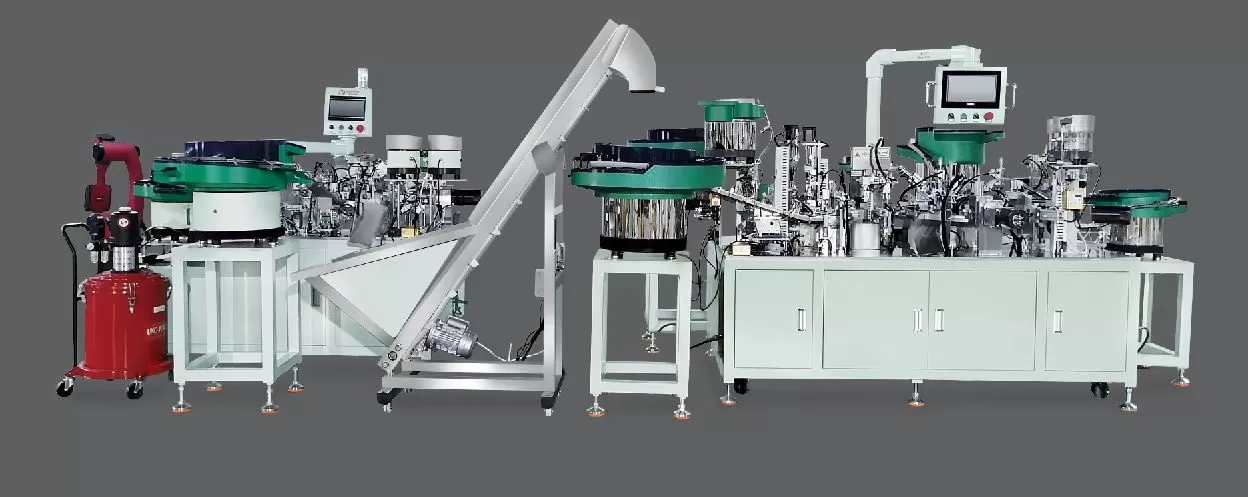
In the fast-paced landscape of modern manufacturing, the demand for high-speed production is non-negotiable—yet maintaining precision amid rapid operation remains a critical challenge. From automotive component assembly to furniture hardware manufacturing, even minor deviations in part alignment or movement can lead to product defects, increased waste, and delayed timelines. Sanyhore, a trusted producer of hinge assembly machines, telescopic drawer slide assembly machines, and roll forming machines, has developed a suite of technologies that address this challenge head-on. By integrating advanced mechanical design, precision control systems, and rigorous quality protocols, Sanyhore’s machinery ensures consistent accuracy even at maximum operational speeds.
#Mechanical Design: The Foundation of Stability at Speed
At the heart of Sanyhore’s precision lies its mechanical architecture. Unlike conventional machines that rely on loose tolerances or generic components, Sanyhore’s equipment features a monoblock cast iron bedframe—an engineering choice that minimizes vibration, a primary culprit of precision loss in high-speed settings. The bedframe is machined to sub-micron tolerances using 5-axis CNC technology, ensuring zero deflection under high loads. Additionally, modular componentry, such as precision linear guides and anti-backlash ball screws, reduces play between moving parts, while low-friction coatings (like diamond-like carbon) lower wear rates, maintaining alignment over extended high-speed runs. This design philosophy transforms the machine into a stable platform, where every movement is controlled and predictable.
#Precision Control: The Digital Brain Behind Accuracy
Beyond physical structure, Sanyhore leverages cutting-edge control systems to maintain precision. Each machine is equipped with industrial-grade servo-drive systems, paired with high-resolution encoders that monitor position, speed, and force in real time—up to 1,000 data points per second. A proprietary closed-loop control algorithm processes this data, adjusting parameters like tool pressure, assembly speed, and material feeding in milliseconds. For example, if a sensor detects a slight misalignment during a hinge assembly, the system automatically recalibrates the robotic arm to correct it, ensuring the final product meets the required tolerance (often ±0.01mm). This “digital brain” doesn’t just react to errors; it predicts them, using historical data to proactively adjust settings before deviations occur.
#Material Science: Durability and Consistency in Motion
The materials used in Sanyhore’s machines are as critical to precision as their design. Key components, such as drive gears and forming dies, are crafted from case-hardened steel with a surface hardness of HRC 60-65, offering exceptional wear resistance and dimensional stability. For moving parts like slides and bushings, Sanyhore uses self-lubricating composite materials (e.g., filled PTFE) that reduce friction and heat buildup, preventing thermal expansion that could distort measurements. Even the base materials undergo precision heat treatment—low-temperature annealing to eliminate internal stresses—ensuring the machine’s structural integrity remains uncompromised, even after thousands of high-speed cycles.
#Real-Time Monitoring: Adaptive Precision on the Fly
To complement its mechanical and control systems, Sanyhore integrates a network of in-line sensors throughout the production process. These sensors measure variables like temperature, pressure, and acoustic emissions, feeding data to a cloud-based analytics platform. Machine learning models analyze this data to identify patterns, such as gradual wear on a die or misalignment in a guide rail, and trigger maintenance alerts before performance degrades. For instance, if a temperature sensor detects a 2°C rise in the drive system, the machine automatically reduces speed by 5% to prevent overheating, while a pressure sensor will flag if a hinge is being crimped too tightly, adjusting the force accordingly. This real-time monitoring ensures precision is maintained not just at startup, but throughout the entire production run.
#Rigorous Quality Assurance: From Prototyping to Production
Sanyhore’s commitment to precision extends beyond the machine itself to the quality of its output. Every machine undergoes a 72-hour “run-in” test at full speed, simulating 30 days of real-world production to validate stability. During this test, a metrology system checks 100% of parts produced, verifying dimensions, surface finish, and functional performance against customer specifications. Post-production, each machine is calibrated by certified engineers using laser alignment tools, ensuring the systems remain within tolerance for years of operation. This focus on quality isn’t just about meeting standards—it’s about building trust, so customers can rely on Sanyhore machinery to deliver consistent results, day in and day out.
For manufacturers prioritizing speed without sacrificing precision, Sanyhore’s hinge assembly machines, telescopic drawer slide assembly machines, and roll forming machines offer a competitive edge. By combining mechanical engineering, advanced control systems, and data-driven quality management, these machines excel in high-speed environments, reducing defects and boosting throughput. To learn more about how Sanyhore can optimize your production line, contact our sales manager at +86 13425506550 or email info@sanyhore.com today.
同类型网站SEO常见问题:
1. What makes Sanyhore’s hinge assembly machines ideal for high-speed precision production?
2. How do telescopic drawer slide assembly machines from Sanyhore maintain accuracy at elevated speeds?
3. What role does roll forming technology play in Sanyhore’s high-speed machinery precision?
4. Can Sanyhore’s machines adapt to varying production speeds while preserving dimensional accuracy?
5. How does Sanyhore ensure long-term reliability and precision in its machinery?


