
Introduction: Navigating the Challenges of 3D Hinge Manufacturing
In modern manufacturing, 3D hinges have emerged as critical components in industries ranging from furniture to automotive, demanding precision, adaptability, and efficiency. Unlike traditional 2D hinges, 3D hinges require multi-axis alignment, intricate material handling, and frequent design variations to meet diverse client needs. However, conventional production lines often struggle with inflexibility, leading to longer setup times, higher costs for small-batch orders, and limited capacity to adapt to evolving design requirements. This is where Sanyhore’s specialized machinery steps in, redefining flexibility in 3D hinge production through innovative engineering and tailored solutions.
Key Limitations of Traditional 3D Hinge Production
Traditional hinge manufacturing relies heavily on rigid, single-purpose equipment. For example, producing 3D hinges with varying dimensions or material specifications typically involves manual adjustments, lengthy die changes, and manual quality checks, which not only slow down production but also increase the risk of errors. Additionally, the rise of custom and small-batch orders in today’s market amplifies these challenges, as rigid lines cannot efficiently switch between different hinge models without significant downtime. To address these pain points, manufacturers need machines that prioritize modularity, speed, and intelligent control—qualities Sanyhore integrates into its hinge assembly and roll forming systems.
Modular Machine Design: Adapting to Diverse Hinge Specifications
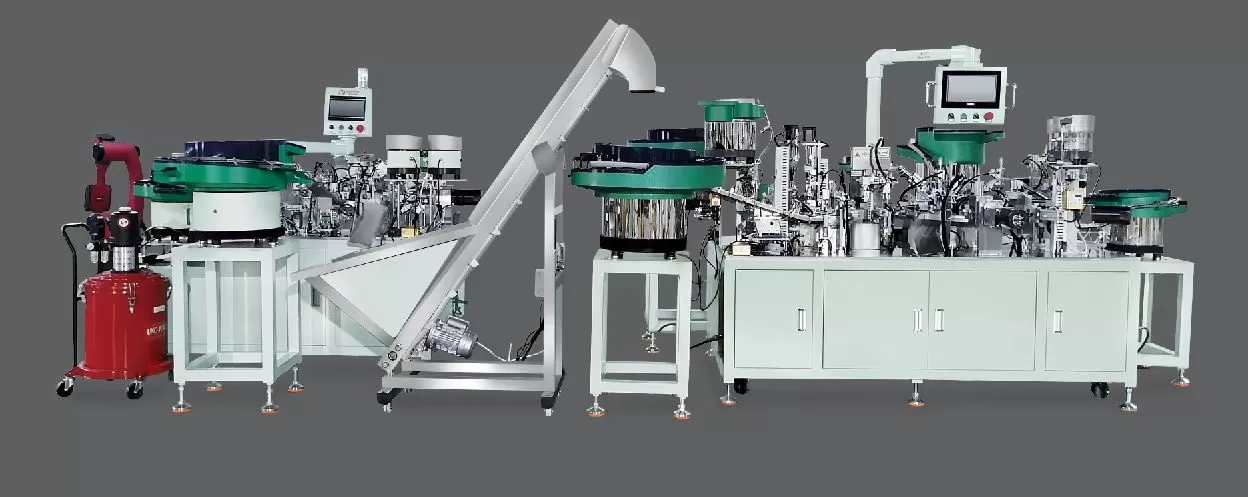
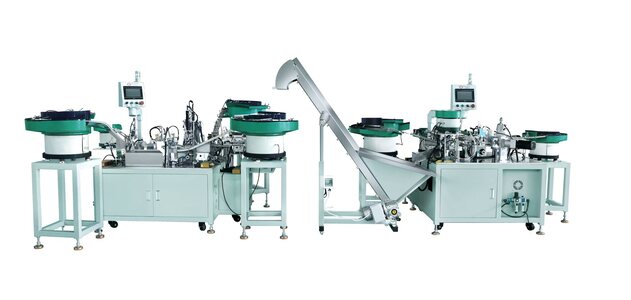
At the core of Sanyhore’s flexibility lies its modular machine architecture. Unlike fixed, one-size-fits-all equipment, Sanyhore’s hinge assembly machines (hinge assembly machine) feature interchangeable components, such as tooling plates, clamping mechanisms, and material guides. These modules can be quickly swapped or adjusted to accommodate different 3D hinge designs, from small consumer electronics hinges to large industrial door hinges. For instance, a manufacturer producing both residential and commercial hinges can switch between modules in under 15 minutes, eliminating the need for expensive, custom-built machines for each product line. This modularity ensures that Sanyhore’s systems adapt seamlessly to production demands, whether scaling up for mass production or switching to niche, custom orders.
Rapid Changeover Systems: Minimizing Downtime for Diverse Production Runs
Another critical factor in enhancing flexibility is Sanyhore’s focus on rapid changeover capabilities. Traditional 3D hinge production often requires hours of setup time for die changes or parameter adjustments, which is inefficient for mixed production runs. Sanyhore’s machines address this with advanced changeover systems, including automated tool changers and pre-programmed parameter presets. Operators can input hinge specifications via a user-friendly interface, and the machine automatically adjusts its settings—such as forming pressure, alignment tolerances, and material feed rates—within minutes. This not only reduces downtime but also minimizes human error, ensuring consistent quality across diverse hinge types. For example, a manufacturer producing telescopic drawer slide assembly machines (telescopic drawer slide assembly machine) alongside 3D hinges can switch between products in less than 30 minutes, a significant improvement over traditional 2–3 hour setups.
Smart Control Systems: Real-Time Adaptability for Custom Production
Sanyhore’s machines are equipped with smart control systems that further boost flexibility by enabling real-time adjustments and data-driven decision-making. These systems integrate sensors and AI-powered analytics to monitor production in real time, identifying deviations from set parameters and automatically correcting them. For instance, if a material batch has slightly different thickness, the control system adjusts the roll forming machine (roll forming machine) settings to maintain the required 3D precision. Additionally, the systems store production data, allowing manufacturers to track performance, optimize processes, and quickly replicate successful setups for future orders. This adaptability is crucial for 3D hinge production, where even minor variations in dimensions can affect functionality, and smart controls ensure consistency without manual intervention.
Automation Integration: Scaling Flexibility Across Production Lines
Beyond standalone machines, Sanyhore offers integrated automation solutions that enhance flexibility across entire production lines. By combining hinge assembly machines with automated material handling systems, vision inspection tools, and inventory management software, Sanyhore creates a seamless workflow that adapts to changing production volumes and product mix. For example, during peak demand, the system can automatically increase production speed, while during low-volume custom runs, it can switch to a slower, more precise mode. This integration not only reduces labor costs but also ensures that the production line remains flexible, capable of handling everything from high-volume standard hinges to low-volume 3D hinge prototypes.
Conclusion: Partnering for Flexible, Future-Proof Manufacturing
In the competitive landscape of 3D hinge production, flexibility is not just a feature—it’s a necessity. Sanyhore’s hinge assembly machines, telescopic drawer slide assembly machines, and roll forming equipment are engineered to address the unique challenges of modern hinge manufacturing, from modular design to smart control systems. By prioritizing adaptability, Sanyhore empowers manufacturers to respond quickly to market demands, scale production efficiently, and maintain quality across diverse hinge types. For those looking to enhance their 3D hinge production flexibility, Sanyhore offers a reliable, innovative solution. Contact our sales manager at +86 13425506550 or email info@sanyhore.com to discuss how our machines can transform your production line.
SEO常见问题:
1. What makes Sanyhore’s hinge assembly machines ideal for 3D hinge production flexibility?
2. How do Sanyhore’s roll forming machines enhance adaptability in telescopic drawer slide manufacturing?
3. Can Sanyhore’s equipment handle small-batch 3D hinge production with quick changeovers?
4. What key features of Sanyhore’s modular machine design improve production flexibility?
5. How do smart control systems in Sanyhore’s machines optimize 3D hinge manufacturing efficiency?


