

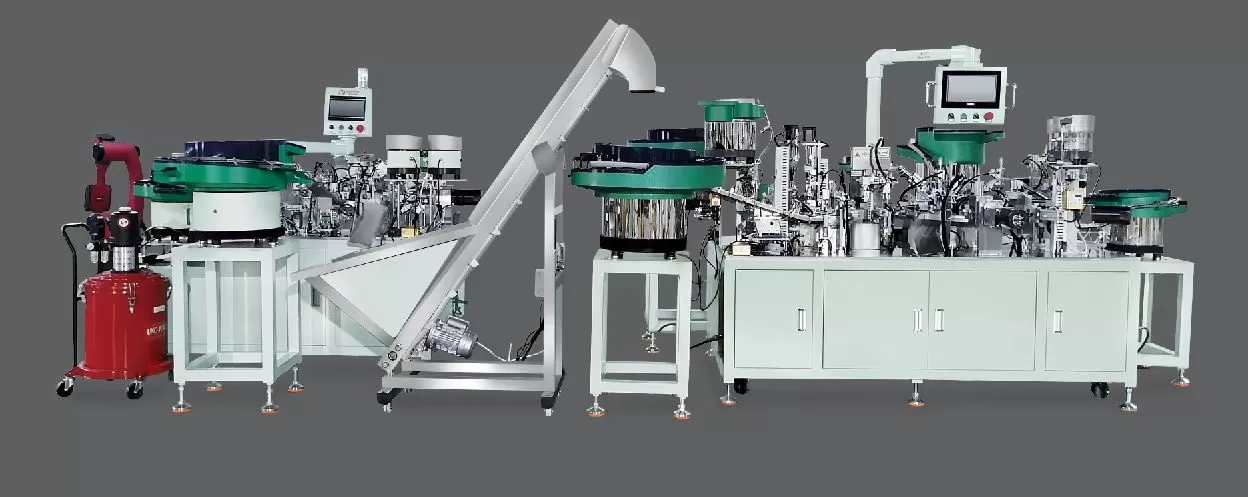
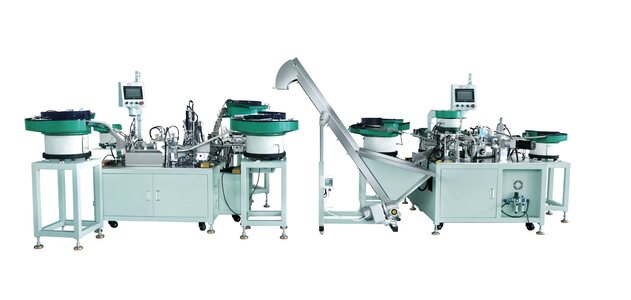
In the dynamic manufacturing landscape of Jieyang, a key industrial hub in southern China, 3D hinge assembly machines are the backbone of producing high-precision hinges for furniture, electronics, and automotive applications. These machines, designed to handle complex three-dimensional alignment and assembly tasks, demand consistent optimization to meet tight production deadlines and quality standards. Local factories in Jieyang face unique challenges—from rapid product iterations to varying customer requirements—making performance fine-tuning a critical operational priority. This article explores actionable strategies Jieyang-based manufacturers use to maximize 3D hinge assembly machine efficiency, reduce downtime, and enhance overall output.
#Understanding 3D Hinge Assembly Challenges in Jieyang
Jieyang’s manufacturing sector thrives on versatility, with factories producing a wide range of hinges, from simple 2D designs to advanced 3D configurations. 3D hinge assembly machines, however, present distinct hurdles. Unlike standard machinery, they require precise alignment across three axes (X, Y, Z), which can be disrupted by material inconsistencies, mechanical wear, or operator error. Additionally, short production runs and frequent design changes in the industry add pressure to maintain flexibility without sacrificing precision. For example, a factory producing custom hinges for premium furniture may need to adjust assembly parameters daily, making real-time optimization essential.
#Key Factors Affecting 3D Hinge Machine Performance
To optimize machine performance, factories must first identify and address core variables influencing operation. Mechanical design is foundational: machines with rigid frames and high-precision guides minimize vibration, ensuring stable movement during assembly. Control systems, often based on PLCs or industrial PCs, must have fast response times to adjust alignment in milliseconds. Material compatibility also plays a role—hinge materials like stainless steel or brass can affect tool wear and assembly accuracy, necessitating careful matching with machine capabilities. Environmental factors, such as temperature and humidity fluctuations, can warp components or cause thermal expansion, further complicating precision.
#Material Selection and Quality Control: The Foundation of Reliable Assembly
In Jieyang, material quality is non-negotiable for 3D hinge assembly. Factories prioritize materials with consistent hardness, surface finish, and thickness to avoid jamming or misalignment. For instance, hinges made from low-carbon steel may require different cutting parameters than high-alloy steel, and any deviation in material thickness can throw off the machine’s preset alignment. Rigorous incoming inspection—including hardness testing, dimensional checks, and surface defect analysis—ensures only suitable materials enter the production line. This step not only protects machine components from unnecessary wear but also guarantees the final hinge meets customer specifications.
#Automation and Integration: Reducing Human Error, Boosting Speed
Many Jieyang factories are integrating automation into 3D hinge assembly lines to address labor-intensive, error-prone manual processes. Automated loading/unloading systems, for example, eliminate the risk of misplacing hinge components during transfer, while vision-guided robots with 3D scanning capabilities ensure precise part positioning. Integration with manufacturing execution systems (MES) also enables seamless communication between the assembly machine and upstream/downstream processes, such as packaging or quality control. A leading Jieyang manufacturer reported a 35% reduction in cycle time after installing an automated feeding system, as the machine now operates continuously without human intervention.
#Calibration and Preventive Maintenance: Extending Machine Lifespan
Even the most advanced 3D hinge assembly machines require regular calibration and maintenance to maintain peak performance. Daily checks include verifying axis alignment, tool wear, and sensor accuracy, while weekly calibrations adjust parameters like pressure, speed, and position based on production data. Preventive maintenance protocols, such as lubricating moving parts, replacing worn bearings, and updating control software, prevent unexpected breakdowns. A Jieyang factory specializing in telescopic drawer slides, for instance, reduced unplanned downtime by 40% by implementing a monthly maintenance schedule, ensuring the 3D hinge machine ran at 95% efficiency.
#Data-Driven Optimization: Turning Data into Actionable Insights
Modern 3D hinge assembly machines are increasingly equipped with IoT sensors that collect real-time data on operational metrics—such as motor temperature, X/Y/Z axis speed, and assembly force. By analyzing this data, factories can identify patterns and bottlenecks. For example, a spike in hinge misalignment might correlate with increased tool wear, prompting a proactive tool replacement. Similarly, tracking cycle times across shifts reveals peak efficiency periods, allowing factories to schedule complex tasks during these windows. Over time, this data-driven approach transforms trial-and-error adjustments into systematic improvements, ensuring the machine consistently delivers optimal results.
#Conclusion: Partnering with Experts for Long-Term Success
Optimizing 3D hinge assembly machine performance in Jieyang factories is a multifaceted process that combines engineering expertise, rigorous quality control, and strategic technology integration. For manufacturers aiming to stay competitive, partnering with a reliable machine supplier—like Sanyhore—proves invaluable. As a leading producer of hinge assembly machines, telescopic drawer slide assembly machines, and roll forming machines, Sanyhore offers tailored solutions to enhance your production line’s efficiency, precision, and scalability.
Ready to elevate your 3D hinge assembly operations? Contact Sanyhore today at +86 13425506550 or email info@sanyhore.com for a free consultation and discover how our machines can drive your manufacturing success.


