

Jieyang, a hub of manufacturing innovation in China, has emerged as a global leader in 3D hinge assembly production. As demand for compact, high-performance hinges grows across industries—from consumer electronics to furniture and automotive—local factories in Jieyang have honed their expertise, mastering the complexities of 3D hinge assembly manufacturing. This article explores how these factories have elevated their capabilities, the key techniques driving their success, and the role of advanced equipment in their journey.
The Complexity of 3D Hinge Assembly: Beyond Traditional Manufacturing
3D hinge assembly is far more than a simple mechanical process. Unlike 2D hinges, which rely on single-axis rotation, 3D hinges require precise movement across x, y, and z axes, demanding tight tolerances, material compatibility, and seamless integration of components. This complexity stems from the need to balance structural strength, rotational smoothness, and miniaturization—critical for applications like foldable devices, smart furniture, and medical instruments, where durability and user experience are paramount. Jieyang factories have addressed these challenges by investing in specialized tooling, material testing, and iterative design processes, transforming 3D hinge production from a niche skill into a core competency.
From Manual Precision to Automated Excellence: Jieyang’s Manufacturing Evolution
Early 3D hinge production in Jieyang was largely manual, with workers relying on hand tools and visual inspections to ensure accuracy. However, over the past decade, factories have embraced automation, integrating computer numerical control (CNC) machines, robotic arms, and 3D printing into their workflows. This shift has not only boosted efficiency—reducing production time by up to 40% for some hinge types—but also enhanced consistency, minimizing human error. For instance, modern 3D printing allows for rapid prototyping of hinge components, enabling engineers to test and refine designs before full-scale production. Meanwhile, automated vision systems now inspect hinge parts with sub-millimeter precision, ensuring every component meets strict quality benchmarks.
Key Technologies: The Backbone of 3D Hinge Mastery
Central to Jieyang’s success in 3D hinge assembly is the integration of advanced manufacturing technologies. One standout technique is multi-axis machining, where CNC machines with 5-axis capabilities carve intricate hinge structures from high-strength alloys (e.g., stainless steel, aluminum alloys) with tolerances as low as 0.02mm. This precision is further supported by electron beam welding, which joins tiny components without distorting their shape, critical for maintaining the hinge’s rotational integrity. Additionally, factories have adopted 3D scanning to reverse-engineer existing hinge designs, allowing for quick adjustments and customization to meet client specifications. These technologies collectively position Jieyang factories to handle diverse 3D hinge requirements, from small, lightweight hinges for wearables to heavy-duty ones for industrial machinery.
Sanyhore: Empowering Factories with Cutting-Edge Assembly Solutions
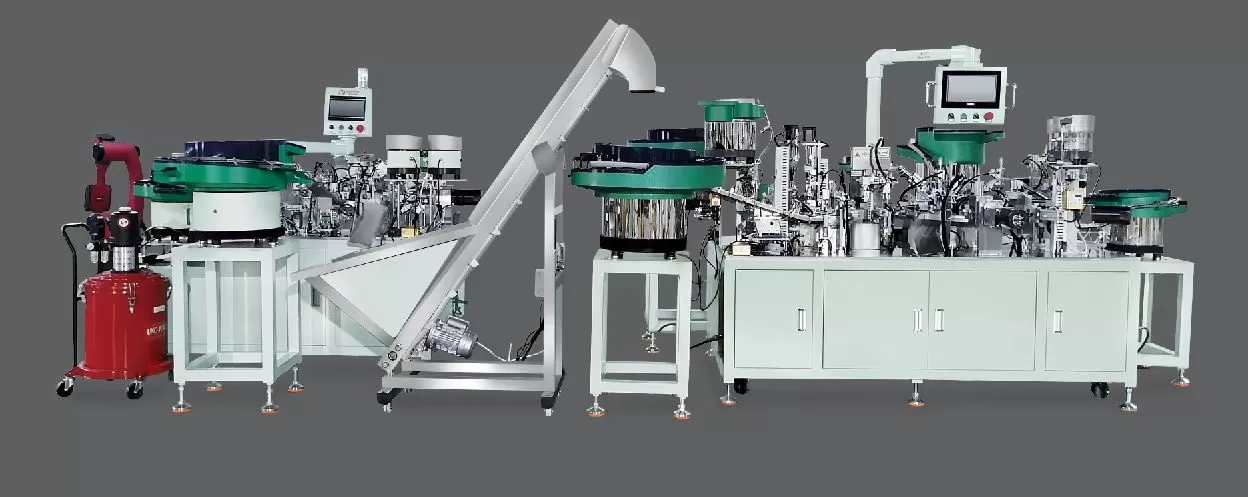
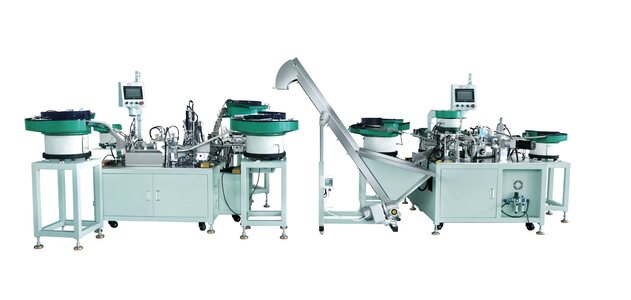
Behind Jieyang’s manufacturing prowess lies the support of specialized equipment suppliers like Sanyhore. As a trusted manufacturer of hinge assembly machines, telescopic drawer slide assembly machines, and roll forming machines, Sanyhore’s technology is engineered to streamline 3D hinge production. Their hinge assembly machines, for example, combine automated feeding, precise alignment, and ultrasonic welding to assemble 3D hinges in a single, efficient cycle. For larger-scale operations, Sanyhore’s telescopic drawer slide assembly machines are designed to handle the complexity of multi-component slide systems, ensuring smooth extension and retraction with minimal friction. Meanwhile, their roll forming machines excel at producing consistent, high-strength metal strips for hinge frames, reducing material waste and enhancing production speed.
Quality Control: The Foundation of Reliable 3D Hinges
Jieyang factories prioritize quality control throughout the 3D hinge manufacturing process. Post-production, hinges undergo rigorous testing, including load capacity tests (to ensure durability), rotational smoothness checks (via torque meters), and environmental stress tests (simulating temperature fluctuations and humidity). These tests are conducted using in-house labs equipped with advanced instruments, such as coordinate measuring machines (CMMs) for dimensional verification and thermal chambers for environmental simulation. By combining automated testing with human expertise, factories ensure that every 3D hinge leaving their facilities meets or exceeds industry standards, earning them trust from global clients.
The Future of 3D Hinge Manufacturing in Jieyang
Looking ahead, Jieyang factories are poised to push further boundaries in 3D hinge assembly. Emerging trends like Industry 4.0 integration—including IoT-connected production lines and AI-driven predictive maintenance—will likely enhance efficiency and reduce downtime. Additionally, the growing focus on sustainable manufacturing is driving the adoption of eco-friendly materials and energy-efficient equipment, aligning with global sustainability goals. As these innovations unfold, Jieyang’s role as a leader in 3D hinge production will only strengthen, supported by partners like Sanyhore that continue to develop cutting-edge assembly solutions.
For manufacturers seeking to source high-quality 3D hinges or upgrade their production lines, partnering with a trusted supplier like Sanyhore is key. With expertise in hinge assembly machines, telescopic drawer slide equipment, and roll forming technology, Sanyhore is committed to delivering reliable, efficient solutions tailored to your needs. To discuss your project requirements, contact sales manager Mr. [Phone: +86 13425506550] or email [info@sanyhore.com]. Let’s build the future of 3D hinge manufacturing together.


