

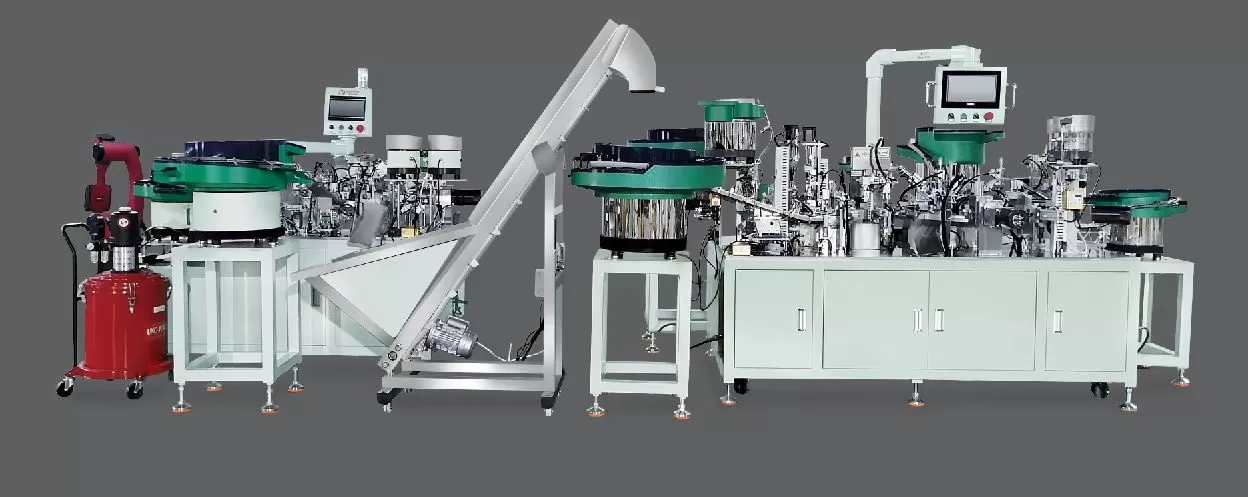
Automation has transformed drawer slide manufacturing, redefining operational safety by minimizing human exposure to hazards. Traditional production relied heavily on manual tasks—from cutting and assembling components to adjusting machinery—exposing workers to repetitive strain, tool-related injuries, and accidental equipment contact. Sanyhore, a trusted manufacturer of hinge assembly machines, telescopic drawer slide assembly systems, and roll forming machines, leverages advanced automation to address these risks, creating safer, more efficient production environments.
The Safety Challenges in Traditional Drawer Slide Production
In conventional manufacturing, manual handling of heavy or sharp components, combined with frequent machine adjustments, posed significant safety threats. Workers often operated near moving parts without adequate safeguards, leading to injuries like lacerations, fractures, or musculoskeletal disorders (MSDs) from repetitive motions. Additionally, human error in setting parameters—such as pressure or speed—could cause equipment malfunctions, escalating risks further. These challenges highlight the urgent need for a more secure production approach.
Automation: A Paradigm Shift in Safety
Automation introduces a layer of protection by reducing reliance on manual labor and introducing intelligent systems that monitor, control, and adapt to production needs. Sanyhore’s automated assembly machines, for instance, integrate mechanized arms, precision sensors, and AI-driven software to handle tasks traditionally performed by humans, minimizing direct worker contact with hazardous operations. This shift not only improves safety but also enhances consistency and productivity, aligning with modern manufacturing demands.
Reducing Manual Handling Risks Through Automated Assembly
A key safety benefit of automation is its ability to eliminate or reduce manual material handling. In traditional setups, workers frequently lift heavy drawer slide components, bend awkwardly to position parts, or reach into tight spaces—all of which strain muscles and increase fall risks. Sanyhore’s telescopic drawer slide assembly machines, however, use robotic arms to transport and position parts with pinpoint accuracy, eliminating the need for manual lifting. Robotic grippers, designed to handle lightweight to medium-weight components safely, reduce the risk of MSDs and injuries related to physical strain.
Smart Monitoring and Predictive Maintenance
Automated systems are equipped with embedded sensors that continuously monitor machine performance and operator actions. These sensors detect anomalies, such as excessive force, sudden speed changes, or component jams, and immediately trigger alerts. For example, if a hinge assembly machine detects an irregular pressure reading, it halts operations to prevent tool damage or operator harm. Additionally, predictive maintenance algorithms analyze data from sensors to identify potential machine failures before they occur, reducing downtime and the risk of unexpected malfunctions during production.
Precision Control for Consistent Safety Standards
Human operators, even experienced ones, can make errors when adjusting machine settings—errors that compromise safety. Automated systems, by contrast, use pre-programmed parameters that ensure consistent control over critical processes. For instance, Sanyhore’s roll forming machines maintain precise pressure and speed throughout the slide forming process, preventing over-formation or under-formation of metal components. This precision eliminates the need for operators to manually adjust settings mid-production, reducing exposure to moving parts and tooling hazards.
Data-Driven Risk Mitigation
Automation generates detailed production data, which can be analyzed to identify safety trends and hotspots. By tracking metrics like injury rates, near-misses, and machine incident logs, Sanyhore’s systems help manufacturers pinpoint areas for improvement. For example, if data shows a spike in injuries during a specific assembly step, engineers can refine the automation workflow—such as adding additional guards or adjusting tool design—to address the risk. This data-driven approach ensures that safety improvements are continuous and targeted, rather than reactive.
For manufacturers seeking to enhance safety while boosting efficiency, Sanyhore’s automated solutions offer a reliable path forward. With a focus on reducing manual labor, implementing smart monitoring, and ensuring precision, our hinge assembly machines, telescopic drawer slide assembly systems, and roll forming machines are engineered to create safer workplaces. To learn more about how we can transform your production line, contact our sales manager at +86 13425506550 or email info@sanyhore.com.
SEO常见问题:
1. Q: How does automation improve safety in drawer slide manufacturing?
A: Sanyhore’s automation reduces manual risks, integrates smart monitoring, and ensures precise control, minimizing injuries from repetitive tasks and machine contact.
2. Q: What automated machines does Sanyhore offer for safer production?
A: We specialize in hinge assembly machines, telescopic drawer slide assembly machines, and roll forming machines, all designed with safety as a core feature.
3. Q: How do Sanyhore’s systems comply with safety regulations?
A: Our automated machines meet global safety standards, with real-time monitoring and predictive maintenance to prevent hazards.
4. Q: Can automation reduce workplace accidents in slide manufacturing?
A: Yes, by replacing high-risk manual tasks with controlled, automated processes, Sanyhore’s machines significantly lower accident rates.
5. Q: How to contact Sanyhore for safety-focused automated solutions?
A: Reach us at +86 13425506550 or info@sanyhore.com for tailored solutions to enhance your manufacturing safety.


