

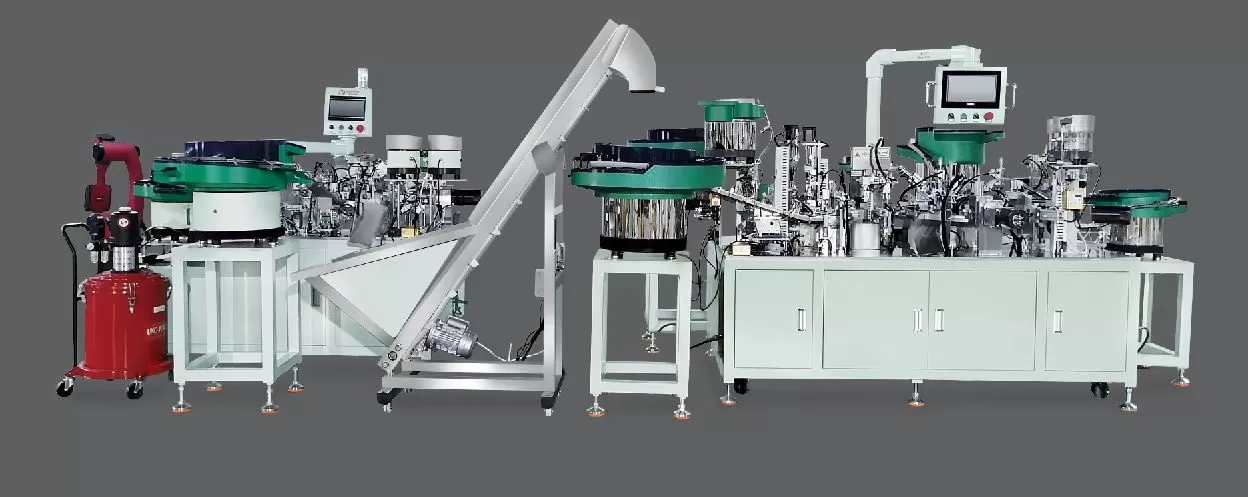
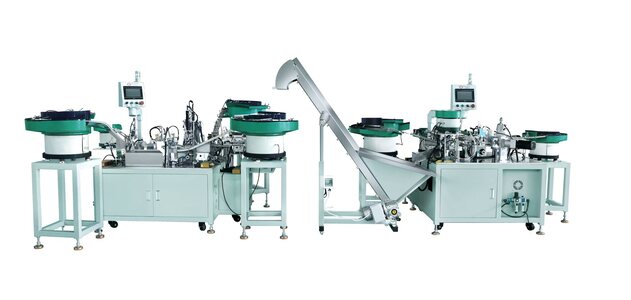
The fully automated production process of Jieyang Hinge Automatic Assembly Machine represents a significant leap in hinge manufacturing efficiency and precision. Hinges, critical components in furniture, automotive, and construction industries, demand consistent quality and high production rates. Traditional manual assembly often faces challenges like inconsistent precision, labor shortages, and high error rates. The automatic assembly machine addresses these issues by integrating advanced robotics, sensors, and software systems to streamline the entire production workflow.
1. Design and Engineering Foundation
The journey begins with meticulous design and engineering. Our team at Sanyhore, a leading manufacturer of hinge assembly machines, starts by analyzing industry-specific requirements, including hinge size, material (brass, steel, aluminum), and load-bearing capacity. Using 3D modeling software, engineers draft detailed machine blueprints, ensuring compatibility with various hinge types. Finite element analysis (FEA) is conducted to simulate stress distribution and optimize structural components, guaranteeing durability and performance. This phase also involves selecting high-precision components, such as linear guides, servo motors, and vision systems, to meet the machine’s operational standards.
2. Component Processing and Raw Material Preparation
Raw materials, including metal sheets and precision parts, undergo strict preprocessing. For example, steel sheets for hinge frames are first cut to exact dimensions using computer numerical control (CNC) cutting machines. Next, parts like pins, bushings, and springs are machined via CNC lathes and milling machines, ensuring tight tolerances (±0.02mm). All components are then cleaned using ultrasonic baths to remove oil, debris, and contaminants, preventing impurities from affecting assembly quality. A automated sorting system, equipped with optical sensors, separates qualified parts from rejects based on size, weight, and surface finish, ensuring only premium components proceed to the assembly stage.
3. Automated Feeding and Handling System
To minimize manual intervention, the production line integrates a sophisticated feeding and handling system. Vibratory bowls and linear feeders deliver small parts (e.g., screws, clips) to the assembly area at a steady rate, with adjustable speed controls to match the assembly pace. Larger components, such as hinge bodies, are transported via overhead conveyors with grippers, guided by laser sensors to avoid collisions. This system not only reduces labor costs but also ensures consistent part positioning, a critical factor for precise assembly.
4. Core Assembly and Robotic Integration
The heart of the process lies in the automatic assembly module, powered by collaborative robots (cobots) and multi-axis manipulators. The cobots, programmed with preset assembly sequences, first place the hinge body on a rotating worktable. A vision-guided system then identifies and positions pins, bushings, and other components with sub-millimeter accuracy. Using ultrasonic welding or press-fit mechanisms, the cobots securely attach parts, applying controlled force to prevent damage. For example, in the case of telescopic drawer slide assembly (a product line Sanyhore specializes in), the machine integrates specialized jigs to align rails and connectors before final crimping. This robotic integration reduces assembly time by up to 70% compared to manual methods.
5. Quality Control and Testing Protocol
Post-assembly, every hinge undergoes rigorous quality testing to ensure reliability. The first step is a functional test, where the hinge is cycled 10,000 times to check for smooth operation and resistance to wear. A force gauge measures opening/closing torque, verifying compliance with industry standards. Additionally, a vision inspection system scans each hinge for defects like misaligned parts, burrs, or surface scratches, flagging non-conforming units for rework. Data from these tests is logged into a central database, allowing traceability and continuous process improvement.
6. Final Packaging and Logistics
After passing quality checks, the assembled hinges are sorted into batches and packaged. Customized packaging solutions, such as anti-static bags or dividers, prevent scratches during storage and transport. The packaging line is integrated with barcode scanners to track inventory, ensuring orders are fulfilled accurately. Sanyhore’s logistics partners then handle delivery, with real-time tracking systems providing customers visibility on shipping status.
At Sanyhore, we specialize in designing and manufacturing hinge assembly machines, telescopic drawer slide assembly machines, and roll forming machines, all engineered to enhance production efficiency. Our commitment to innovation ensures our machines adapt to evolving industry demands, from lightweight material handling to high-speed continuous production. Whether you need a fully automated hinge production line or a tailored solution for your specific hinge type, our team is ready to deliver. For inquiries, contact us at +86 13425506550 or email info@sanyhore.com to discuss your project requirements.


