
In the competitive manufacturing sector, factories often face the dual challenge of meeting rising demand while maintaining operational efficiency. A mid-sized metal fabrication plant, which specialized in producing hinges and drawer slides for furniture and automotive industries, was no exception. Strained by manual assembly processes, the factory struggled with inconsistent output, quality defects, and high labor costs. Orders frequently missed deadlines, and the management knew a solution was critical to scaling operations.
1. Navigating Production Bottlenecks
The factory’s traditional workflow relied heavily on manual assembly. Workers spent hours aligning parts, tightening fasteners, and inspecting products—tasks that were both time-consuming and error-prone. With a daily output of 5,000 units, the plant could barely meet 60% of its weekly order volume. “We needed to reduce cycle time while improving accuracy,” said the plant manager, referring to the main pain points: slow production speed, frequent rework due to misaligned components, and a lack of real-time process monitoring. The team explored in-house upgrades but quickly realized that integrating specialized automation was the only sustainable fix.
2. Sanyhore's Tailored Assembly Line Design
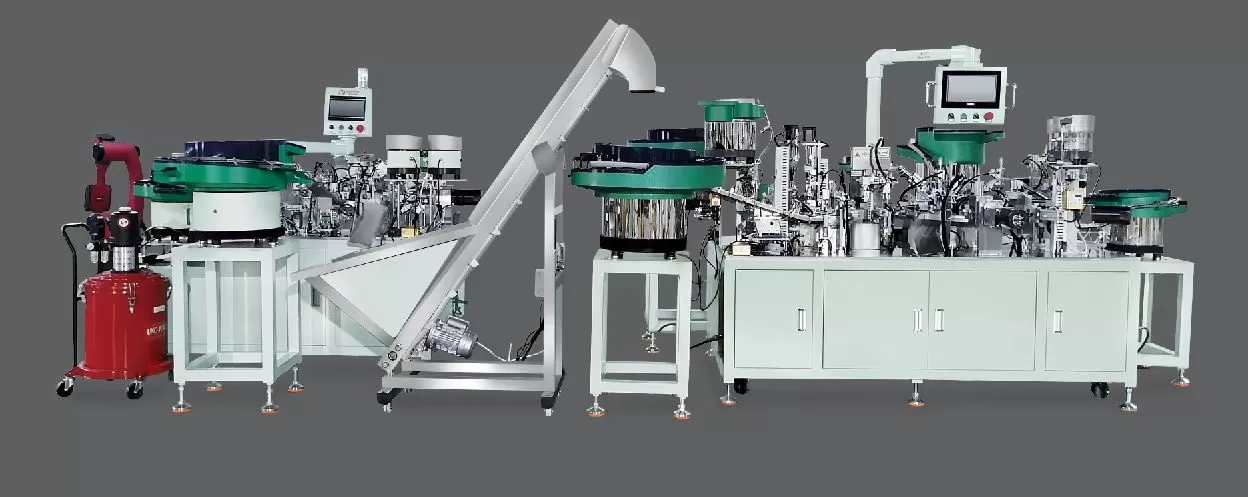
After reviewing the factory’s operations, Sanyhore’s technical team proposed a customized assembly line solution. Central to the plan were two key machines: the hinge assembly machine and the telescopic drawer slide assembly machine. The hinge assembly machine automated the critical steps of feeding, aligning, and crimping hinge components, reducing the need for manual handling by 70%. Meanwhile, the telescopic drawer slide assembly machine integrated precision rollers and lock mechanisms, ensuring consistent slide performance and minimizing defects. Additionally, a compact roll forming machine was added to streamline the production of slide rails, further reducing dependency on external suppliers.
3. Implementation and Immediate Impact
Installation took just three weeks, with minimal disruption to the factory’s schedule. Sanyhore’s engineers worked closely with the plant team to calibrate the machines, train operators, and adjust workflows. The first week of operation revealed initial improvements: cycle time per unit dropped by 45%, and rework rates fell by 30%. By the end of the second month, the factory’s daily output had surged to 10,200 units—exactly double the original capacity. “The machines don’t just speed up production; they maintain quality,” noted an operator. “We’re now meeting 95% of orders on time, and the reduction in manual labor has cut down on fatigue-related errors.”
4. Long-Term Scalability and Operational Gains
Beyond the immediate output increase, the new assembly line offered long-term benefits. The roll forming machine, for example, reduced raw material waste by 15% by precisely shaping metal sheets. The hinge assembly machine’s built-in sensors also enabled predictive maintenance, cutting downtime by 20% compared to manual setups. Most importantly, the factory now had the flexibility to scale operations—adding more machines to meet growing demand without overextending its workforce. “Sanyhore’s solution was a game-changer,” the plant manager concluded. “We’ve not only doubled our output but also improved our overall competitiveness in the market.”
For factories looking to optimize production, Sanyhore’s assembly line solutions—including hinge assembly machines, telescopic drawer slide assembly machines, and roll forming machines—deliver tangible results. Whether you’re struggling with bottlenecks or aiming to boost efficiency, our team can design a tailored setup to fit your needs. Contact us today at +86 13425506550 or via email at info@sanyhore.com to discuss how we can help your factory achieve similar success.


