

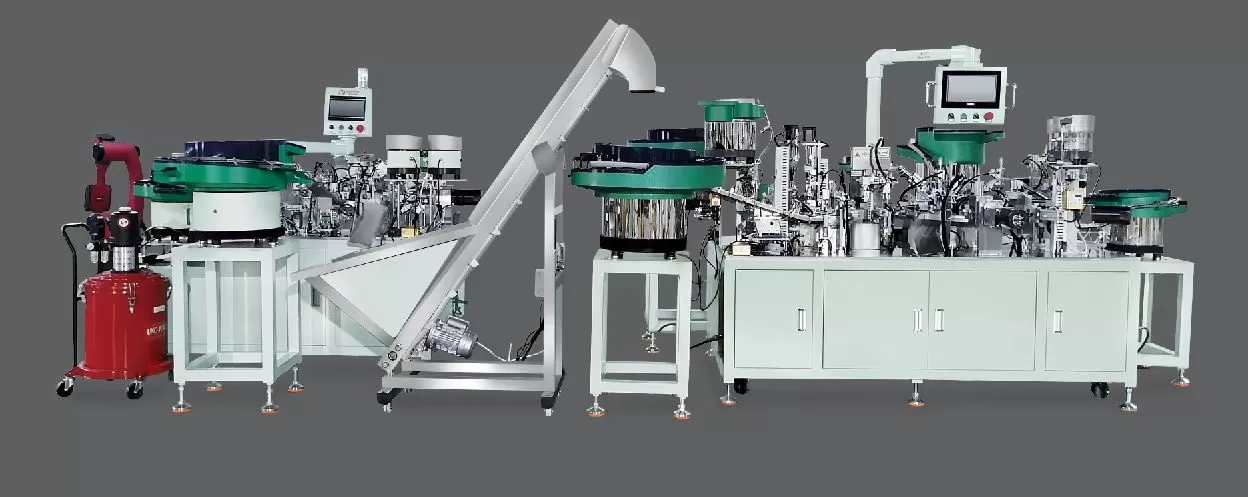
Proper calibration and maintenance are critical for ensuring the consistent performance, precision, and longevity of Jieyang hinge automatic assembly machines. As a professional manufacturer specializing in hinge assembly machines, telescopic drawer slide assembly machines, and roll forming machines, Sanyhore understands the importance of a structured care routine to maximize equipment efficiency and minimize downtime. This guide outlines the essential calibration and maintenance process, helping operators and technicians maintain their machines at peak operation.
Initial Setup and Pre-Calibration Checks
Before initiating calibration, a thorough pre-check is necessary to identify any initial issues. First, verify the power supply voltage and frequency match the machine’s specifications, ensuring stable electricity to prevent voltage fluctuations that could damage internal components. Next, inspect the air pressure system: the machine relies on compressed air for operations, so confirm the pressure gauge reads within the recommended range (typically 6-8 bar) and that all air hoses and connections are free from leaks or wear.
Mechanical components should also be checked. Examine guide rails, slides, and fixtures for foreign debris, loose fasteners, or signs of misalignment. A quick visual inspection of conveyor belts, gearboxes, and motor mounts can prevent unexpected jams during operation. Additionally, review the machine’s manual to confirm all safety interlocks, sensors, and emergency stop buttons are functioning correctly, as these are foundational to safe and accurate calibration.
Core Calibration Procedures
Calibration is the process of adjusting the machine to meet specified performance standards, ensuring parts are assembled with the required precision. Start with sensor calibration, as these devices (e.g., position sensors, force transducers) are critical for detecting component placement and assembly force. Use a calibrated tool, such as a multimeter or laser alignment仪, to adjust sensor sensitivity and response time. For example, position sensors should trigger at the exact moment a hinge or slide reaches the assembly point to prevent overshooting or misalignment.
Mechanical alignment is another key step. Use dial indicators to check the parallelism and perpendicularity of key components, such as the main assembly table and tooling fixtures. Adjust screws or shims to correct deviations, aiming for a tolerance of 0.02mm or less for critical axes. This ensures that parts, like hinge leaves and pins, are inserted at the correct angle and depth, reducing assembly errors and part defects.
Parameter configuration follows alignment. Access the machine’s control system to review and adjust assembly parameters, including press force, insertion speed, and cycle time. These settings should be based on the specific hinge model being produced, as different hinge sizes and materials require varying force and speed to avoid damaging components. Test a small batch of samples after configuration to verify assembly quality, using a CMM (Coordinate Measuring Machine) or visual inspection to check for dimensional accuracy and tightness of fasteners.
Routine Maintenance Schedule
A regular maintenance schedule prevents unexpected breakdowns and extends the machine’s lifespan. Daily maintenance should include cleaning the work area to remove metal shavings, oil residues, or dust that could interfere with sensor readings or component movement. Wipe down slides and guide rails with a lint-free cloth, and lubricate pivot points and gears with a high-performance machine oil to reduce friction.
Weekly maintenance expands on daily checks. Inspect all fasteners, including screws, bolts, and clips, to ensure they are tight and not showing signs of corrosion. Replace any worn or damaged fasteners immediately to prevent loose parts from causing misalignment. Additionally, check the oil level in gearboxes and change the oil filter if it appears discolored or contaminated, as dirty oil can accelerate component wear.
Monthly maintenance involves more in-depth inspections. Disassemble and clean the air filter to prevent dust from entering the pneumatic system, which can clog valves and reduce air pressure. Test all safety features, such as emergency stops and light curtains, to confirm they engage instantly when triggered. For critical moving parts like cam followers or bearings, use a torque wrench to verify they are torqued to the manufacturer’s specifications, and replace any components with play or excessive wear.
Quarterly maintenance includes comprehensive system checks. Run a full diagnostic test using the machine’s built-in software to monitor for errors, such as sensor drift or motor inefficiencies. Calibrate position encoders if drift is detected, as this ensures accurate tracking of component movement. Additionally, inspect the conveyor system for belt wear or misalignment, and adjust the take-up tensioners to maintain proper belt tightness. For older machines, this is also a good time to update firmware or software to ensure compatibility with new production requirements.
Troubleshooting Common Calibration and Maintenance Issues
Even with proper care, hinge automatic assembly machines may encounter issues that require troubleshooting. One common problem is sudden drops in assembly precision, often caused by sensor drift or mechanical wear. If parts start to show inconsistent insertion depth or misalignment, first check the sensor calibration. Use the machine’s diagnostic menu to run a self-test and verify sensor readings against known values; if off, recalibrate using the steps outlined earlier. If the issue persists, inspect the sensor lens for dirt or scratches, which can block readings, and clean it with compressed air or a lens cleaner.
Another issue is unusual noises during operation, which may indicate loose components or dry lubrication. If grinding or rattling sounds occur, stop the machine immediately and visually inspect the drive gears, pulleys, and motor mounts. Tighten any loose fasteners and apply additional lubrication to dry areas. For persistent noises, check for worn bearings, as they can cause misalignment and excessive vibration; replacing bearings promptly prevents further damage to other components.
Reduced production speed is often a sign of inefficient maintenance. If the machine’s cycle time increases beyond the specified limit, check the conveyor system for jams or misalignment, which can slow down part transfer. Clean any debris from the conveyor tracks and adjust the speed control settings to ensure smooth operation. Additionally, inspect the tooling fixtures for wear, as damaged or loose fixtures can cause parts to misfeed, increasing cycle time. Replacing worn fixtures with OEM or high-quality alternatives ensures consistent part handling.
Best Practices for Longevity and Performance
To maximize the lifespan and performance of your Jieyang hinge automatic assembly machine, adopt these best practices. First, train operators and technicians on proper operation and maintenance procedures, emphasizing the importance of following the maintenance schedule and calibration steps outlined in the manual. This reduces human error and ensures consistency in machine care.
Document all maintenance and calibration activities in a logbook, recording dates, tasks performed, and any adjustments made. This history helps identify patterns in issues, such as recurring sensor drift, and allows for proactive maintenance. Digital logs, stored in cloud or local databases, make it easy to track performance over time and plan future maintenance.
Finally, partner with a reliable supplier like Sanyhore for spare parts and technical support. Using genuine OEM or high-quality replacement parts ensures compatibility and reduces the risk of premature failure. Sanyhore offers a range of hinge assembly machines and can provide expert guidance on calibration, maintenance, and troubleshooting, ensuring your equipment operates at its best. For inquiries about maintenance services, spare parts, or to discuss your specific production needs, contact our sales manager at +86 13425506550 or email info@sanyhore.com.


