
Automatic Production Scheduling Process for Jieyang Hinge Automatic Assembly Machine

2026-01-16


In the dynamic landscape of modern manufacturing, the efficiency of production processes directly impacts a company’s competitiveness. For producers of hinge components, especially those utilizing automatic assembly machines, optimizing the production scheduling process is critical to meeting order demands, reducing operational costs, and maintaining consistent quality. This article delves into the automatic production scheduling process specifically designed for Jieyang hinge automatic assembly machines, exploring its core components, technological integration, and the role of specialized equipment in driving efficiency.

Understanding the Core of Automatic Production Scheduling

At its essence, automatic production scheduling is a systematic approach to organizing and managing production activities to align with order requirements, resource availability, and operational constraints. For hinge automatic assembly machines, this process goes beyond basic task sequencing; it involves real-time monitoring, data-driven decision-making, and adaptive adjustments to ensure the smooth flow of operations. Unlike manual scheduling, which is prone to delays and inefficiencies, automatic systems leverage advanced algorithms and connectivity to create a responsive framework that optimizes every stage of production, from raw material intake to final product packaging.

Key Components of the Scheduling Process for Hinge Assembly

Effective scheduling for hinge automatic assembly machines relies on the seamless coordination of several key components. First, order demand analysis forms the foundation, as the system must first interpret customer requirements, including order quantities, delivery timelines, and product specifications. This data is then integrated with real-time equipment status—such as machine uptime, maintenance needs, and operator availability—to avoid bottlenecks. Concurrently,物料管理 (material management) is critical, with the system ensuring that raw materials, components, and tools are available when needed, minimizing inventory holding costs and reducing lead times for production runs.

Integration of Data and Technology in Scheduling

Modern automatic scheduling processes for hinge assembly machines are heavily dependent on data and technology integration. Internet of Things (IoT) sensors embedded in the assembly machines and production lines collect real-time data on machine performance, energy consumption, and production metrics, creating a continuous stream of insights. This data is then fed into a Manufacturing Execution System (MES) or a dedicated production scheduling software, which uses AI and machine learning algorithms to analyze patterns, predict potential disruptions, and adjust schedules dynamically. For example, if a machine requires maintenance, the system can automatically reallocate tasks to other available equipment, ensuring production continues without significant downtime.

Benefits of Optimized Scheduling for Hinge Production

The implementation of an optimized automatic production scheduling process for hinge assembly machines yields a range of tangible benefits. Reduced machine downtime is a primary outcome, as the system proactively schedules maintenance and avoids overloading individual machines, extending their operational lifespan. Additionally, production efficiency improves, with the system minimizing idle time for both machines and labor, leading to higher output rates and faster order fulfillment. Cost savings are another key advantage, as optimized resource allocation reduces waste, lowers energy consumption, and decreases the need for overtime labor. Ultimately, these improvements enhance customer satisfaction by ensuring consistent delivery times and high-quality products, strengthening the manufacturer’s market position.

How Sanyhore Supports Efficient Scheduling with Hinge Assembly Machines

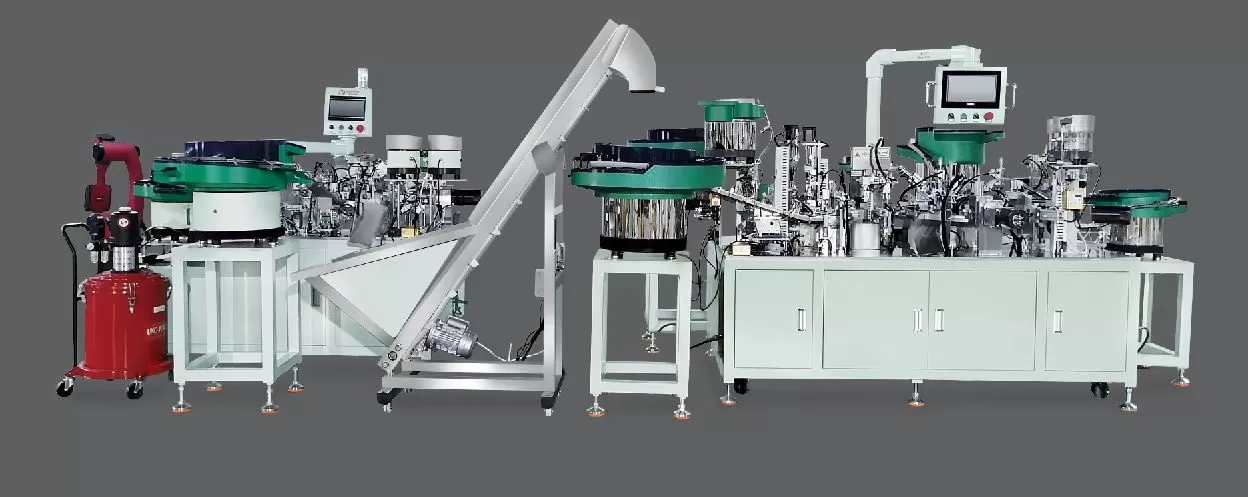
As a professional manufacturer of hinge assembly machines, telescopic drawer slide assembly machines, and roll forming machines, Sanyhore integrates scheduling-friendly features into its equipment to simplify production management. Our hinge automatic assembly machines are designed with built-in connectivity, enabling seamless data exchange with scheduling systems and MES platforms. This integration allows for real-time monitoring of machine performance and production progress, empowering operators to make informed decisions. Moreover, our machines are engineered for flexibility, supporting quick changeovers between different hinge models, which is crucial for adapting to varying order demands and ensuring the scheduling system can efficiently manage mixed production runs. For businesses looking to optimize their hinge production scheduling, Sanyhore offers comprehensive support, from equipment selection to software integration, to help streamline operations and drive growth.

For inquiries about how automatic production scheduling can transform your hinge assembly operations, contact our sales manager at +86 13425506550 or email info@sanyhore.com to discuss your specific needs and explore tailored solutions.

We use cookie to improve your online experience. By continuing to browse this website, you agree to our use of cookie.

Cookies

Please read our Terms and Conditions and this Policy before accessing or using our Services. If you cannot agree with this Policy or the Terms and Conditions, please do not access or use our Services. If you are located in a jurisdiction outside the European Economic Area, by using our Services, you accept the Terms and Conditions and accept our privacy practices described in this Policy.
We may modify this Policy at any time, without prior notice, and changes may apply to any Personal Information we already hold about you, as well as any new Personal Information collected after the Policy is modified. If we make changes, we will notify you by revising the date at the top of this Policy. We will provide you with advanced notice if we make any material changes to how we collect, use or disclose your Personal Information that impact your rights under this Policy. If you are located in a jurisdiction other than the European Economic Area, the United Kingdom or Switzerland (collectively “European Countries”), your continued access or use of our Services after receiving the notice of changes, constitutes your acknowledgement that you accept the updated Policy. In addition, we may provide you with real time disclosures or additional information about the Personal Information handling practices of specific parts of our Services. Such notices may supplement this Policy or provide you with additional choices about how we process your Personal Information.


Cookies

Cookies are small text files stored on your device when you access most Websites on the internet or open certain emails. Among other things, Cookies allow a Website to recognize your device and remember if you've been to the Website before. Examples of information collected by Cookies include your browser type and the address of the Website from which you arrived at our Website as well as IP address and clickstream behavior (that is the pages you view and the links you click).We use the term cookie to refer to Cookies and technologies that perform a similar function to Cookies (e.g., tags, pixels, web beacons, etc.). Cookies can be read by the originating Website on each subsequent visit and by any other Website that recognizes the cookie. The Website uses Cookies in order to make the Website easier to use, to support a better user experience, including the provision of information and functionality to you, as well as to provide us with information about how the Website is used so that we can make sure it is as up to date, relevant, and error free as we can. Cookies on the Website We use Cookies to personalize your experience when you visit the Site, uniquely identify your computer for security purposes, and enable us and our third-party service providers to serve ads on our behalf across the internet.

We classify Cookies in the following categories:
 ●  Strictly Necessary Cookies
 ●  Performance Cookies
 ●  Functional Cookies
 ●  Targeting Cookies


Cookie List
A cookie is a small piece of data (text file) that a website – when visited by a user – asks your browser to store on your device in order to remember information about you, such as your language preference or login information. Those cookies are set by us and called first-party cookies. We also use third-party cookies – which are cookies from a domain different than the domain of the website you are visiting – for our advertising and marketing efforts. More specifically, we use cookies and other tracking technologies for the following purposes:

Strictly Necessary Cookies
These cookies are necessary for the website to function and cannot be switched off in our systems. They are usually only set in response to actions made by you which amount to a request for services, such as setting your privacy preferences, logging in or filling in forms. You can set your browser to block or alert you about these cookies, but some parts of the site will not then work. These cookies do not store any personally identifiable information.

Functional Cookies
These cookies enable the website to provide enhanced functionality and personalisation. They may be set by us or by third party providers whose services we have added to our pages. If you do not allow these cookies then some or all of these services may not function properly.

Performance Cookies
These cookies allow us to count visits and traffic sources so we can measure and improve the performance of our site. They help us to know which pages are the most and least popular and see how visitors move around the site. All information these cookies collect is aggregated and therefore anonymous. If you do not allow these cookies we will not know when you have visited our site, and will not be able to monitor its performance.

Targeting Cookies
These cookies may be set through our site by our advertising partners. They may be used by those companies to build a profile of your interests and show you relevant adverts on other sites. They do not store directly personal information, but are based on uniquely identifying your browser and internet device. If you do not allow these cookies, you will experience less targeted advertising.

How To Turn Off Cookies
You can choose to restrict or block Cookies through your browser settings at any time. Please note that certain Cookies may be set as soon as you visit the Website, but you can remove them using your browser settings. However, please be aware that restricting or blocking Cookies set on the Website may impact the functionality or performance of the Website or prevent you from using certain services provided through the Website. It will also affect our ability to update the Website to cater for user preferences and improve performance. Cookies within Mobile Applications

We only use Strictly Necessary Cookies on our mobile applications. These Cookies are critical to the functionality of our applications, so if you block or delete these Cookies you may not be able to use the application. These Cookies are not shared with any other application on your mobile device. We never use the Cookies from the mobile application to store personal information about you.

If you have questions or concerns regarding any information in this Privacy Policy, please contact us by email at . You can also contact us via our customer service at our Site.