

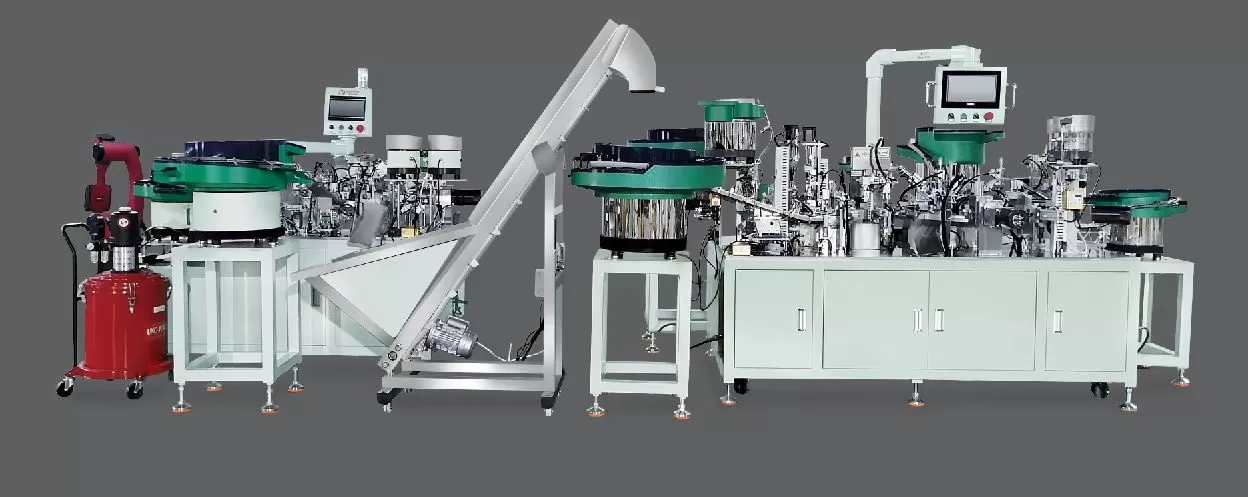
In industrial production, roll forming machines are critical for shaping metal sheets into precise profiles, widely used in industries like construction, automotive, and furniture manufacturing. However, the high-speed rotation of rollers, continuous material feeding, and complex mechanical movements pose inherent risks of accidents, including entanglement,挤压 (extrusion), or laceration. Sanyhore, a professional manufacturer specializing in hinge assembly machines, telescopic drawer slide assembly machines, and roll forming machines, prioritizes accident prevention through rigorous safety engineering, ensuring its roll forming machines meet global safety standards while enhancing operational efficiency. This article explores the key safety features embedded in Sanyhore’s roll forming machines, detailing how they mitigate risks and secure workplace well-being.
Understanding Roll Forming Machine Hazards
Before examining safety solutions, it’s essential to identify common risks in roll forming operations. The primary hazards stem from three sources: mechanical contact, material handling, and electrical malfunctions. Mechanical contact often occurs when operators inadvertently reach into the machine’s forming area, where rotating rollers or moving parts can trap limbs. Material handling issues arise from improper feeding, leading to misalignment or jams that may force operators into dangerous zones. Electrical hazards, such as short circuits or overheating, can cause unexpected shutdowns or even fires if not controlled. Sanyhore addresses these risks by integrating multiple layers of protection, ensuring each hazard is addressed with targeted safety mechanisms.
Sanyhore’s Core Safety Design Philosophy
Sanyhore’s roll forming machines are designed with a “safety-first” philosophy, aligning with international standards like EN ISO 13849-1 (functional safety) and EN 954-1 (safety of control systems). The brand prioritizes not just compliance but proactive risk reduction, with engineers collaborating closely with manufacturers to understand real-world operational challenges. This approach ensures every safety feature is practical, effective, and seamlessly integrated into the machine’s workflow, minimizing disruption to production while maximizing protection. Unlike generic machines, Sanyhore’s roll forming models are customized based on specific operational requirements, ensuring tailored safety solutions for diverse industries.
Emergency Stop System: Immediate Risk Mitigation
A foundational safety feature in Sanyhore’s roll forming machines is the fail-safe emergency stop (E-stop) system. Strategically placed across the machine—including on the control panel, side frames, and near the material loading/unloading areas—E-stops allow operators to halt the machine instantly in emergencies. Each E-stop triggers a dual-action shutdown: it immediately cuts power to the drive system and locks the rollers within milliseconds, preventing any residual movement. To prevent accidental activation, the E-stops are designed with a minimum actuation force of 50N and a 0.5-second response time, balancing quick action with operational reliability. This system significantly reduces the risk of prolonged exposure to hazards, a critical advantage in high-risk manufacturing environments.
Enclosed Safety Guards: Barrier Protection for Hazardous Areas
To prevent direct human contact with dangerous components, Sanyhore equips its roll forming machines with fully enclosed safety guards. These guards are constructed from high-strength, transparent polycarbonate or steel mesh, ensuring unobstructed visibility while completely enclosing the forming area, drive gears, and rotating rollers. The guards are secured with positive-locking mechanisms (e.g., quick-release latches) that require tools for access, preventing unauthorized opening during operation. Additionally, safety interlocks are integrated into the guards: if a guard is opened, the machine immediately shuts down, and a visual/audio alarm alerts nearby personnel. This design eliminates the need for manual supervision of all access points, making the machine safer for continuous operation.
Photoelectric Sensors: Intelligent Risk Detection
Beyond physical barriers, Sanyhore’s roll forming machines feature advanced photoelectric sensors for real-time hazard detection. In the material feeding section, a pair of infrared sensors between the infeed table and forming rollers monitors material alignment and thickness. If a foreign object (e.g., a tool, scrap metal) enters the detection zone, the sensors send a signal to the control system, which immediately stops the machine and displays an error code on the HMI. Similarly, in the outfeed area, a laser sensor tracks the length of formed profiles; if the length exceeds the set parameter (due to material slippage or jamming), the machine pauses to prevent overfeeding and potential material ejection. These sensors act as an early warning system, reducing human reaction time and minimizing accident severity.
Overload Protection and Auto-shutdown: Preventing System Failure
Roll forming machines are prone to overloads due to unexpected material thickness, hard foreign objects, or mechanical wear. Sanyhore addresses this risk with a robust overload protection system, which continuously monitors the torque of the drive motor and the current draw of the electrical system. If an overload is detected (exceeding 110% of the rated load), the machine enters a controlled shutdown sequence: it reduces speed gradually, alerts the operator via the HMI, and powers down completely if the overload persists. This not only prevents damage to the machine but also avoids the dangerous scenarios that could result from system failure, such as sudden roller lockups or material explosions.
Ergonomic Design: Reducing Human Error Risks
Human factors, such as fatigue or misjudgment, often contribute to accidents in manufacturing. Sanyhore incorporates ergonomic principles into its machine design to minimize these risks. The control panel is positioned at a height of 120-130cm, aligning with the average operator’s eye level, reducing neck strain. Button layout follows IEC 61417 standards, with color-coded labels (red for E-stops, green for start/stop) to ensure intuitive operation. The material loading platform is equipped with anti-slip treads and a height-adjustable guide rail, making it easier to position sheets without excessive lifting or bending. By prioritizing operator comfort and ease of use, Sanyhore reduces the likelihood of operational errors caused by fatigue.
Why Choose Sanyhore for Safe Roll Forming Solutions
In an industry where safety compliance is non-negotiable, Sanyhore stands out as a reliable partner. Each roll forming machine undergoes third-party safety testing (e.g., by TÜV SÜD) to verify compliance with EN ISO 13850 and IEC 61508 standards. The brand also offers on-site safety training for operators and maintenance staff, ensuring proper use and upkeep of safety features. For manufacturers prioritizing accident prevention without compromising productivity, Sanyhore’s roll forming machines are a trusted choice, combining cutting-edge safety technology with over 15 years of industry expertise.
For more details on how Sanyhore’s roll forming machines can enhance your workshop’s safety, contact our sales manager at +86 13425506550 or email info@sanyhore.com to discuss your production line requirements. Let Sanyhore help you build a safer, more efficient manufacturing process.


